

You shut the front door, drop your bag, and the walls seem to lean in a little closer. Sound familiar?
If you’ve been quietly Googling how to make a small apartment feel bigger, you’re in very good company right now. Rents keep climbing while square footage keeps shrinking — the average U.S. apartment now rents for roughly $1,750 a month, and in many cities the newest units are the smallest ones on the block.
That math is pushing more Americans into studios and tight one-bedrooms than ever. The frustrating part? Most people assume they’re stuck until they can afford to move.
You’re not. The right small apartment look bigger tips can completely change how a room feels without changing a single wall. Below are 20 fixes sorted from quickest wins to studio-specific tricks. You can do most of them this weekend, for less than the cost of one dinner out.
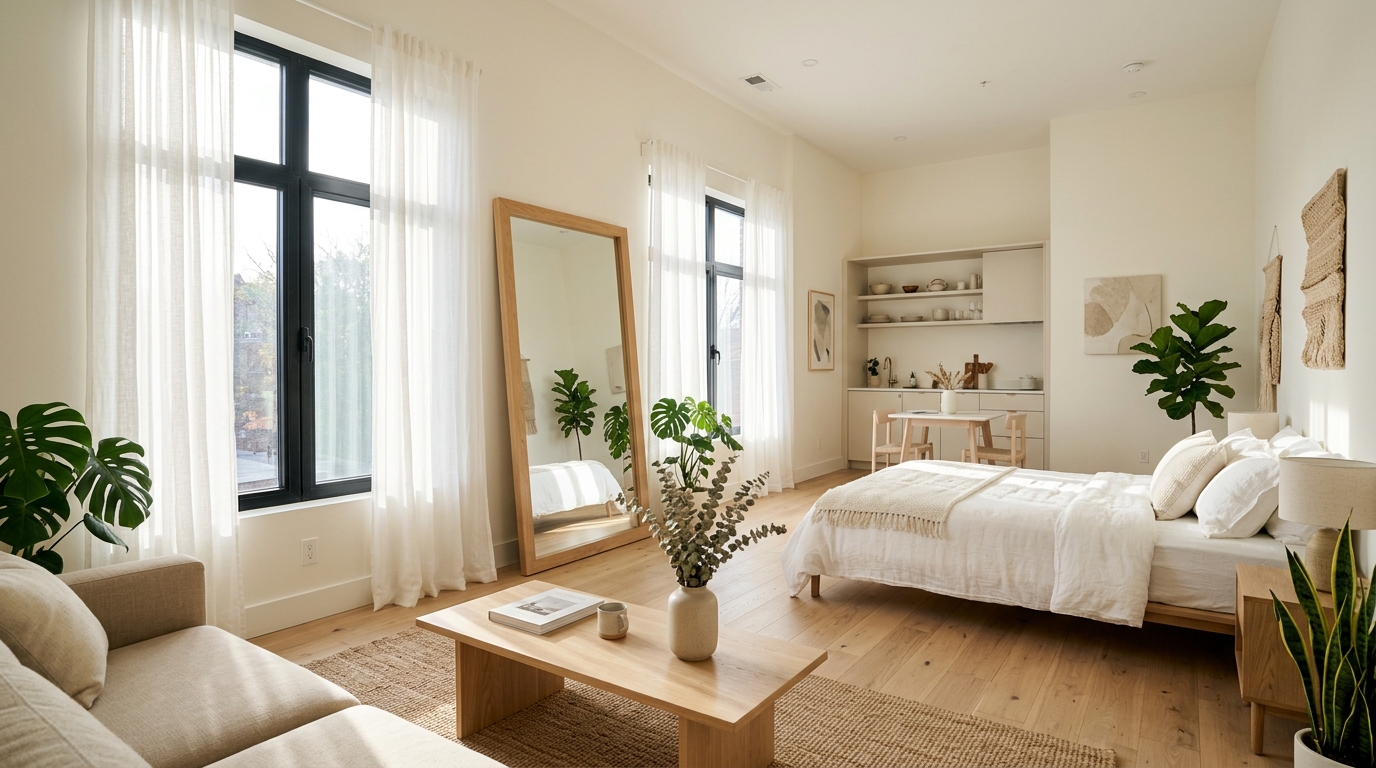
Why Small Spaces Feel Cramped (and How to Make a Small Apartment Feel Bigger Fast)
Here’s the thing: “small” and “cramped” aren’t the same problem. A 450-square-foot studio can feel airy, while a 700-square-foot one-bed can feel like a closet. The difference is rarely the floor plan.
Your brain reads a room as small when its eyes get stuck — blocked sightlines, dark corners, clutter at every glance, furniture that swallows the floor. Open those sightlines up and the same space reads as roomy.
So the real goal of learning how to make a small apartment feel bigger is simple: give the eye room to travel. Light, height, and breathing space do the heavy lifting.
Think of it like a photograph. A cluttered frame feels chaotic; a clean one with a clear focal point feels calm and spacious — even if both are the same size. Once you start designing for the eye instead of the square footage, everything shifts.
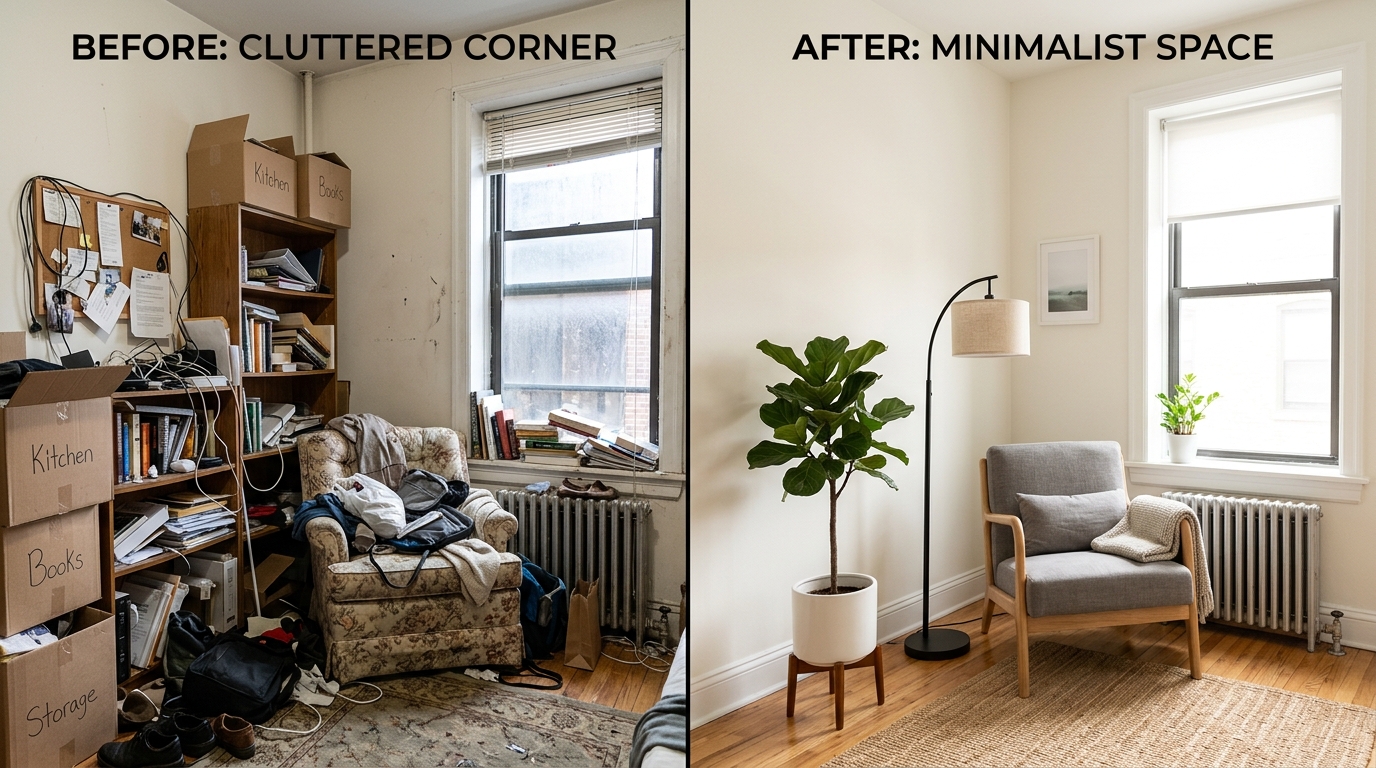
Light and Color: Small Space Decorating Ideas That Open Any Room
Light is the cheapest square footage you’ll ever buy. These small space decorating ideas trick the eye into reading more space than there is.
- Hang one big mirror opposite a window. Mirrors bounce daylight deep into the room and visually double the space. One large mirror beats five small ones — it reads as a “second window,” not décor.
- Go pale on the walls, but not boring. Soft whites, warm greys, and muted sage recede, making walls feel farther away. If you rent and can’t paint, removable wallpaper or large light-toned art does the same job.
- Paint (or curtain) the ceiling’s friend: vertical lines. Floor-to-ceiling curtains hung above the window frame draw the eye up and make ceilings feel taller.
- Layer your lighting. One harsh overhead bulb flattens a room and shoves every shadow into the corners. Add a floor lamp and a table lamp so light comes from three heights — the room instantly feels deeper.
- Match your curtains to your walls. When window treatments blend into the wall color, the boundary disappears and the room reads as one continuous, larger surface.
Picture a renter named Maya in a north-facing studio that always felt like dusk. She swapped a navy accent wall for warm white and hung a 4-foot mirror across from her only window. Same apartment, same lease — suddenly it photographed (and felt) twice as bright.
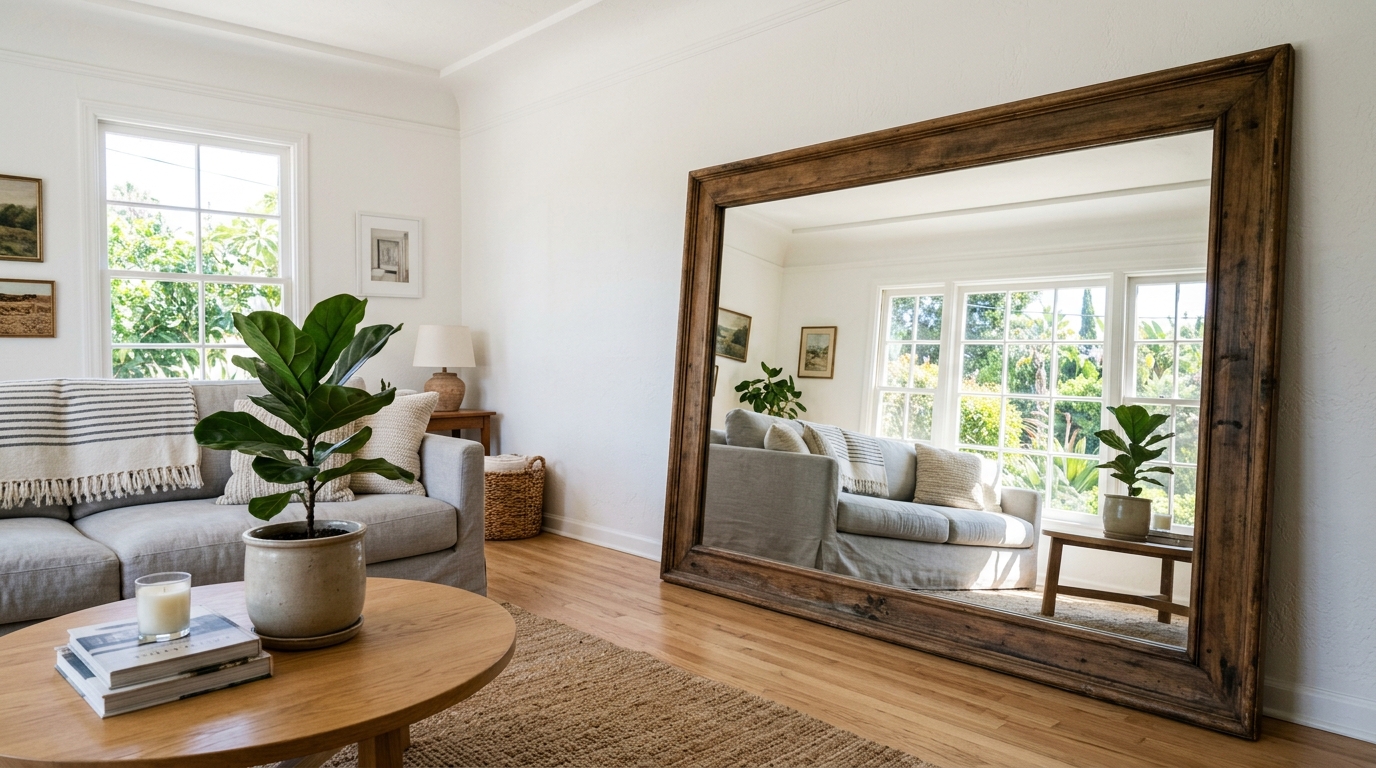
Furniture Moves That Maximize Apartment Space
The fastest way to maximize apartment space isn’t buying more — it’s choosing pieces that earn their footprint. Every item should do at least one job, ideally two.
- Raise everything off the floor. Furniture with visible legs lets your eye see the floor underneath it, and visible floor reads as space. Swap the skirted sofa for one on legs and watch the room exhale.
- Buy furniture that does double duty. A storage ottoman, a bed frame with drawers, a lift-top coffee table — each one removes a separate storage piece you’d otherwise need.
- Scale down, don’t shrink down. You don’t need dollhouse furniture. You need fewer, right-sized pieces. One properly scaled sofa beats a loveseat plus two bulky armchairs crammed together.
- Float furniture off the walls — a little. Pushing everything flat against the walls feels intuitive but often makes a room feel boxed in. A few inches of breathing room can paradoxically read as more space.
- Pick a see-through piece. A glass or acrylic coffee table, an open-frame console — anything the eye passes through instead of stopping at — keeps sightlines flowing.
Why does this matter so much in a small place? Because in a big house a clunky table is a minor sin. In 500 square feet, one oversized piece eats the whole room. In a small apartment, restraint is the real luxury.
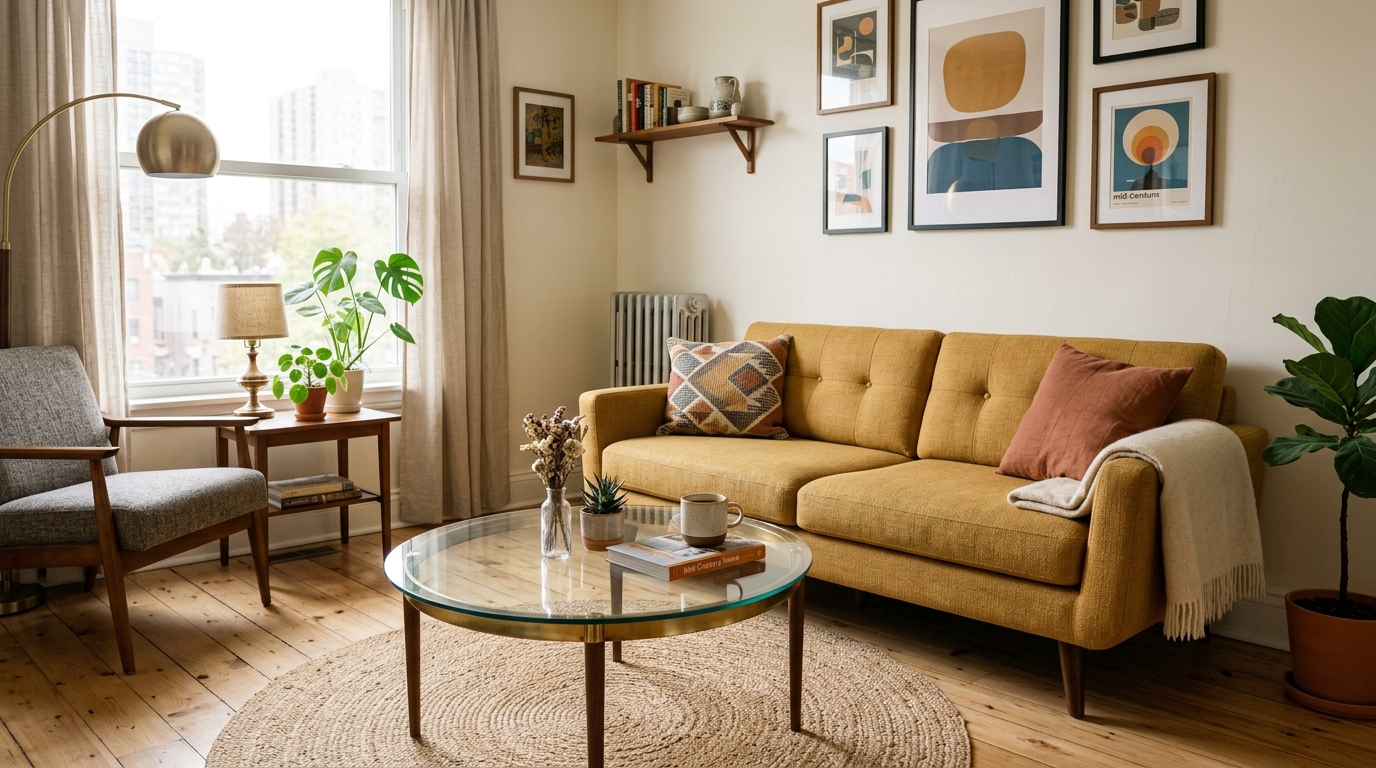
Go Vertical: Apartment Space Hacks USA Renters Swear By
When you can’t build out, build up. These apartment space hacks USA renters love all share one idea: use the walls, free the floor.
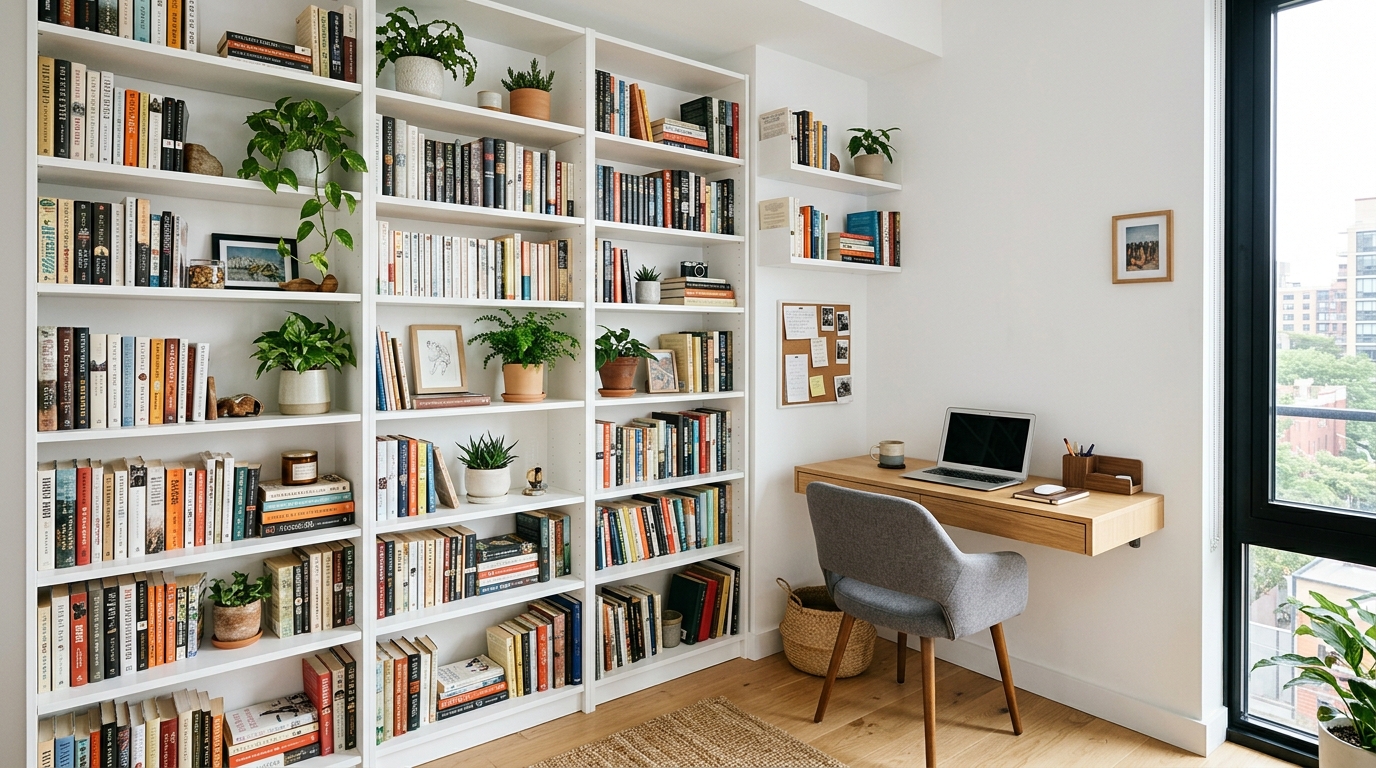
- Take shelves to the ceiling. Stop your shelving at chest height and you waste the most valuable real estate in the room. Floor-to-ceiling shelves draw the eye up and add storage without stealing floor.
- Hang it, don’t stand it. Wall-mounted nightstands, floating desks, and pegboards keep surfaces clear and floors open. Renters: heavy-duty adhesive hooks and tension rods do a lot without holes.
- Use the back of every door. Over-the-door organizers turn dead vertical space into a pantry, a shoe rack, or a cleaning closet.
- Draw the eye upward on purpose. A tall plant, a vertical art piece, or a high curtain rod gives the room a top edge to reach toward — and rooms that feel tall feel bigger.
Imagine Devon, a grad student in a one-bed where the floor was always the battleground. He moved his entire book collection onto two floor-to-ceiling shelves and mounted his desk to the wall. The footprint he reclaimed fit a reading chair he never thought he had room for.
Declutter Smart: Apartment Organization Hacks
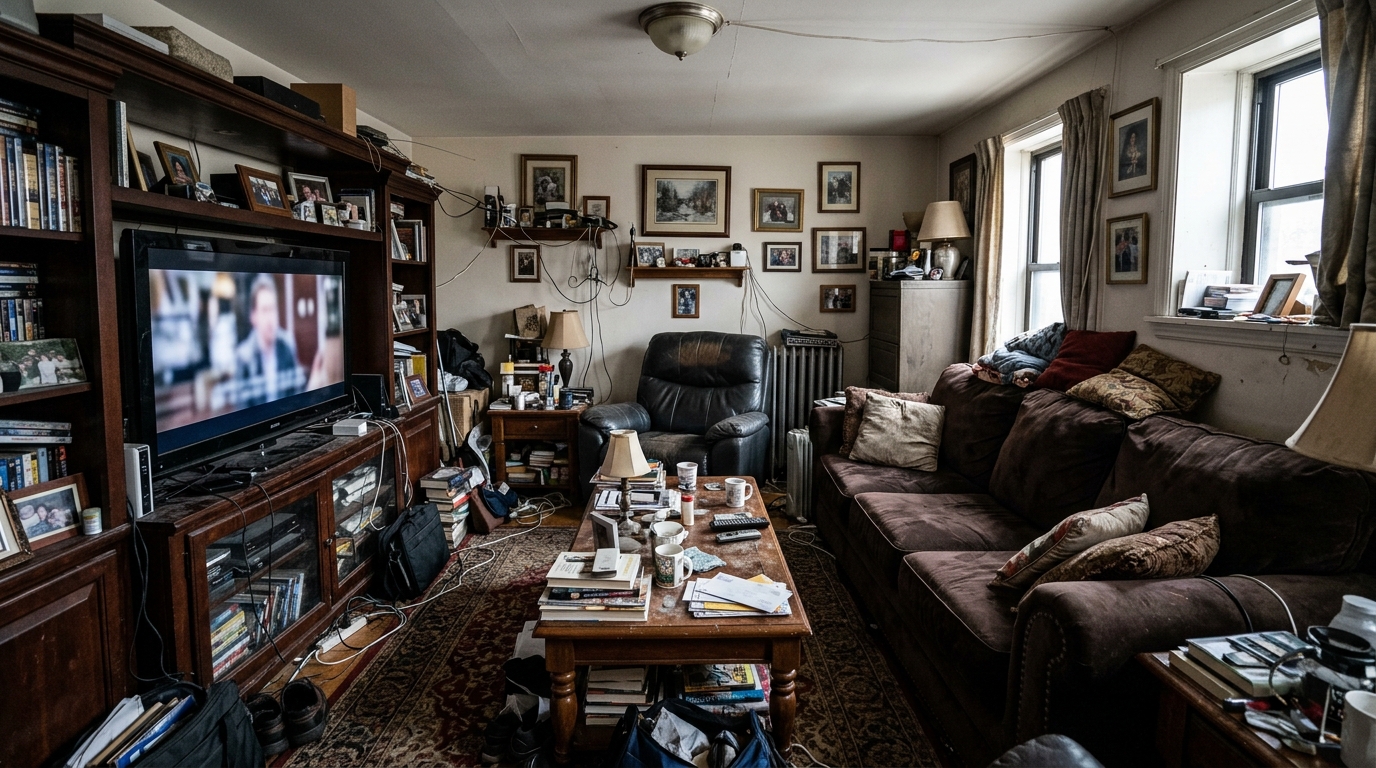
You can’t decorate your way out of clutter. The most underrated answer to how to make a small apartment feel bigger is simply owning less stuff that’s out in the open. These apartment organization hacks keep surfaces clear so the space can breathe.
- Adopt the “one in, one out” rule. Every new item means one leaves. In a small space, storage is a fixed budget — spend it on purpose.
- Clear your horizontal surfaces. Counters, coffee tables, and the floor are what your eye lands on first. Keep them 80% empty and the whole place reads as calm and roomy.
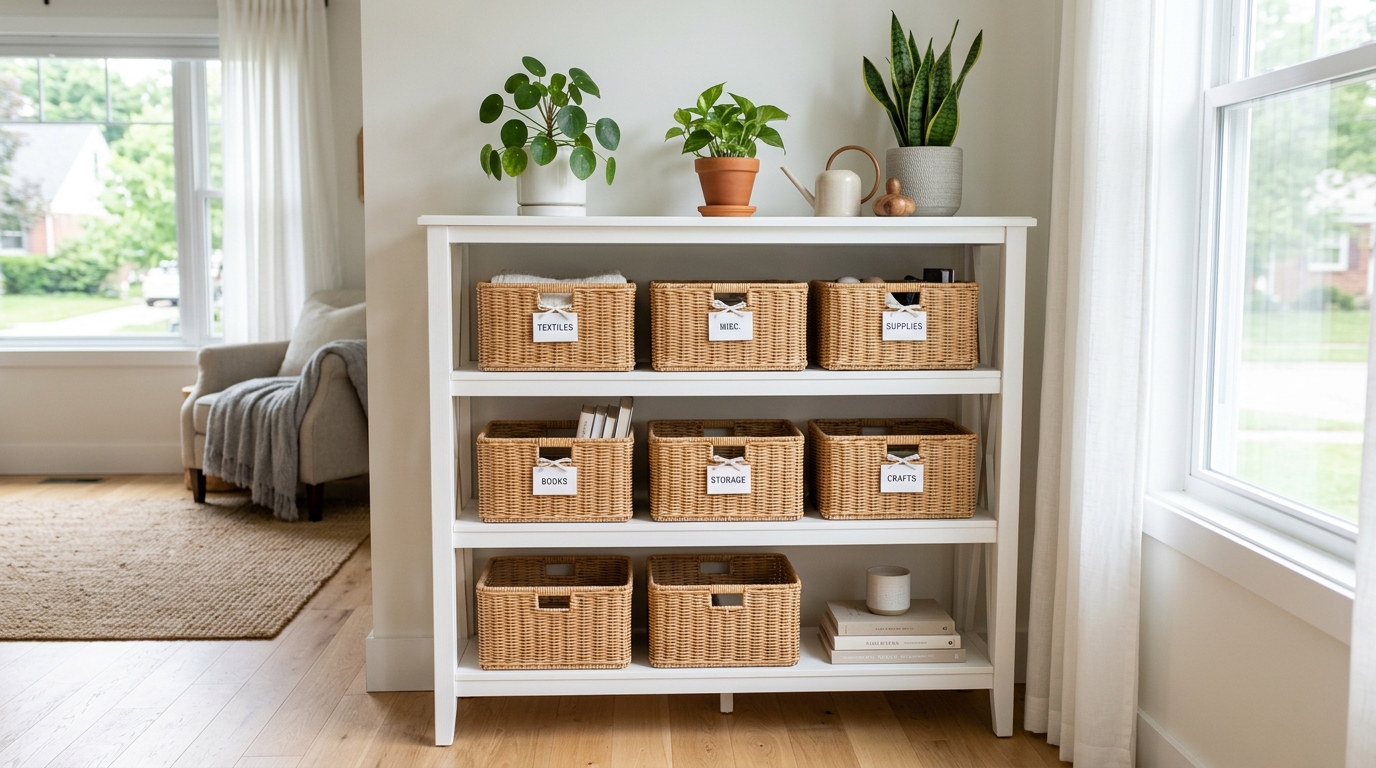
- Hide the daily mess in matching bins. Visual noise — mismatched boxes, exposed cords, random piles — makes a room feel chaotic and small. Uniform baskets in one color quiet it instantly.
Ever notice how a hotel room the size of your bedroom feels weirdly spacious? It’s not bigger. It’s just empty of your stuff. Clutter isn’t a storage problem — it’s a space problem in disguise.
Studio-Specific Tips to Make a Studio Apartment Feel Larger
Studios have their own rulebook, because one room has to be everything. These tiny apartment design tips are aimed squarely at helping you make a studio apartment feel larger — and saner to live in.
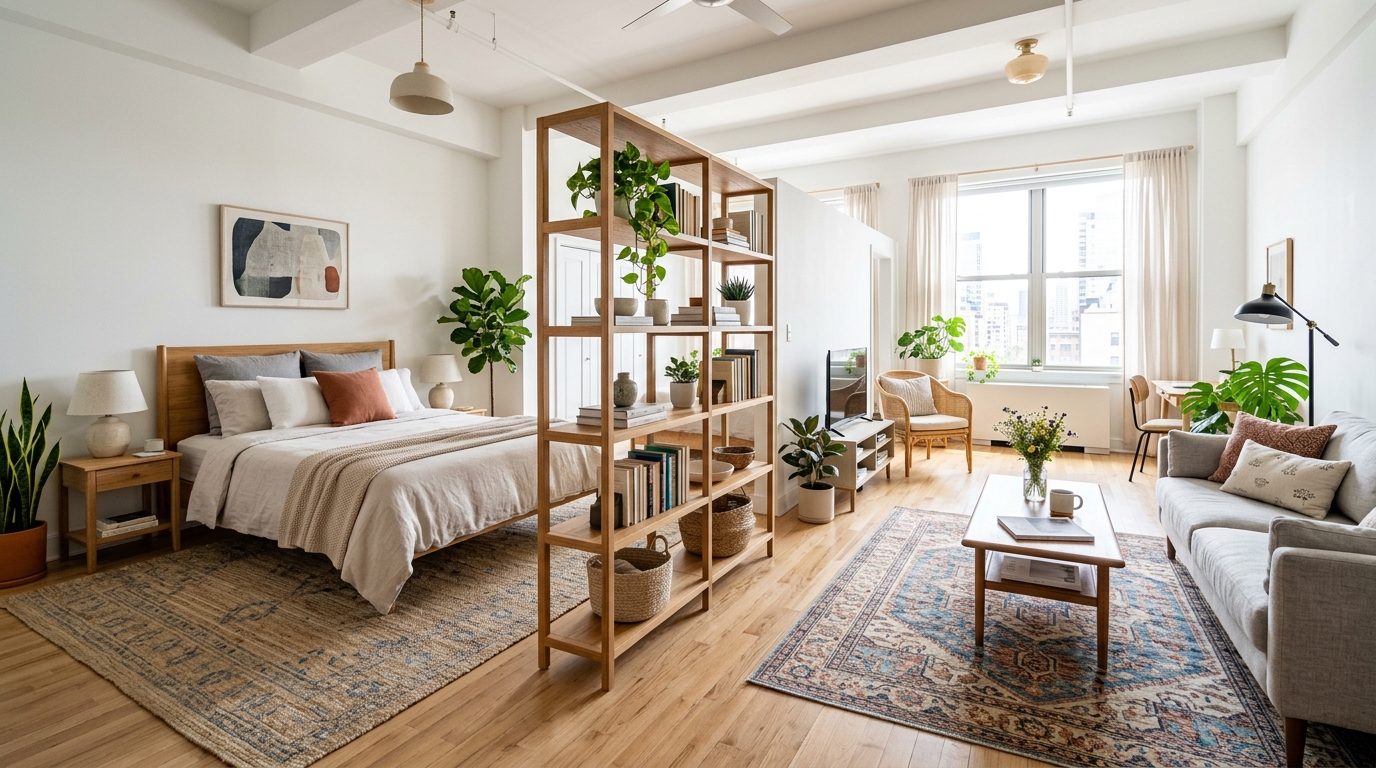
- Define zones without walls. A rug under the bed and a different rug under the sofa tells your brain “bedroom” and “living room” even in one open box. Zones make a studio feel like a small apartment instead of one cramped room.
- Use a room divider you can see through. An open shelving unit or a slatted screen separates sleep from living while still letting light and sightlines pass — so you get privacy without losing openness.
- Make the bed disappear by day. A Murphy bed, a daybed styled as a sofa, or even a fitted cover and bolster pillows reclaim your studio’s biggest piece of furniture for daytime hours.
Here’s the mindset shift that ties all twenty together: you’re not trying to fool anyone into thinking you live in a mansion. You’re making the space you have feel intentional, open, and yours. A small apartment that’s well-designed always beats a big one that isn’t.
Your Simple Weekend Plan: Make a Small Apartment Feel Bigger in 3 Steps
Twenty tips can feel like a lot. So here’s how to make a small apartment feel bigger starting this Saturday, without the overwhelm.
- Clear first. Spend the first morning on surfaces and floor only. Box anything that doesn’t have a home. You’ll see “new” space before you spend a dollar.
- Light second. Hang one large mirror across from your main window and lift your curtain rod to the ceiling. This is the highest-impact, lowest-cost move on the entire list.
- Lift third. Get your most-used items off the floor and onto the walls — one shelf, one wall-mounted surface. Reclaim that footprint for something you actually enjoy.
Do those three things and you’ll feel the difference by Sunday night. Everything else on this list is a bonus you can layer in over the coming weeks.
Common Mistakes That Make a Small Apartment Feel Even Smaller
Mistake 1: Buying tiny furniture for a tiny room. Too many small pieces create visual clutter. Fewer, properly scaled pieces almost always feel roomier.
Mistake 2: Lining every wall with stuff. A wall-to-wall perimeter of furniture boxes the room in. Leave gaps; let the floor show.
Mistake 3: Relying on one overhead light. Single-source lighting flattens the room and deepens every shadow. Layer it.
Mistake 4: Going all-dark for “cozy.” Dark, busy walls can look stunning — but in a windowless corner they shrink the room. Use bold color as an accent, not the whole envelope.
Mistake 5: Storing everything in sight. Open shelving crammed full reads as chaos. Keep some breathing room on every shelf.
Quick Reference: Cost vs. Impact of Each Fix
| Fix | Typical Cost | Effort | Space-Feel Impact |
|---|---|---|---|
| Large mirror opposite window | $40–$120 | Low | ★★★★★ |
| Floor-to-ceiling curtains | $30–$80 | Low | ★★★★☆ |
| Layered lighting (2–3 lamps) | $50–$150 | Low | ★★★★☆ |
| Furniture with visible legs | $0 (swap) | Medium | ★★★★☆ |
| Floor-to-ceiling shelving | $60–$200 | Medium | ★★★★☆ |
| Wall-mounted desk/nightstand | $40–$150 | Medium | ★★★☆☆ |
| Zone rugs (studio) | $50–$180 | Low | ★★★★☆ |
| See-through room divider | $80–$250 | Medium | ★★★☆☆ |
| Declutter + matching bins | $20–$60 | Medium | ★★★★★ |
Costs are rough 2026 U.S. estimates and vary by city and brand.
Final Thoughts: Your Small Apartment Has More Room Than You Think
Remember that closed-in feeling when you walked through the door at the start? It was never really about the square footage.
Learning how to make a small apartment feel bigger is mostly about giving your eyes somewhere to go — more light, more height, fewer things stopping the view. None of these 20 tips require a renovation, a landlord’s blessing, or a big bank balance. Most need a free afternoon and a willingness to edit what you own.
With rents climbing and apartments shrinking across the country in 2026, getting more feeling out of every square foot isn’t just nice — it’s how you actually enjoy where you live right now.
So pick one tip. The mirror, maybe, or a single cleared surface. Do it today and notice how the room answers back. Your space is waiting to feel bigger — you just have to let the light in.
Save this post, try one fix this weekend, and send it to the friend whose studio is driving them quietly up the wall.
Frequently Asked Questions
Q: What’s the single fastest way to make a small apartment feel bigger?
Hang one large mirror directly across from your main window. It bounces daylight through the room and reads almost like a second window, which instantly opens up the space. It’s the best return on effort of any tip here.
Q: Do darker colors really make a small apartment look smaller?
Not always — it depends on light. In a room with good natural light, a dark accent wall can add depth. But in a dim or windowless space, dark, busy walls absorb light and close the room in. As a safe rule, keep large surfaces light and save bold color for accents.
Q: How do I make a studio apartment feel larger when everything’s in one room?
Create zones. Use separate rugs and an open, see-through divider to visually separate sleeping, living, and working areas without blocking light. Defined zones make a studio read as a thoughtfully arranged small apartment rather than one crowded room.
Q: Are these tiny apartment design tips renter-friendly?
Yes — nearly all of them are. Mirrors, lamps, rugs, tension rods, adhesive hooks, and freestanding shelves leave no damage and move with you. Skip anything requiring permanent changes, and you’ll keep your full deposit while still making a small apartment feel bigger.
