

You sign the lease, drop off the deposit, and walk into four beige walls you’re not allowed to touch.
Last Updated: June 17, 2026
It’s frustrating. You want a home that feels like yours, but every nail hole feels like a future deduction waiting to happen.
That fear is justified, too. Knowing how to decorate a rental without damaging anything has quietly become one of the most valuable skills a renter can have right now.
Here’s why: the typical U.S. asking rent sat around $1,895 a month in early 2026, and security deposits often run one to two months of rent on top of that. For a one-bedroom, that deposit can easily land between $1,000 and $2,000 — real money you don’t want to gamble on a curtain rod.
The good news? You don’t have to choose between a stylish space and a full refund. This guide walks you through 12 deposit-safe ways to make a rental feel like home — and the common mistakes that quietly cost renters hundreds.
Why Knowing How to Decorate a Rental Matters More in 2026
Renting used to feel temporary. Now, for a growing share of Americans, it’s the long-term plan — which makes living in a blank box for years feel a lot less acceptable.
The numbers back up the pressure. Rents climbed roughly 2% year-over-year heading into 2026, and while growth has cooled, prices are still near record highs after the pandemic surge. When you’re paying that much, you want the space to actually feel good.
Then there’s the deposit. Across the U.S. in 2026, deposits commonly range from about $800–$1,500 for a studio up to $1,400–$2,800 for a two-bedroom, with major metros running higher.
Here’s the part most renters underestimate: nearly 30% of renters lose part of their deposit over move-out damage they could have prevented. That’s not bad luck — it’s usually a handful of avoidable renter-friendly decorating choices missed.
Deposit disputes are also among the most common complaints tenants file nationally, and one Zillow survey found 41% of renters had at least one move-out disagreement over repair or cleaning costs. Learning how to decorate a rental the smart way is really just learning how to protect your own cash.
Start Here: Read Your Lease Before You Decorate Anything
Before you buy a single thing, open your lease and find the section on alterations.
Some leases ban nail holes outright. Others allow “reasonable” hanging but charge for patching. A few are surprisingly relaxed. You can’t decorate confidently until you know which kind you signed.
Take five minutes to photograph every room the day you move in — corners, walls, floors, fixtures, existing scuffs. Date-stamped move-in photos are your single best defense if a landlord later claims you caused damage.
I know someone who lost $300 over a “scratched” floor that was already there on day one. She had no photos. Her neighbor, same building, fought an identical charge and won — because he had time-stamped pictures.
This matters even more now that some states are tightening the rules. In California, for example, a 2025 law (AB 2801) requires landlords to provide photographic evidence before withholding part of a deposit for repairs or cleaning. Your photos sit on the other side of that same conversation.
Document first, decorate second — your move-in photos are worth more than any deposit-protection trick in this guide.
→ Related: 17 Renter-Friendly Apartment Upgrades That Won’t Cost Your Deposit
12 Proven Ways to Decorate a Rental Without Losing Your Deposit
Now for the fun part. These are renter-tested, landlord-friendly ideas — organized roughly from easiest to most ambitious.
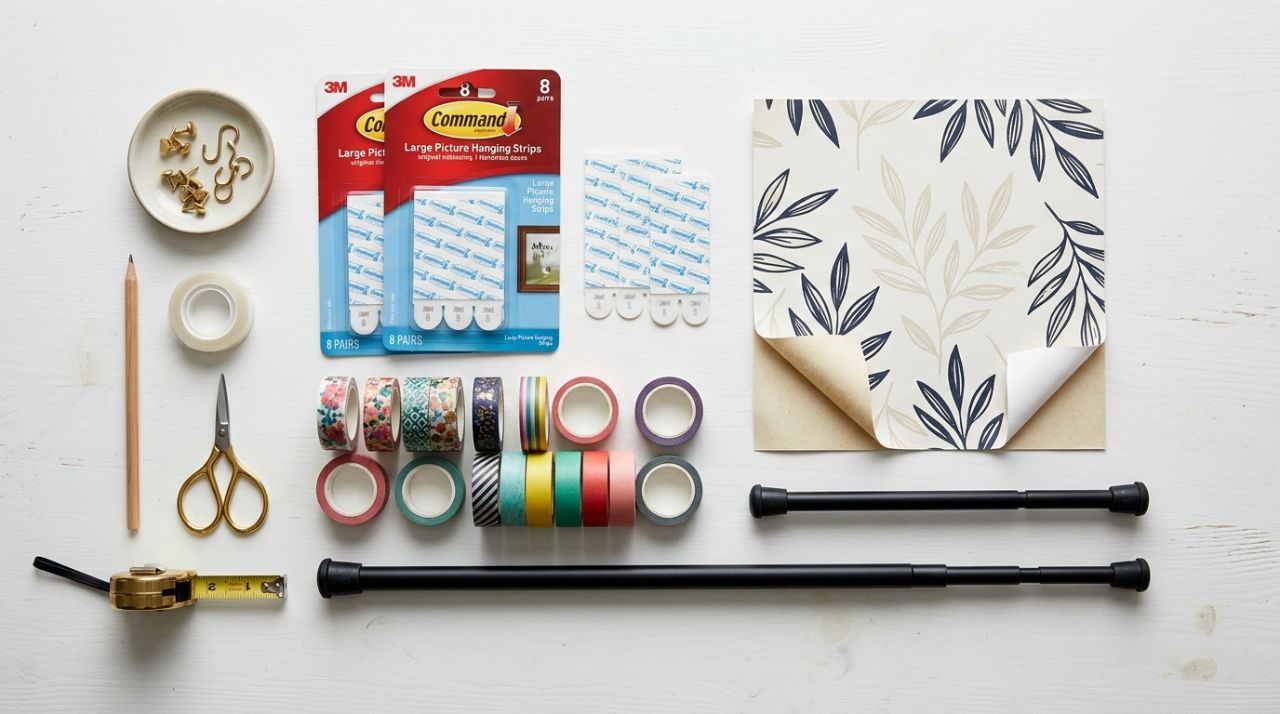
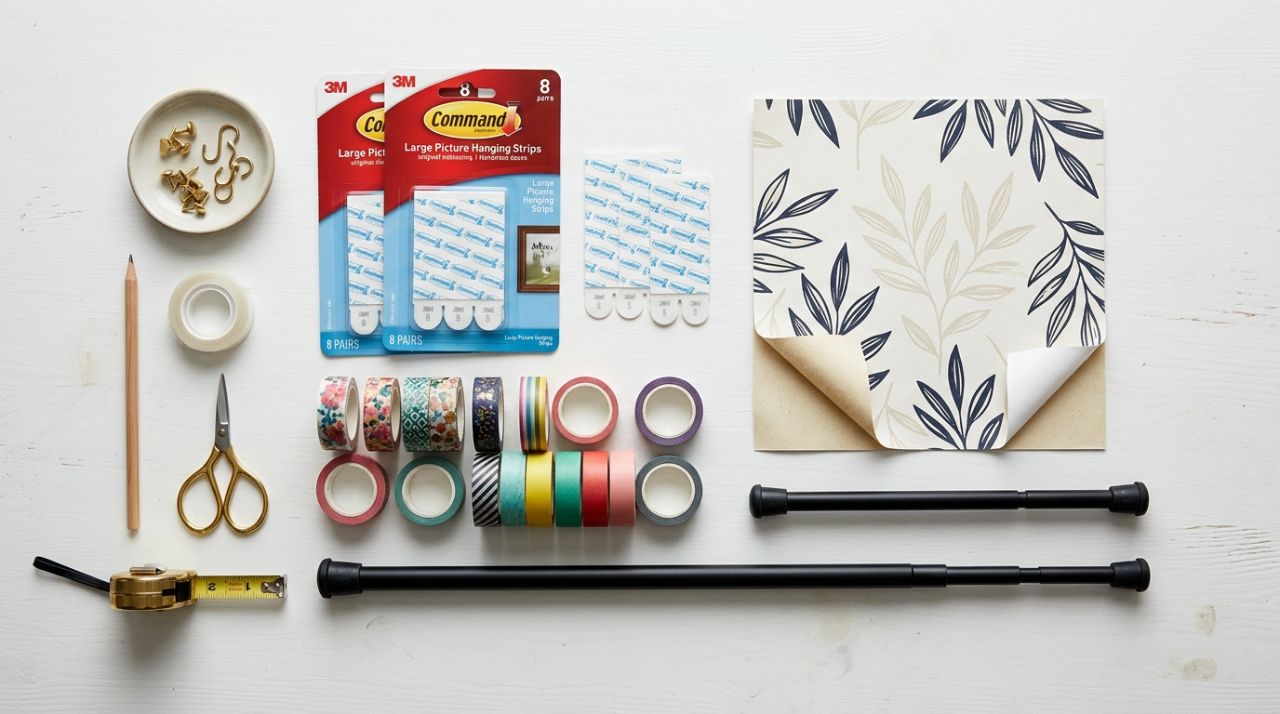
1. Hang art with removable adhesive strips, not nails. Modern adhesive hooks and picture strips hold real weight and peel off cleanly when you pull the tab straight down. Stick to the weight limit on the packaging and you’ll never see a hole.
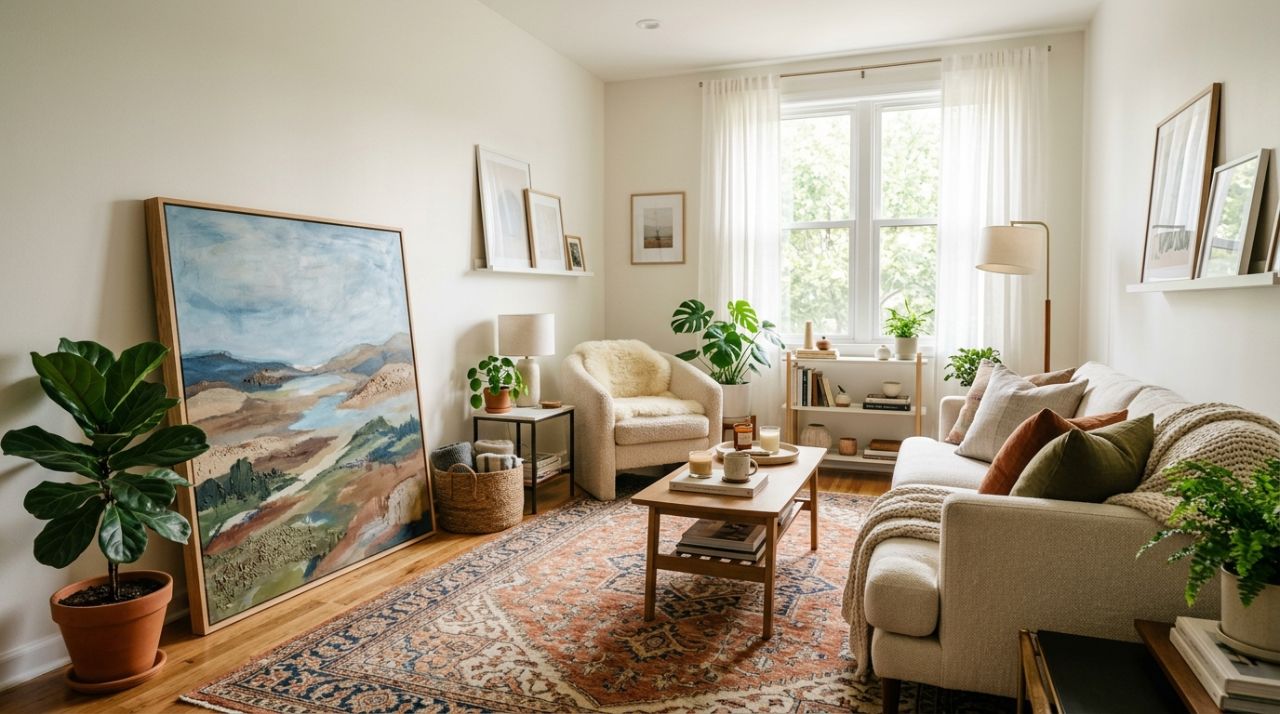
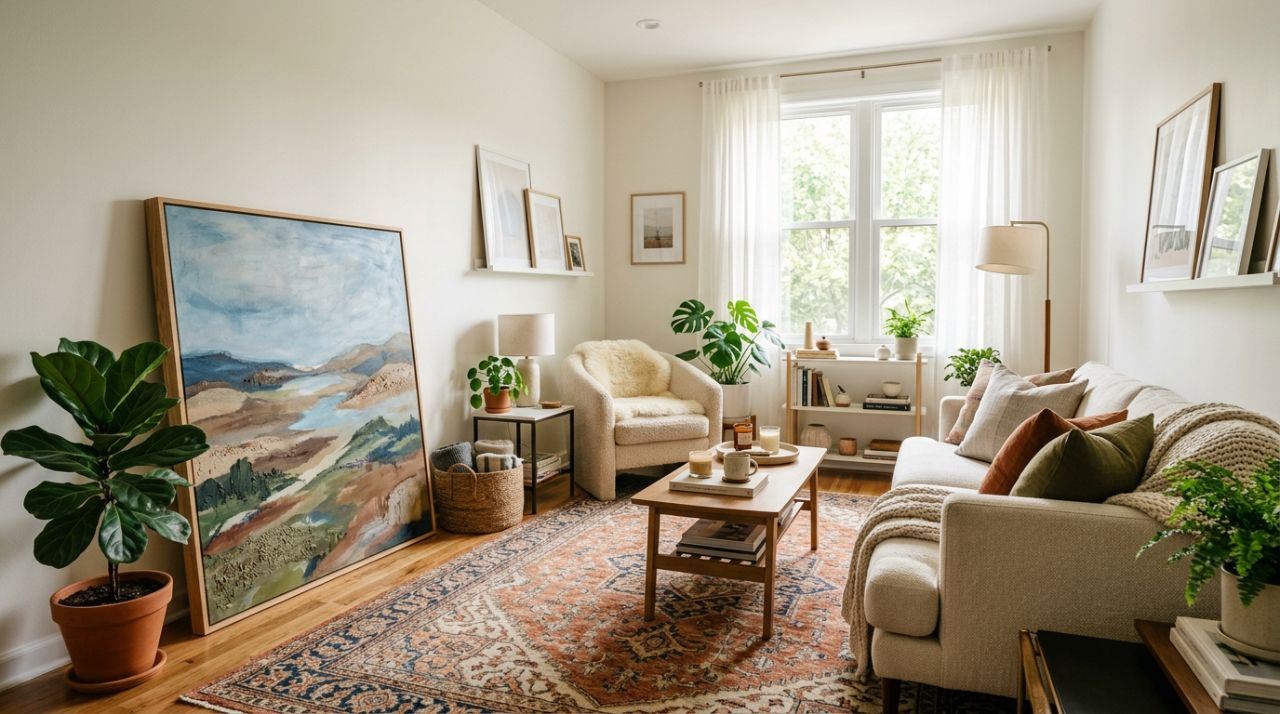
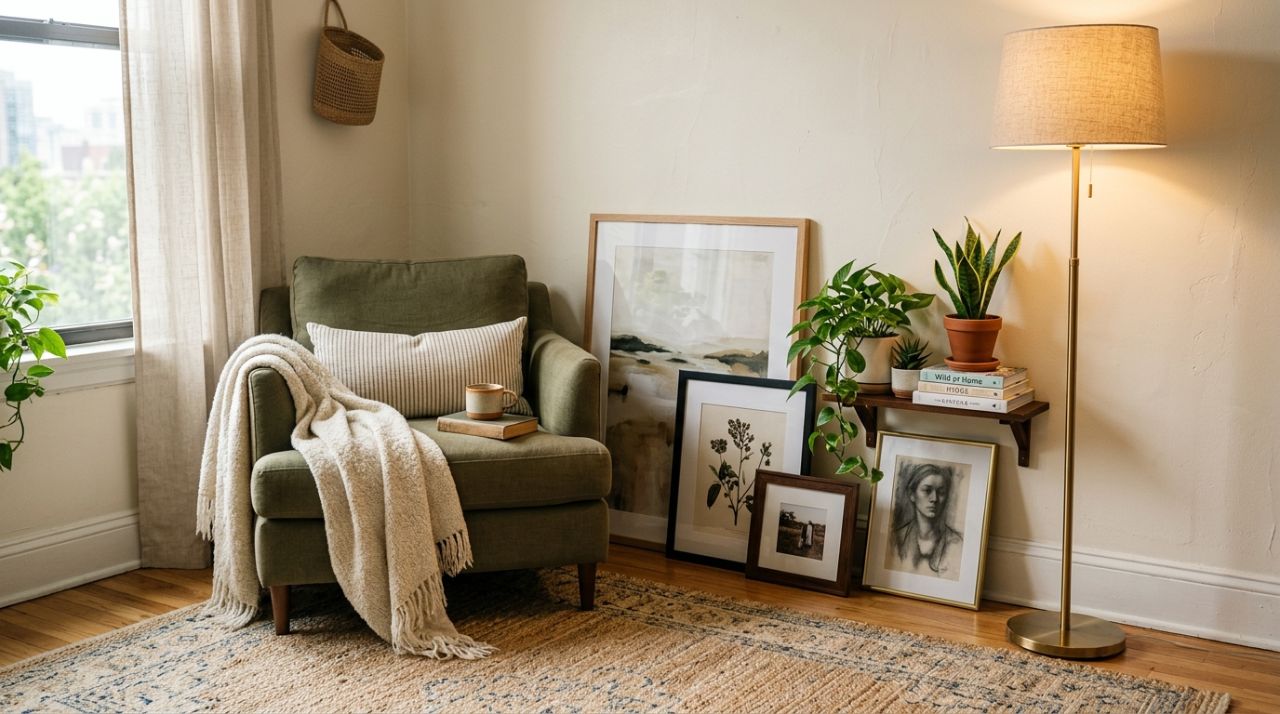
2. Lean it instead of hanging it. Oversized framed prints and floor mirrors look intentional leaned against a wall — and they touch zero drywall. A big leaning mirror also bounces light and makes a small apartment read larger.
3. Use peel-and-stick wallpaper on one accent wall. The 2026 versions come in fabric textures, matte finishes, and PVC-free materials that look nothing like the old contact-paper era. Apply it to a clean, smooth, primed wall and remove it slowly from a top corner, warming stubborn spots with a hair dryer.
4. Try the peel-and-stick “headboard” hack. Can’t justify a real upholstered headboard? Apply two or three panels of bold wallpaper behind the bed. It frames the sleeping area and instantly makes the room feel designed.
5. Add removable peel-and-stick tile to a tired kitchen or bath. “Tile-look” panels refresh a dated backsplash without grout or commitment — just keep them a few inches clear of the stovetop for safety.
6. Outline with washi tape. At a few dollars a roll, washi tape creates faux frames, geometric wall designs, or accent borders that peel off without a trace. It’s the lowest-risk, lowest-cost upgrade on this list.
7. Soften walls with textiles. A large tapestry, woven hanging, or fabric panel adds warmth, absorbs echo, and hides an ugly wall — all hung from a couple of damage-free adhesive hooks or a tension rod.
8. Use tension rods everywhere. Beyond curtains, tension rods create room dividers, hang plants in a window, or section off a closet. They press between two surfaces and leave nothing behind.
9. Bring in plants as living decor. Hanging planters, a tall floor plant beside the sofa, or a shelf of greenery adds life and color with zero permanent changes. (Just check your lease on hanging hardware.)
10. Swap the lighting. Plug-in sconces, floor lamps, and battery LED strips replace harsh builder lighting without an electrician. Warm, layered light changes a room’s whole mood more than people expect.
11. Add peel-and-stick crown molding. Lightweight foam molding goes up like a long sticker, breaks the line between wall and ceiling, and peels off at move-out. It turns “builder-beige box” into “finished room” in an afternoon.
12. Style the floor, not the walls. A large area rug anchors the space, defines zones in a studio, and covers scuffed or dated flooring — no installation, no risk.
The throughline across all twelve: every single one removes cleanly, so your move-out photos match your move-in photos.
The Renter-Friendly Decor Mistakes That Quietly Cost You
Even careful renters slip up. Here are the errors that turn into deductions.
Mistake 1: Ignoring the wall texture. Adhesive products grip smooth, painted walls best. On heavily textured or freshly painted walls (paint needs about three to four weeks to fully cure), strips can fail — taking paint with them. Test in a hidden spot first.
Mistake 2: Removing decor on a hot day. Heat softens adhesive and makes it cling to paint. Remove hooks, strips, and peel-and-stick wallpaper in cool conditions, pulling slowly and low against the wall.
Mistake 3: Overloading a hook. That “holds 7.5 lbs” rating is real — and so is the gouge when you hang a 12-pound mirror on it and it rips free. Match the product to the weight, every time.
Mistake 4: Going over old wallpaper or dirty walls. Peel-and-stick needs a clean, flat surface. Seams and grime underneath cause bubbling, poor grip, and messy removal.
Mistake 5: Skipping the move-out cleanup. After you peel everything off, wipe walls with mild soap and re-photograph. A clean wall plus matching photos is what actually closes the deposit conversation.
Would you rather spend ten careful minutes removing a hook the right way, or argue with a property manager three states away about a paint chip? Same choice, very different outcomes.
→ Related: How to Furnish an Apartment Under $500 in 2026 (7 Proven Ways)
A Real Scenario: How Maya Got Her Full Deposit Back
Maya moved into a $1,500-a-month one-bedroom with an $1,800 deposit and a strict no-nails lease. The walls were the kind of flat beige that makes a place feel borrowed.
Instead of risking holes, she did this: a peel-and-stick accent wall behind the bed, a big leaning mirror in the living room, adhesive hooks for her art, washi-tape “frames” in the hallway, and a rug that covered a scuffed patch of floor. Total spend: under $250.
She also photographed every room the day she moved in and the day she moved out.
Twelve months later, removal took one careful weekend. Everything peeled clean. Her move-out photos matched her move-in photos exactly — and her full $1,800 deposit landed back in her account with no phone call and no fight.
The lesson isn’t that Maya got lucky. It’s that she treated decorating and documenting as the same project.
How to Decorate a Rental on a Tight Budget
You don’t need a big budget to know how to decorate a rental well — you need a smart order of operations.
Start with the highest-impact, lowest-cost moves: washi tape, a rug, and lighting. These three alone can transform a room for under $100 and carry almost no deposit risk.
Next, invest in pieces that move with you. A leaning mirror, quality area rug, and good floor lamp aren’t apartment decorations — they’re furniture you’ll keep for years and across multiple leases. This is the part of how to decorate a rental that actually saves money long-term.
Save peel-and-stick wallpaper for one focal wall rather than a whole room. It costs less, installs faster, and removes more reliably. One bold accent does more work than four busy walls anyway.
Spend on portable pieces you’ll reuse, not on permanent changes you’ll have to undo. That single rule keeps both your space stylish and your deposit intact.
→ Related: 9 Underrated Space-Saving Furniture Ideas for Small Apartments
Final Thoughts: Make It Home Without the Risk
Remember those four beige walls from the start — the ones you weren’t allowed to touch?
They were never the real problem. The real problem was thinking you had to choose between a home that feels like you and a deposit that comes back in full. You don’t. Knowing how to decorate a rental simply means decorating in a way that’s designed to be undone.
With deposits running into the thousands and rents still high in 2026, that skill pays for itself the moment you move out. Every removable adhesive hook, leaning mirror, and peel-and-stick panel is quietly protecting your refund.
So start small this week. Photograph your rooms, pick one wall, and try a single idea from this list. Save this post so you’ve got the full playbook when you’re ready for the next.
Frequently Asked Questions
How can I decorate a rental without losing my security deposit?
The whole secret to how to decorate a rental safely is sticking to removable solutions — adhesive hooks and strips, peel-and-stick wallpaper, leaning art and mirrors, washi tape, and rugs — so nothing leaves a permanent mark. Photograph every room at move-in and move-out, and remove everything carefully in cool conditions. Done right, your refund stays untouched.
Does peel-and-stick wallpaper really come off without damaging paint?
Usually yes, if you apply it to a clean, smooth, fully cured wall and remove it slowly from a top corner, using a hair dryer to loosen stubborn spots. Problems mostly happen on freshly painted, textured, or dirty walls. Always test a small hidden area before committing to a whole wall.
What’s the safest way to hang art in a rental with a no-nails lease?
Use heavy-duty adhesive picture strips rated above your frame’s weight, or skip the wall entirely and lean larger pieces on a shelf, dresser, or floor. For galleries, damage-free adhesive hooks on a smooth wall work well. Just respect the weight limits — overloading is the top cause of paint damage.
Is it worth decorating a rental if I might move in a year?
Yes — and it’s smarter than people think. Focus your money on portable pieces (rugs, mirrors, lamps, framed art) that move with you to the next place, and keep wall changes cheap and removable. You get a home that feels like yours now plus decor you’ll reuse for years.
→ Related: How to Find a Roommate Safely: 7 Proven Steps for 2026
→ Related: 15 Proven Small Balcony Ideas on a Budget (Smart 2026 Upgrades)
