

Imagine opening your savings account next New Year’s Eve and seeing $1,378 sitting there — money you barely noticed leaving your pocket.
That’s not a fantasy. It’s exactly what the 52 week money challenge does, and it might be the simplest savings plan you’ll ever try.
Here’s the gut-punch behind why this matters. A 2025 Bankrate report found that 59% of Americans don’t have enough savings to cover an unexpected $1,000 emergency expense. A busted car, a surprise medical bill, a broken fridge — and suddenly you’re reaching for a credit card.
This challenge fixes that quietly, one small deposit at a time. No budgeting apps. No spreadsheets full of guilt. Just a tiny weekly habit that snowballs into real money.
In this guide, you’ll get the full week-by-week breakdown, three easy ways to run it, the mistakes that make people quit by March, and a few clever shortcuts to make it almost effortless. Ready to actually finish a savings goal this year?

What Is the 52 Week Money Challenge (and Why It Works)
The idea is almost embarrassingly simple. You save an amount that matches the week number. Week 1, you tuck away $1. Week 2, $2. Week 26, $26. By the final week of the year, you set aside $52.
Add all 52 weeks together and you land on exactly $1,378 — no rounding, no tricks.
Why does something this basic actually work? Because it removes the part of saving people hate most: the big, scary commitment. Telling yourself “I’ll save $1,378 this year” feels impossible. Telling yourself “I’ll save $4 this week” feels like nothing.
That’s the secret. The 52 week money challenge hides a serious goal inside painless steps. It’s the financial version of “couch to 5K” — you build the muscle before you even notice you’re running.
Here’s the thing about momentum: once you’ve stacked eight or nine weeks in a row, you don’t want to break the streak. The habit starts protecting itself.
Related: How to Set Up Sinking Funds — once you’ve built the habit, use sinking funds to keep multiple savings goals running at the same time.
The Full 52 Week Savings Challenge Breakdown
Let’s see the shape of it. The early weeks feel like loose change; the back half is where the real saving happens.
- Weeks 1–13 (first quarter): You save $1 through $13. Total saved so far: $91. Easy mode.
- Weeks 14–26 (second quarter): Deposits climb from $14 to $26. Quarter total: $260. Running total: $351.
- Weeks 27–39 (third quarter): $27 up to $39. Quarter total: $429. Running total: $780.
- Weeks 40–52 (final quarter): $40 up to $52. Quarter total: $598. Final total: $1,378.
Notice something? More than half your money — $598 — comes in the last 13 weeks, right around the holidays.
That back-loaded design is the single biggest reason people abandon the challenge. December asks for $49, $50, $51, and $52 in four straight weeks, exactly when your budget is already stretched thin with gifts and travel.
Don’t worry — the next section solves that completely.
The Reverse Method: A 52 Week Savings Challenge Printable Hack
Here’s a twist most beginners never hear about: run the challenge backwards.
Start week 1 by saving $52. Week 2, save $51. Keep counting down until your final week of the year asks for just $1.
The math is identical — you still finish with $1,378. But now the hardest deposits happen in January, when your motivation is sky-high and your wallet hasn’t been hammered by holiday spending yet.
Picture Maria, a nursing student in Ohio. She tried the standard version two years running and quit both Decembers. Last year she flipped it, front-loaded the big weeks in winter, and coasted to the finish in December saving pocket change. She crossed the finish line for the first time.
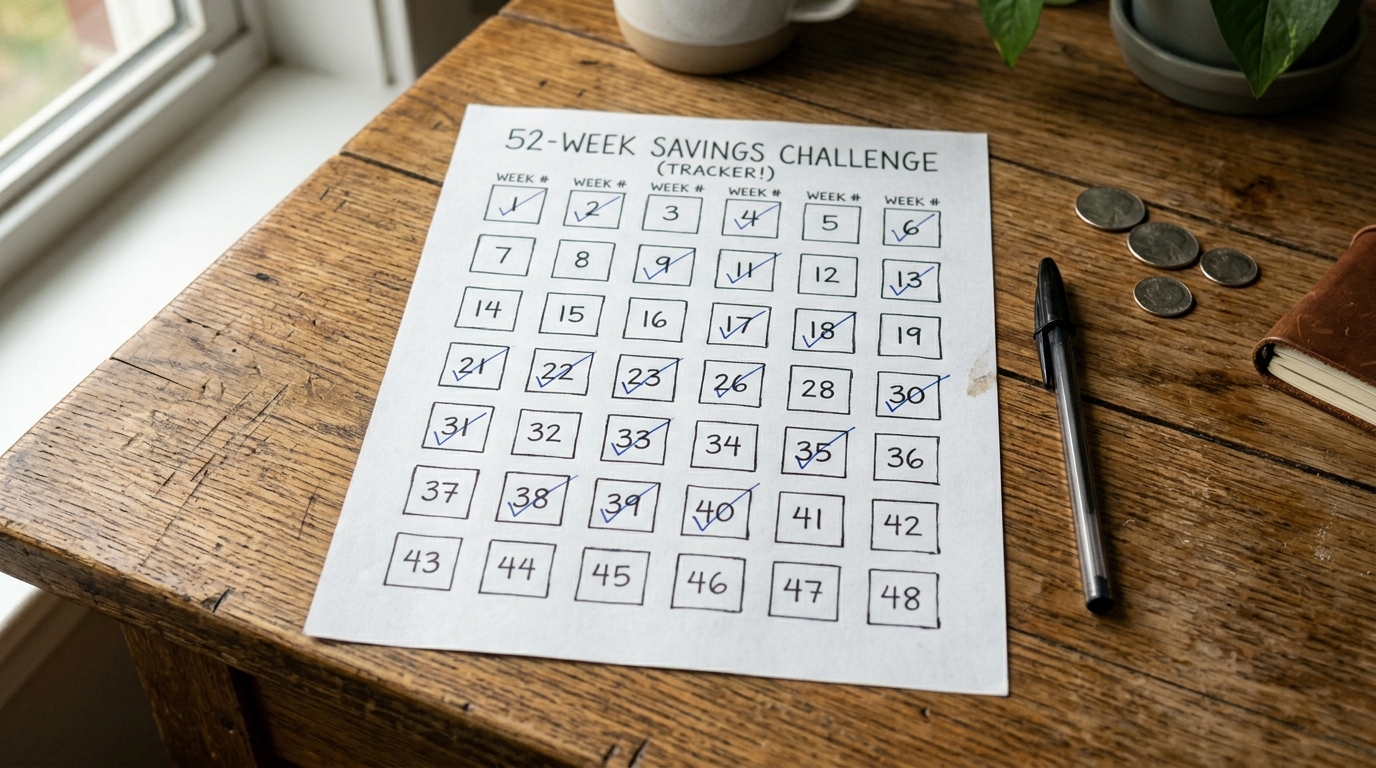
A free 52 week savings challenge printable makes either version stick. Print the grid, stick it on your fridge, and color in a box every week. That tiny dopamine hit of checking off a square is weirdly powerful.
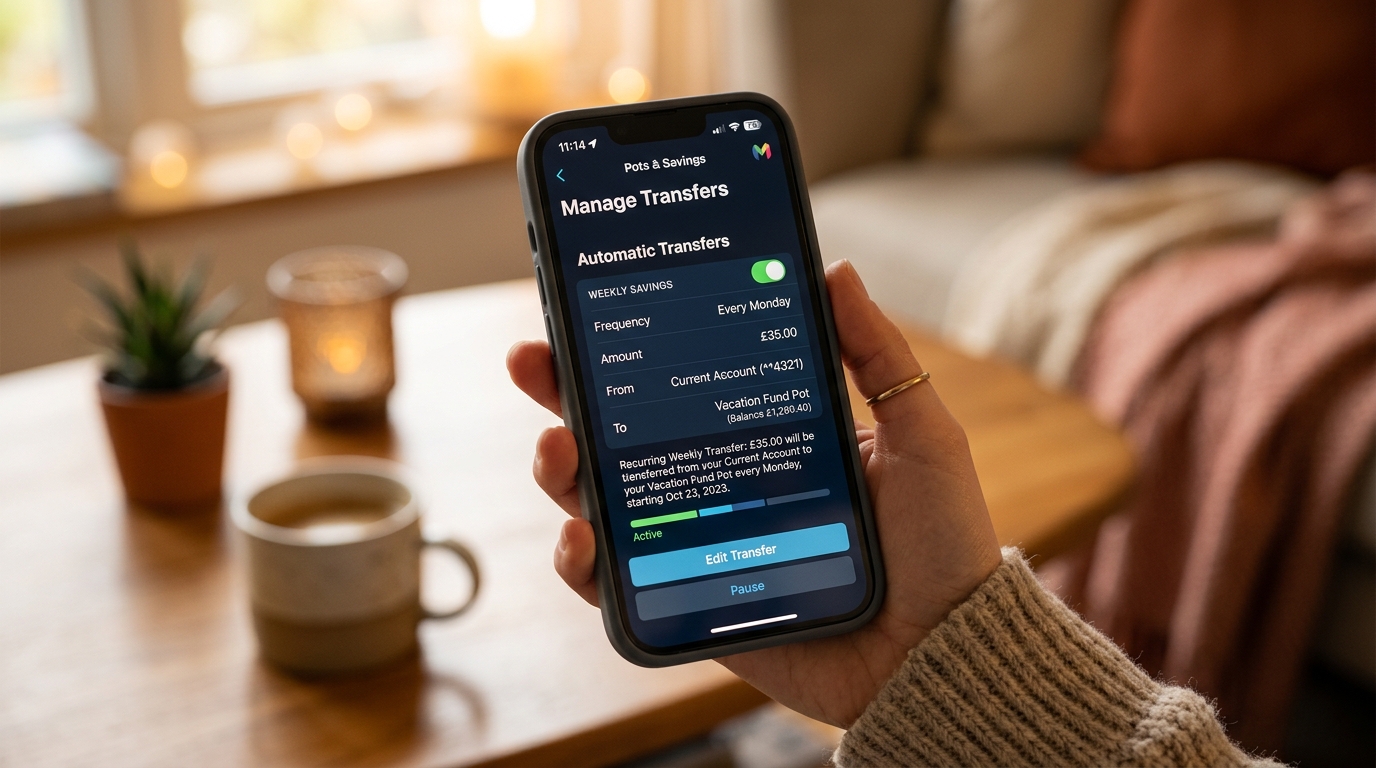
Prefer digital? A locked savings account or an automatic weekly transfer does the same job without the marker.
How to Start the Money Challenge in 2026 (Step-by-Step)
- Pick your account. Open a separate savings account so the cash isn’t sitting in your everyday checking, tempting you. Out of sight, out of spending.
- Choose your direction. Standard (small to big) or reverse (big to small). If money’s tight at year-end, go reverse.
- Automate what you can. Set a recurring weekly transfer if your bank allows custom amounts, or batch it into monthly transfers using the quarter totals above. Automation beats willpower every single time.
- Track it visibly. Use a printable, a whiteboard, or a note on your phone. Seeing progress is what keeps you going when the novelty fades around week 6.
- Build a buffer week. Skip a week? Don’t quit — just double up next week or borrow from a high-deposit week later. Flexibility keeps you in the game.
Want to supercharge it? Round up. Anytime you’d normally grab a $6 coffee, drop that $6 in instead. Small swaps quietly accelerate the whole yearly savings challenge.
4 Mistakes That Make Beginners Quit
Most people don’t fail this challenge because it’s hard. They fail because of avoidable traps.
Mistake 1: Mixing it with your spending money. When the savings sit in checking, they vanish into everyday purchases. Fix it by using a dedicated account you don’t carry a card for.
Mistake 2: Going all-in on the standard version. The holiday-heavy back half breaks people. If December scares you, run it reverse from day one.
Mistake 3: Treating one missed week as failure. Life happens. A skipped week isn’t the end — it’s a $30 catch-up next week. Perfection isn’t the goal; finishing is.
Mistake 4: Not making it visible. Out of sight means out of mind. A tracker on the fridge does more for your follow-through than any app notification ever will.
Avoid these four, and your odds of crossing the finish line jump dramatically.

Why This Beginner Savings Challenge Hits Different in 2026
There’s a reason savings challenges are exploding right now. With living costs still high and that 59% emergency-fund gap hanging over so many households, people are craving structure — a plan that doesn’t require a finance degree or a strict budget.
The 52 week money challenge delivers exactly that. It’s structured enough to work, gentle enough to start, and flexible enough to survive a rough month.
And $1,378 is no small thing. It’s most of a $1,000 emergency cushion plus a little extra. It’s a flight home. It’s the difference between reaching for a credit card and reaching for your own savings.
Think of it as planting a tree. The first weeks feel like nothing’s happening — then suddenly there’s shade you can actually use.
Final Thoughts: Your $1,378 Starts With One Dollar
Remember that imaginary New Year’s Eve from the start — the one where you check your account and see $1,378 staring back?
That number isn’t built from heroic effort or a six-figure salary. It’s built from a single dollar, repeated, with a little patience layered on top. The 52 week money challenge proves that small, boring consistency beats big, dramatic intentions almost every time.
You don’t need the perfect month or a fat paycheck to begin. You need one dollar and the decision to start this week. That’s genuinely it.
So here’s your move: open a savings account today, pick standard or reverse, and make your first deposit before you close this tab. Save this guide, share it with a friend who needs a push, and start your week 1 right now.
Related: Zero Based Budgeting for Beginners — once you’ve built the savings habit, pair it with a proper budget to keep every dollar working for you.
Frequently Asked Questions
Q: How much do you save with the 52 week money challenge?
You save exactly $1,378 over a full year. Each week you set aside an amount equal to the week number — $1 in week one, up to $52 in week 52 — and it all adds up to $1,378. The total stays the same whether you run it forward or in reverse.
Q: Can I do the 52 week money challenge if I’m broke or just starting out?
Yes — that’s exactly who it’s designed for. The first weeks ask for just a few dollars, so almost anyone can begin. If the bigger end-of-year deposits worry you, run the challenge in reverse so the small amounts land in December.
Q: Is there a 52 week savings challenge printable I can use?
Absolutely, and a printable tracker is one of the best ways to stay consistent. Print a grid of 52 numbered boxes, stick it somewhere you’ll see daily, and check off each week as you deposit. The visual progress keeps motivation high through the tougher months.
