

Picture this: it’s the 23rd of the month, you check your bank balance, and your stomach drops a little. You’re not reckless. You’re not buying yachts. You’re just… tired of money feeling tight all the time.
You’re far from alone. In a CNN/SSRS poll from May 2026, 76% of Americans named the cost of living as their single biggest economic worry — up sharply from 58% just a year earlier.
Here’s the good news: the best frugal living tips aren’t about deprivation. They’re about spending on purpose so you keep more of what you earn — and still enjoy your life. This guide walks you through 11 realistic, modern strategies that save real money without making you feel broke.
No rice-and-beans-forever nonsense. Just smart moves that fit a normal 2026 life.

Why Frugal Living Tips Hit Different in 2026
Frugality used to carry a stigma — clipping coupons, reusing tea bags, feeling guilty about every latte. That version is dead.
The 2026 reality is different. Household spending now runs an estimated $78,000–$79,000 a year, while the personal savings rate has slipped to roughly 4.8% — meaning the average family keeps less than five cents of every dollar they earn.
Today’s frugal living tips are about strategy, not suffering — directing your money toward what matters and quietly cutting what doesn’t.
Think of your budget like a garden. You’re not refusing to water anything. You’re just pulling the weeds that drain resources so the plants you actually care about can grow.
That mindset shift changes everything. When saving money feels like freedom instead of punishment, you actually stick with it. And sticking with it is the whole game. A frugal lifestyle isn’t a 30-day challenge — it’s a set of quiet habits that compound month after month.
The old model framed every purchase as a test of willpower, which is exhausting and impossible to sustain. The 2026 model frames frugality as design: you build a system once, and it runs in the background. That’s far easier to keep up, and it’s why these frugal living tips work for real people with real jobs.
Related: How to Start a Budget With No Money: A Beginner’s Guide
Frugal Living Ideas for Your Biggest Expenses (Where the Real Money Is)
Here’s a mistake that’s easy to make: obsessing over $5 coffees while ignoring the $500 leaks. If you want frugal living ideas that move the needle in the USA, start with your three biggest costs — housing, transportation, and food.
These three swallow the majority of most budgets. The bottom-earning households spend roughly 73% of income on them alone.
1. Renegotiate or right-size your housing.
Rent isn’t always as fixed as it feels. Renters who ask for a renewal discount — especially long-term, reliable tenants — often get one. A polite email beats a silent $100/month increase.
Priya was bracing for a rent hike last spring. She sent a two-line message offering to re-sign for 14 months in exchange for holding the current rate. Her landlord said yes in an hour. That’s $1,400 saved over the year for the cost of one email.
2. Cut the second car (or the new-car payment).
The average new-car payment in 2026 is around $735 a month. Driving a reliable used vehicle can save $300–$500 monthly, and two-car households that downshift to one often save $6,000–$12,000 a year.
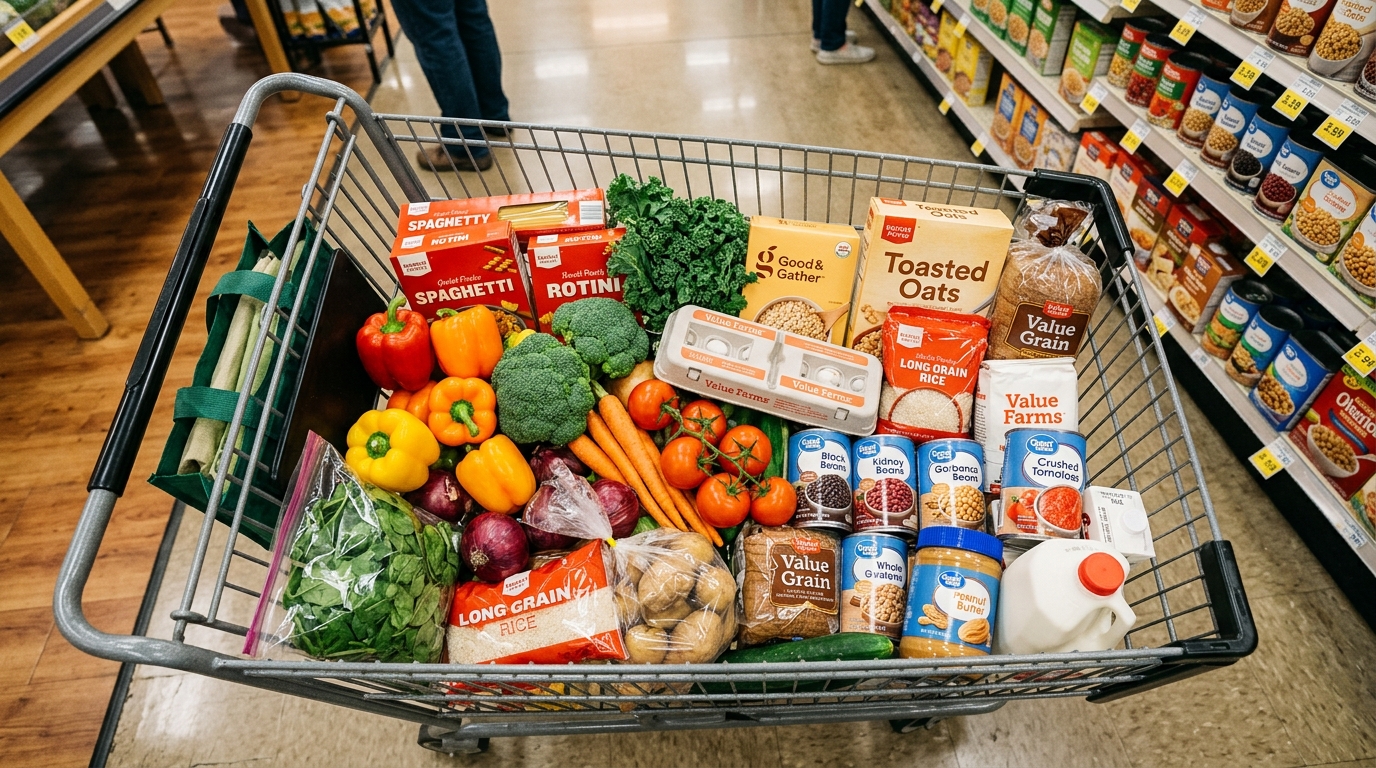
3. Shop groceries with a loose plan, not a rigid one.
Plan 4–5 anchor meals a week, buy store brands on staples, and leave room for what’s on sale. You eat well, waste less, and skip the daily “what’s for dinner” panic that ends in takeout.
To see why the big three matter so much, look at where the realistic savings actually live:
| Spending Area | Common Monthly Leak | Realistic Monthly Savings | Effort Level |
|---|---|---|---|
| Housing (rent/utilities) | Auto-accepting renewals | $50–$150 | Low (one email) |
| Transportation | New-car payment, two cars | $300–$600 | Medium |
| Groceries & dining | Unplanned takeout | $150–$300 | Low–Medium |
| Subscriptions | Forgotten services | $20–$80 | Very low |
| Impulse buys | No “pause” rule | $50–$200 | Low |
Add even the conservative end of those rows and you’re looking at $570–$1,330 freed up every single month — without a single thing you’d describe as suffering.
Easy Frugal Living Tips for Everyday Spending
Big wins matter, but the small daily stuff is where a frugal lifestyle either sticks or crumbles. The trick is making these easy frugal living tips automatic — so you’re not relying on willpower every single day.
The most effective everyday savings come from removing friction, not adding restriction.
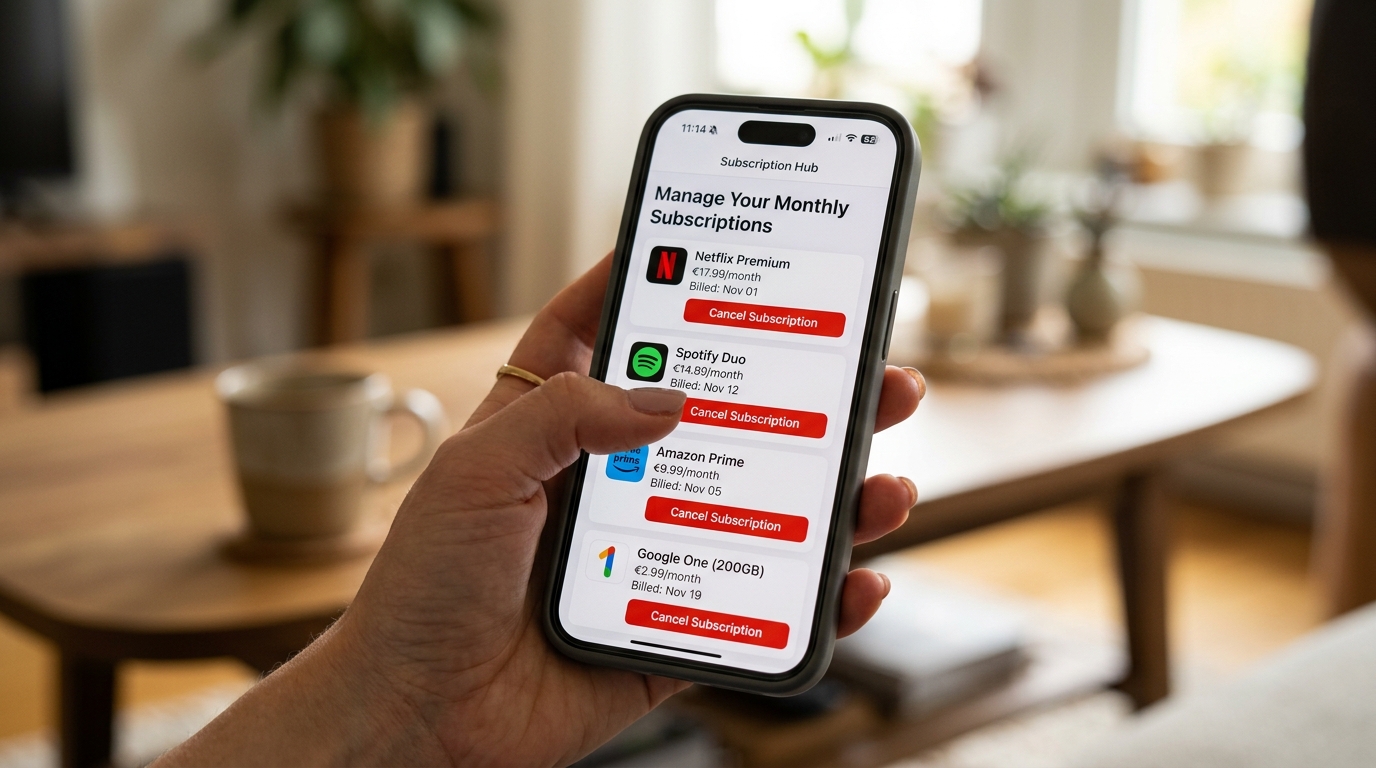
- Audit your subscriptions once a quarter. The average person forgets at least one they’re paying for. Cancel anything you haven’t touched in 60 days — you can always resubscribe.
- Use a 24-hour rule for non-essentials. See something you want online? Leave it in the cart for a day. Half the time the urge is gone by morning.
- Default to “free fun first.” A library card, a hiking trail, a potluck with friends — none of these feel like sacrifice, and they’re often more memorable than a $90 night out.
- Cook the meals you’d happily pay for. Frugal doesn’t mean joyless food. Make the restaurant burger at home and you save money and skip the wait.
- Buy generic where the brand doesn’t matter. Medicine, pantry staples, cleaning supplies, and basic clothing are often identical to name brands at half the price.
Notice none of this says “never enjoy anything.” That’s the point.
Big, painful cuts trigger a rebound — you white-knuckle it for two weeks, then “reward” yourself with a $200 splurge that erases the progress. Small, frictionless changes never trigger that backlash because you barely register them. Ever notice how the spending you regret is almost never the planned stuff? It’s the impulse buys, the forgotten subscriptions, the “might as well” upgrades.
How to Build Frugal Habits That Actually Stick
Knowing what to do is easy. Doing it past week three is the hard part. So let’s make these frugal habits run on autopilot.
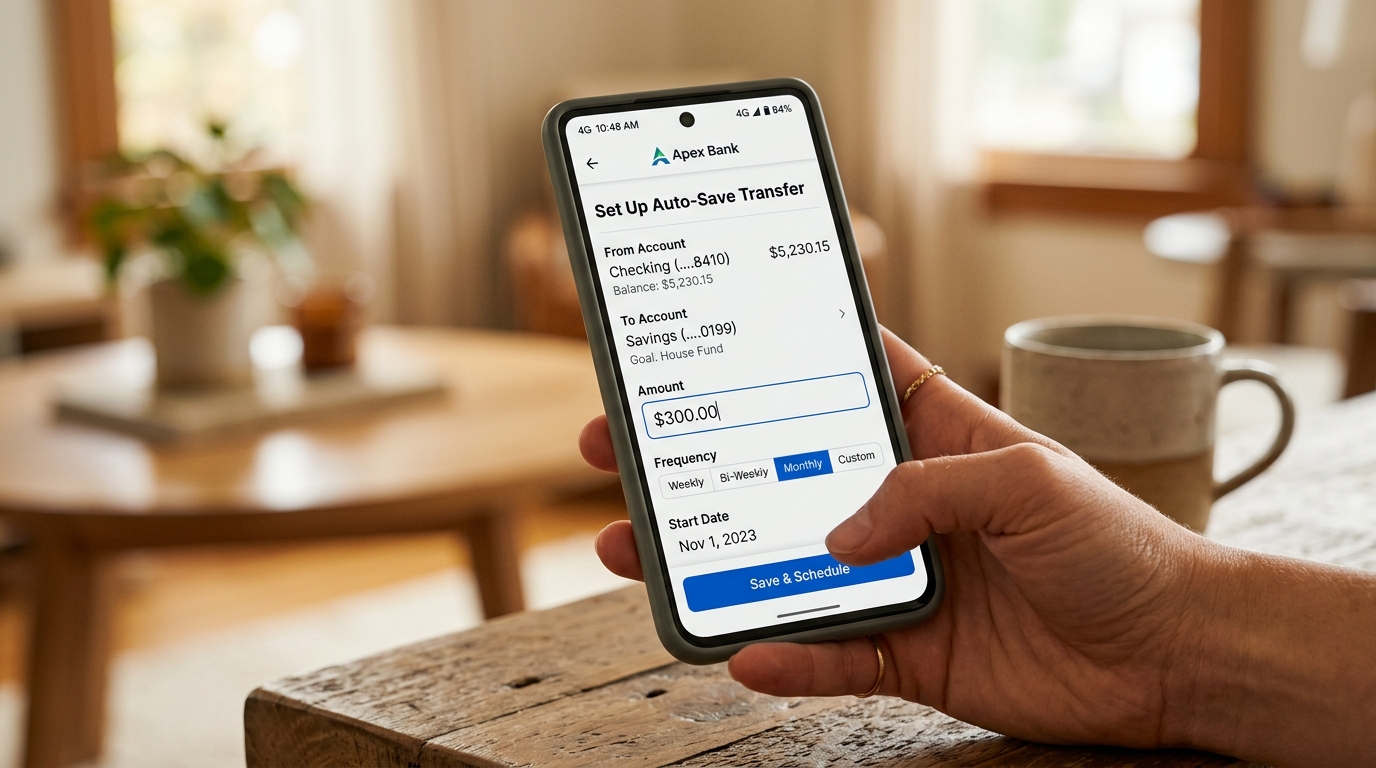
Step 1 — Automate your savings before you can touch it. Set an automatic transfer to a separate savings account for the day after payday. You can’t miss money that was never in your checking account. Start small — even $50 — and raise it quarterly.
Step 2 — Give every category a ceiling, not a ban. Instead of “no eating out,” try “$120 a month for eating out.” Permission with a limit beats prohibition every time. When Marcus, a renter in Ohio, switched from banning takeout to budgeting $100 for it, he actually spent less — because the limit made him choose intentionally.
Step 3 — Track for two weeks, then relax. You don’t need to log every penny forever. Track closely for 14 days, spot your patterns, then loosen up. Awareness does most of the work.
Step 4 — Build one “anti-budget” treat. Pick one thing you refuse to cut — your gym, your coffee ritual, your streaming service. Protecting it keeps the whole plan sustainable.
Step 5 — Review monthly, judge gently. Once a month, look back without shame. Overspent? Adjust the number. This is intentional spending, not a morality test.
The magic of these intentional spending tips is that they compound. A habit you keep for a year beats a heroic month you abandon.
Take Dana, a 29-year-old teacher renting in Austin. She wasn’t broke, but she never seemed to save either. Instead of a strict budget, she did three things: automated $75 to savings every payday, capped dining out at $130 a month, and protected her weekend climbing-gym membership as her one untouchable expense. Eleven months later she had just over $4,000 set aside — her first real emergency cushion ever — and she swears she never felt “poor” for a single day.
Common Frugal Living Mistakes That Backfire
Mistake 1: Being cheap instead of frugal. Buying the $8 shoes that fall apart in three months isn’t saving — it’s spending twice. Frugal means best value over time, not lowest price today. Fix: judge cost-per-use, not the sticker.
Mistake 2: Cutting joy completely. Going cold-turkey on everything fun is the fastest route to a blowout binge. Fix: protect one or two things you love and trim everywhere else.
Mistake 3: Ignoring the big three. Skipping name-brand ketchup while overpaying for rent and car payments is rearranging deck chairs. Fix: attack housing, transport, and food first.
Mistake 4: Doing it all in your head. Without a number on the page, “I’ll be more careful” lasts about four days. Fix: write the limits down, even on a sticky note.
The biggest mistake of all is treating frugality as a punishment instead of a path to freedom. When it feels like loss, you quit. When it feels like control, you keep going.

Final Thoughts: Frugal Living Tips That Set You Free
Remember that sinking feeling when you checked your balance at the start? These simple ways to save money exist to make that moment rare.
Frugality in 2026 isn’t about shrinking your life. It’s about pointing your money at the things that genuinely matter to you and quietly ignoring the things that don’t. That’s not sacrifice — that’s freedom.
You don’t have to do all 11 at once. Pick one today. Automate $50 to savings, or cancel that subscription you forgot about. Small starts beat perfect plans.
The families who feel calmest about money in 2026 aren’t the ones who never spend. They’re the ones who decided, on purpose, where every dollar goes.
Save this post, try one tip this week, and watch how quickly “tight” turns into “comfortable.”
Related: Best Free Budgeting Apps to Track Your Spending in 2026
Frequently Asked Questions
Q: What are the easiest frugal living tips to start with in 2026?
Start with the painless wins: automate a small savings transfer after payday, cancel forgotten subscriptions, and use a 24-hour rule on non-essential buys. These take minutes to set up and don’t change your daily life — but they quietly add up over the year.
Q: How is frugal living different from just being cheap?
Being cheap means choosing the lowest price every time, even when it costs more long-term. Frugal living means getting the best value over time — sometimes spending more upfront on something that lasts. One drains your wallet slowly; the other protects it.
Q: Can you live frugally without giving up things you enjoy?
Absolutely, and you should. The most sustainable frugal lifestyle protects one or two things you love and trims the rest. Cutting everything leads to burnout and overspending, so build a “treat” into your budget on purpose.
Q: Where should I cut spending first to save the most money?
Start with your three biggest expenses — housing, transportation, and food. They take the largest share of most budgets, so a small percentage saved there beats endless tiny cuts elsewhere. Renegotiate rent, right-size your vehicle, and plan groceries before you worry about the little stuff.
→ Related: Buy Nothing Groups: 7 Proven Ways to Get Free Stuff Near You in 2026
→ Related: 12 Proven Free Weekend Ideas to Save Big in 2026
→ Related: How to Live Below Your Means: 7 Smart Habits to Actually Enjoy in 2026
