

You added one thing to your cart. Then three more appeared. Twenty minutes later, your card was charged and you couldn’t quite explain why.
If that scene stings a little, you’re in good company — and you’re not weak or bad with money. Figuring out how to stop spending money on things you don’t need is harder in 2026 than it has ever been, because nearly every app on your phone is engineered to make you tap “buy.”
Here’s the part that actually helps: the problem isn’t your willpower. It’s your environment. And environments can be changed.
In this guide, I’ll walk you through what’s really driving your overspending, then hand you 9 proven habits you can start today — without the guilt, the spreadsheets you’ll abandon, or the feeling that you’re punishing yourself.
Why Learning How to Stop Spending Money Feels So Hard Right Now
Let’s name the obvious thing first. Prices are up. As of May 2026, U.S. consumer prices rose 4.2% over the past year — the highest annual reading since 2023 — with energy, groceries, and rent leading the squeeze, according to the U.S. Bureau of Labor Statistics.
So when you feel like you’re spending more just to stand still, you’re not imagining it.
But rising costs are only half the story. The other half is design. One-click checkout, saved cards, “buy now, pay later” buttons, and an endless scroll of shoppable videos have removed almost every speed bump between wanting something and owning it.
The reason learning how to stop spending money feels impossible is that you’re fighting billion-dollar systems built to make spending frictionless — and frictionless spending is the enemy of intentional spending.
I know what you’re thinking: “If it’s all designed against me, what’s the point?” The point is that once you see the traps, you can disarm them one by one. That’s exactly what the habits below do.

What’s Really Driving Your Overspending (The Psychology)
Before the fixes, you need to understand the trigger. Most overspending isn’t about the object — it’s about the feeling the object promises.
When you spot something you want, your brain releases a hit of dopamine. The reward arrives before the purchase even does, which is why “Add to Cart” can feel better than actually using the thing later. Stress, boredom, sadness, and even celebration all crank up that urge.
The numbers back this up. The average American spent roughly $254 a month on impulse buys in 2025 — about $3,045 a year — and over 90% of shoppers admit to buying on a whim at least sometimes. Social feeds make it worse: nearly half of social media users have purchased something they first saw in a feed.
Here’s the thing — none of that makes you irrational. It makes you human. Knowing how to stop spending money starts with separating the feeling you’re chasing from the object you’re about to buy, because the feeling is almost always available for free.
Bored? That’s a walk, not a checkout. Stressed? That’s a call to a friend, not a cart. Once you can spot the emotion underneath the urge, you’ve already won half the battle.
→ Related: 7 Proven No Spend Challenge Rules: Easy Wins for 2026
9 Proven Habits to Stop Spending Money on Things You Don’t Need
This is the heart of it. You don’t need all nine at once — pick two or three that hit closest to home and build from there.
1. Install a 24-to-48-hour pause. When you want something non-essential, put it on a list and wait one to two days. Most urges evaporate once the dopamine fades. The thing you “needed” on Tuesday rarely matters by Thursday.
2. Delete the shopping apps from your phone. Friction is your friend. If buying requires opening a laptop and re-typing a card number, you’ll skip half your impulse purchases automatically. The goal is to make spending slightly annoying again.
3. Turn off one-click checkout and remove saved cards. This is one of the single most effective moves. Every saved card and one-tap button is a removed speed bump. Put them back and you reintroduce the pause your brain needs to think.
4. Ask one question before every purchase: “Why am I buying this?” If the honest answer is boredom, stress, a sale, or “everyone has one,” that’s your signal to wait. Mindful spending isn’t about saying no to everything — it’s about saying yes on purpose.
Picture Maya, a renter scrolling at 11 p.m. She sees a $60 gadget, feels the pull, and asks the question. The honest answer is “I’m bored.” She closes the app. That’s $60 saved in ten seconds — and it adds up fast.
5. Break up with Buy Now, Pay Later. BNPL makes a $200 purchase feel like “just $50,” which is exactly the trap. In 2026, 47% of BNPL users reported paying late in the past year — up from 41% the year before — per a LendingTree report. Switch to debit so you feel the full price now.
6. Unfollow the feeds that make you spend. If an account exists mostly to show you things to buy, mute or unfollow it. You can’t impulse-buy a product you never see. Curate your feed for inspiration, not temptation.
7. Run a no-spend challenge. Pick a week, a category, or a month where you buy essentials only. It resets your baseline and proves how much you were spending on autopilot. Treat it like a game, not a punishment.
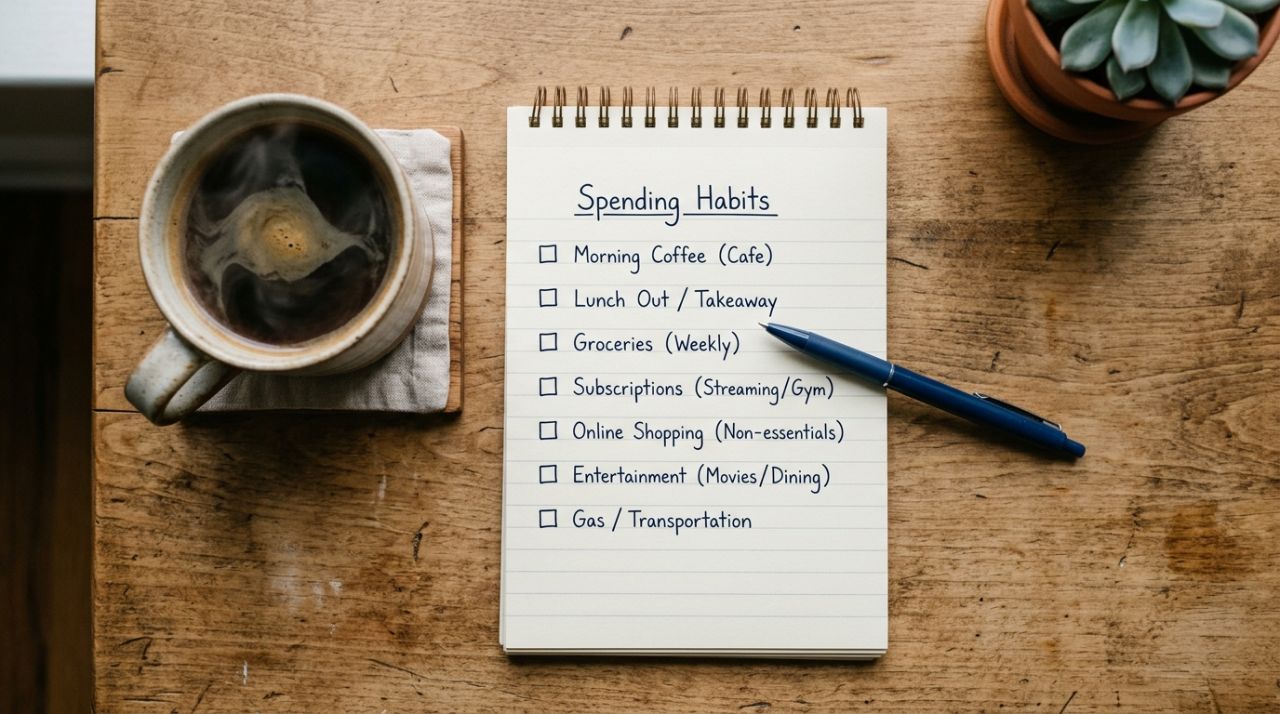
8. Track every dollar for 30 days. You can’t change what you can’t see. Logging purchases — even messily — turns invisible leaks into visible numbers, and visible numbers are easy to plug. Awareness alone cuts spending for most people.
9. Give yourself a guilt-free “fun money” budget. Deprivation backfires. Set aside a small, fixed amount each month to spend on whatever you want, no justification needed. The fastest way to overspend is to forbid all spending — a little planned indulgence is what makes the whole system sustainable.
Mindful Spending Tips That Make These Habits Stick
Knowing how to stop spending money is one thing. Keeping it going is another. Here’s how to avoid the slips that sink most people.
Don’t aim for perfection. One impulse buy doesn’t undo a month of progress. The all-or-nothing mindset is what turns a single slip into a full relapse. Log it, learn from it, and move on.
Watch the “I deserve it” trap. Rewards are fine — but when “treating yourself” becomes a weekly habit, it stops being a treat and becomes a leak. Build the reward into your fun-money budget so it’s planned, not impulsive.
Make saving automatic. Every dollar you move into savings the moment you’re paid is a dollar you can’t spend on a whim. Automation beats willpower every single time.
The goal of controlling overspending isn’t to live a smaller life — it’s to spend on what you actually care about and cut the noise that’s quietly draining you.

What Most People Get Wrong About How to Stop Spending Money
Before we get to a real example, let’s clear up the myths — because the wrong belief will sink you faster than any sale.
Myth 1: It’s all about willpower. It isn’t. Willpower is a finite resource that drains as the day goes on, which is exactly why you cave at 11 p.m. The whole point of how to stop spending money is to lean on systems and friction so you barely need willpower at all.
Myth 2: You have to give up everything fun. Wrong, and this is why most budgets collapse. A plan with zero room for enjoyment is a plan you’ll quit by week two. Sustainable spending leaves space for the things you love.
Myth 3: Earning more will fix it. Lifestyle inflation says otherwise — spending tends to rise to match income, which is why high earners go broke too. Until you change the habits, a raise just funds bigger impulse buys.
Myth 4: One slip means you failed. A single unplanned purchase isn’t failure; quitting after it is. Progress is measured over months, not moments.
The real secret to how to stop spending money is boring on purpose: remove temptation, add small delays, and give every dollar a job — then let those quiet systems do the heavy lifting for you.
Get these four myths out of your head and the habits suddenly feel a lot lighter to carry.
Real Example: How One Reader Cut $280 a Month
Let me introduce you to Jordan, a 28-year-old in a one-bedroom apartment who felt broke despite a decent salary.
Jordan tracked spending for one month and found the leaks: $90 on food delivery, $70 on impulse Amazon orders, $45 on subscriptions barely used, and about $75 on “little treats” while scrolling.
The fixes were small. Jordan deleted two shopping apps, removed saved cards, canceled three subscriptions, and set a $50 monthly fun-money budget. No drastic lifestyle overhaul — just friction and awareness.
Three months later, Jordan was spending roughly $280 less per month and, surprisingly, didn’t feel deprived. The difference? Every dollar now had a job, and the impulse purchases simply stopped showing up.
That’s the whole lesson: you don’t need more discipline. You need fewer triggers and a little structure.
What’s worth noting is that Jordan never felt like anything was taken away. The money that used to vanish on forgettable purchases now goes toward a travel fund and a growing emergency cushion — the same income, simply pointed somewhere that actually matters.
Final Thoughts
Remember that cart that filled itself while you weren’t paying attention? It wasn’t a character flaw. It was a system working exactly as designed.
The shift happens when you stop blaming your willpower and start changing your environment instead. Once you add friction, mute the triggers, and give every dollar a purpose, the urge to overspend loses most of its power — quietly, without a fight.
You don’t have to overhaul your life this week. Pick one habit from the list and try it today. Maybe it’s deleting a shopping app, maybe it’s the 24-hour pause. Small moves compound fast.
Knowing how to stop spending money isn’t about earning more or sacrificing everything you enjoy — it’s about taking back control of where your money goes. And that control is more freeing than anything in your cart.
Save this post, try one habit today, and come back when you’re ready for the next.
→ Related: Envelope Budgeting Method: 9 Easy Steps to Stop Overspending in 2026
Frequently Asked Questions
Q: How do I stop spending money when I’m bored or stressed?
A: Boredom and stress trigger spending because shopping delivers a quick dopamine hit. Replace the habit with a free alternative — a walk, a text to a friend, or a 10-minute task — and add a 24-hour pause before any non-essential purchase. Naming the emotion is often enough to break the urge.
Q: What’s the fastest way to stop impulse spending in 2026?
A: Remove the friction-free paths to buying: delete shopping apps, turn off one-click checkout, and unsave your cards. With those gone, most impulse purchases never happen because the small delay gives your rational brain time to catch up.
Q: Is Buy Now, Pay Later making my overspending worse?
A: Often, yes. BNPL splits a price into small installments, which makes purchases feel cheaper than they are and encourages buying things you’d otherwise skip. With late-payment rates climbing in 2026, switching to debit — so you feel the full cost upfront — is one of the simplest ways to rein it in.
Q: How long does it take to break an overspending habit?
A: Most people see a real difference within 30 days, especially after tracking spending and removing their biggest triggers. It’s less about time and more about reducing temptation — change the environment and the new habit sticks faster than you’d expect.
Q: Can I learn how to stop spending money without making a strict budget?
A: Absolutely. Plenty of people cut spending just by adding friction — deleting shopping apps, removing saved cards, and pausing before purchases — without ever building a line-item budget. A budget helps, but awareness and fewer triggers do most of the work on their own.
