

Last month I watched my own checkout total hit $58 for what felt like nothing — some chicken, oat milk, a sad bag of spinach, and snacks I didn’t even remember grabbing.
If you live alone, you know that quiet panic at the register. Prices keep creeping up, and there’s nobody to split the cost with.
So what’s a realistic grocery budget for one person in 2026, and how do you actually hit it without living on instant ramen? That’s exactly what we’re breaking down here.
You’ll get the real USDA numbers, a sane monthly target, and seven tactics that shaved real dollars off my own bill. No extreme couponing. No spreadsheets you’ll abandon by Thursday.
Here’s the good news up front: solo grocery spending is one of the easiest line items to control once you know your number. Most people overspend simply because they’ve never set one.
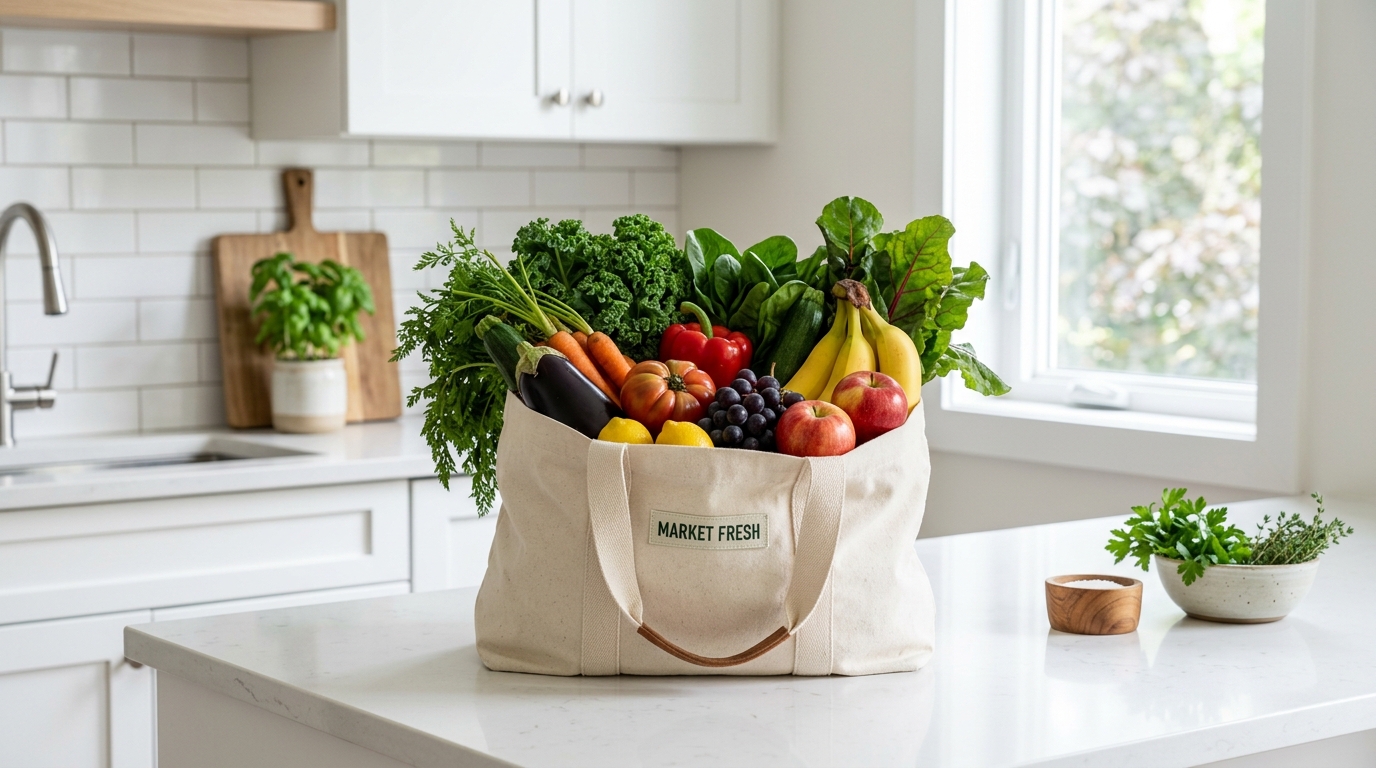
What’s a Realistic Grocery Budget for One Person in 2026?
Let’s start with the closest thing to an official answer. Each year the USDA publishes food-cost plans across four tiers: thrifty, low-cost, moderate, and liberal.
For 2026, the USDA puts the moderate-cost benchmark at about $465/month for an adult male and $392/month for an adult female aged 19–50. The thrifty tier runs lower, around $247–$309.
But here’s the catch nobody mentions. Those figures assume you’re part of a four-person household buying in bulk.
When you shop for one, the math changes. The USDA advises adults living alone to increase the expected cost by 20%, because you can’t take advantage of bulk pricing and you waste more relative to what you buy.
So what does that mean for your wallet? A realistic grocery budget for one person in 2026 lands roughly like this:
- Thrifty: ~$250–$310/month (about $58–$72 a week)
- Low-cost: ~$320–$375/month
- Moderate: ~$390–$465/month
- Liberal: ~$500–$565/month
The national average per person sits around $438/month, within a typical range of roughly $346 to $543. Most solo shoppers naturally drift toward the moderate tier without realizing it.
Related: How to Start a Budget With No Money — a step-by-step guide to building your first budget as a renter or solo earner.
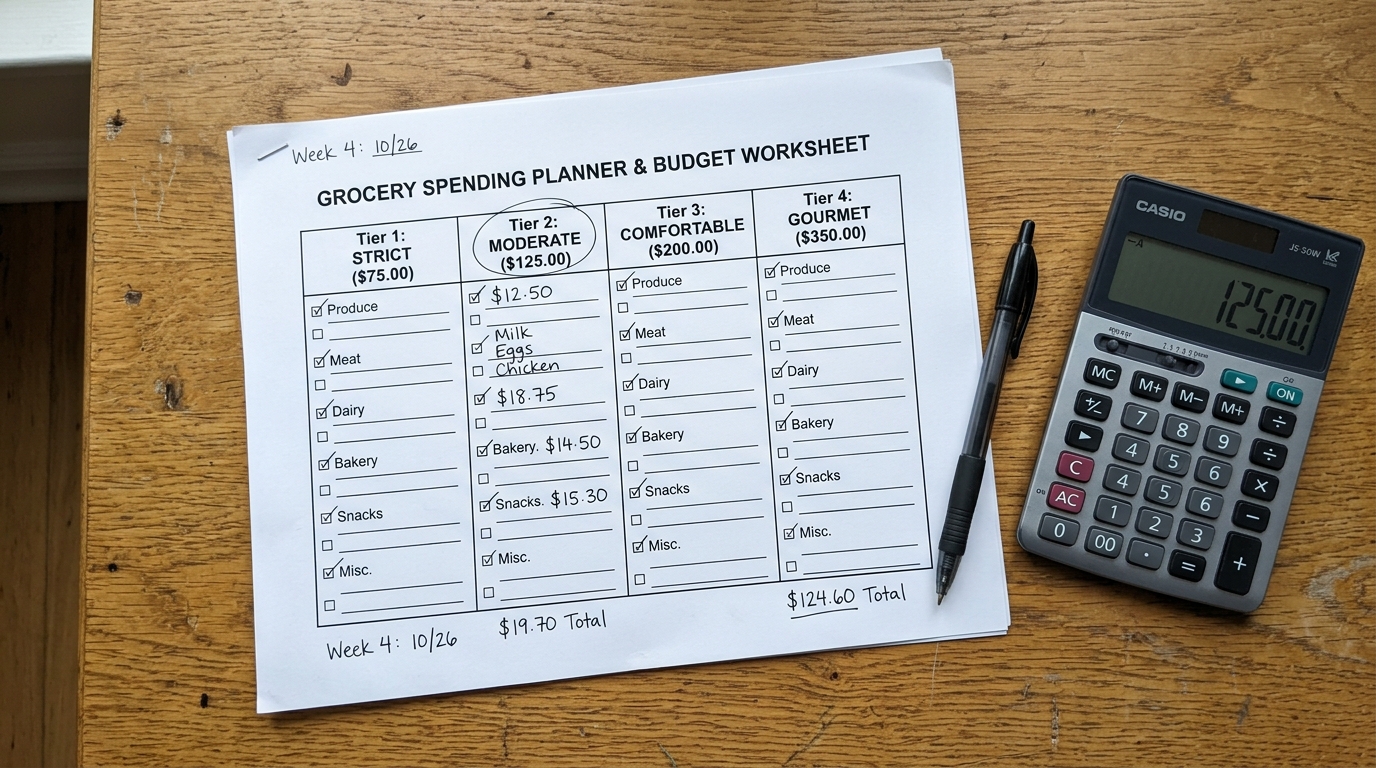
Why the Monthly Food Budget for a Single Person Feels So High
Here’s the thing about living alone: you pay a “solo tax” on almost everything you eat.
Buy a head of lettuce, and half of it liquefies before you finish it. Cook one chicken breast, and the rest of the pack sits in the freezer for three months.
Single-person households waste more food per person than any other group. The EPA estimates the average person throws away about $728 worth of food a year — food they bought and never ate.
That’s roughly $60 a month evaporating into your trash can. For a solo shopper, that waste is the single biggest hidden leak in the monthly food budget.
There’s also context to feel a little better about. US food-at-home prices rose only about 2 to 3% from 2025 to 2026, a sharp slowdown from the roughly 25% cumulative jump between 2020 and 2024. The brutal sticker shock is easing — but the elevated baseline is here to stay.
The takeaway: your grocery bill isn’t high because you’re careless — it’s high because shopping for one is structurally inefficient, and you’re paying off four years of accumulated inflation. Knowing that reframes the whole problem.
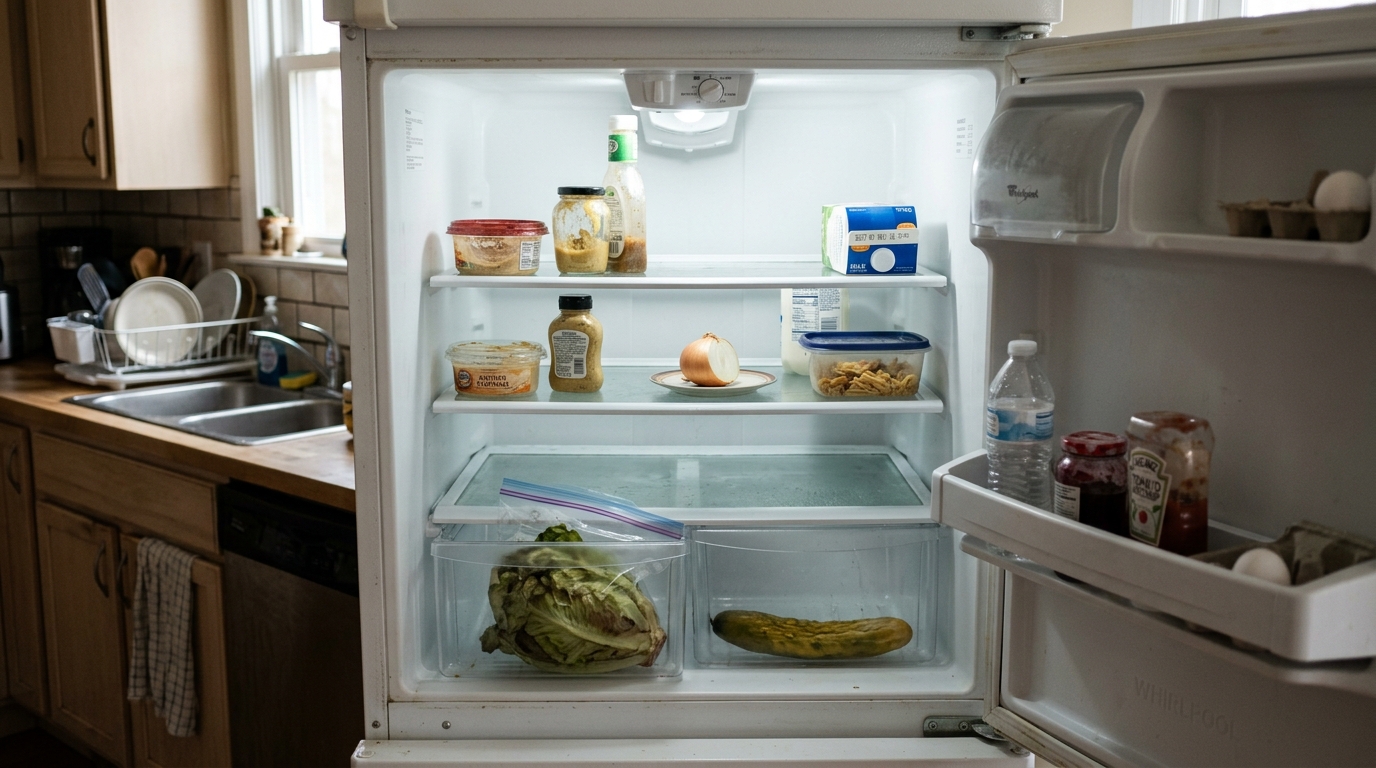
How Much Should You Spend? A Simple Rule of Thumb
Forget memorizing USDA tables. Use one number instead.
Financial planners suggest keeping food spending in check relative to income. A common guideline is to aim to keep groceries under 10–15% of your take-home pay.
So if you bring home $3,200 a month after taxes, a healthy ceiling is roughly $320–$480 for groceries. That range probably looks familiar — it maps almost perfectly onto the USDA’s low-cost-to-moderate tiers.
Picture two real solo renters. Maya, a grad student, take-home is tight, so she targets the thrifty end near $280. Jordan, a remote software developer, has room to breathe at $450 and prioritizes fresh produce and convenience.
Same city, same store, totally different correct answer. Your ideal grocery budget for one person isn’t a universal figure — it’s a percentage of what you actually earn.
Where you live matters too. Households in Hawaii spend well over $1,500 monthly on groceries, while states like West Virginia land closer to $770–$850 at the household level. Adjust your target up or down based on your zip code.
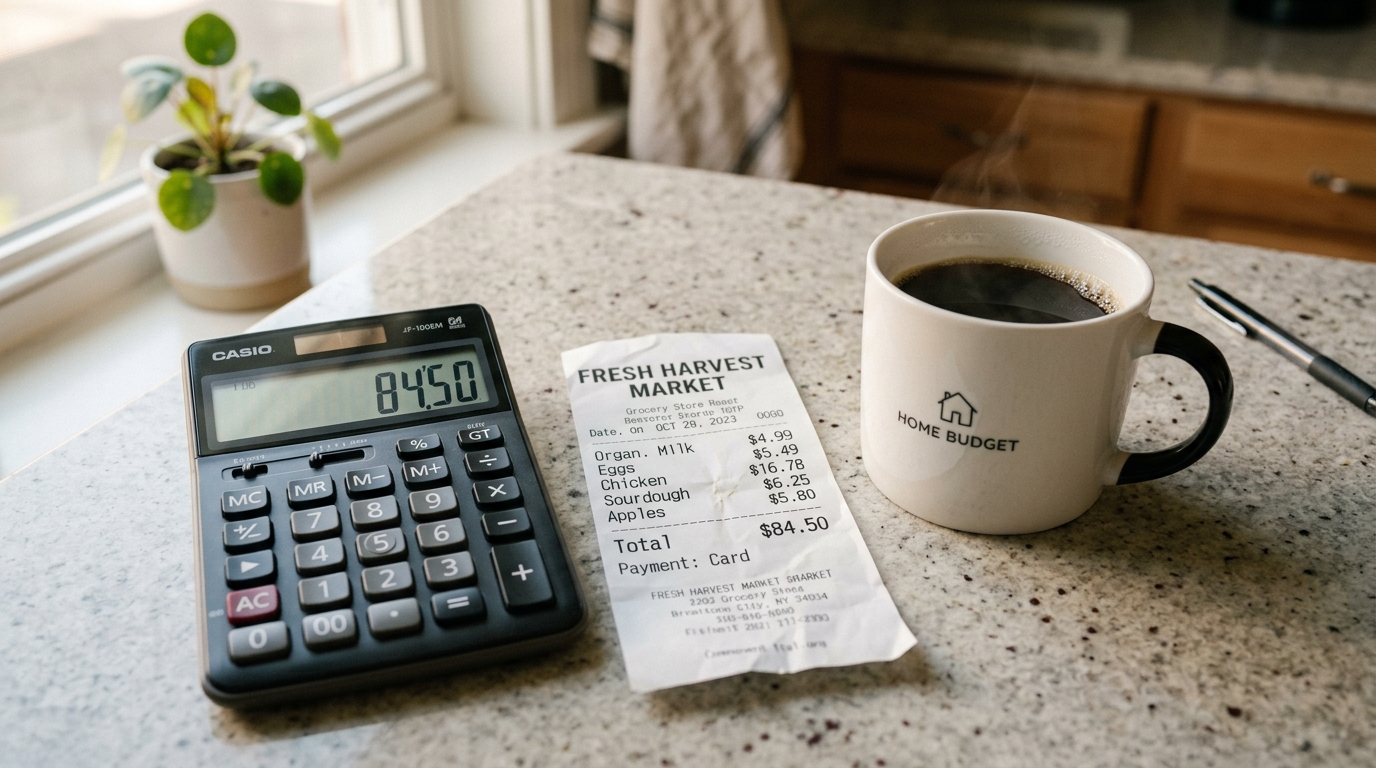
7 Proven Ways to Cut Your Grocery Budget for One Person
Ready for the part that actually moves the number? These are the tactics that work specifically for solo shopping, ranked by how much they save.
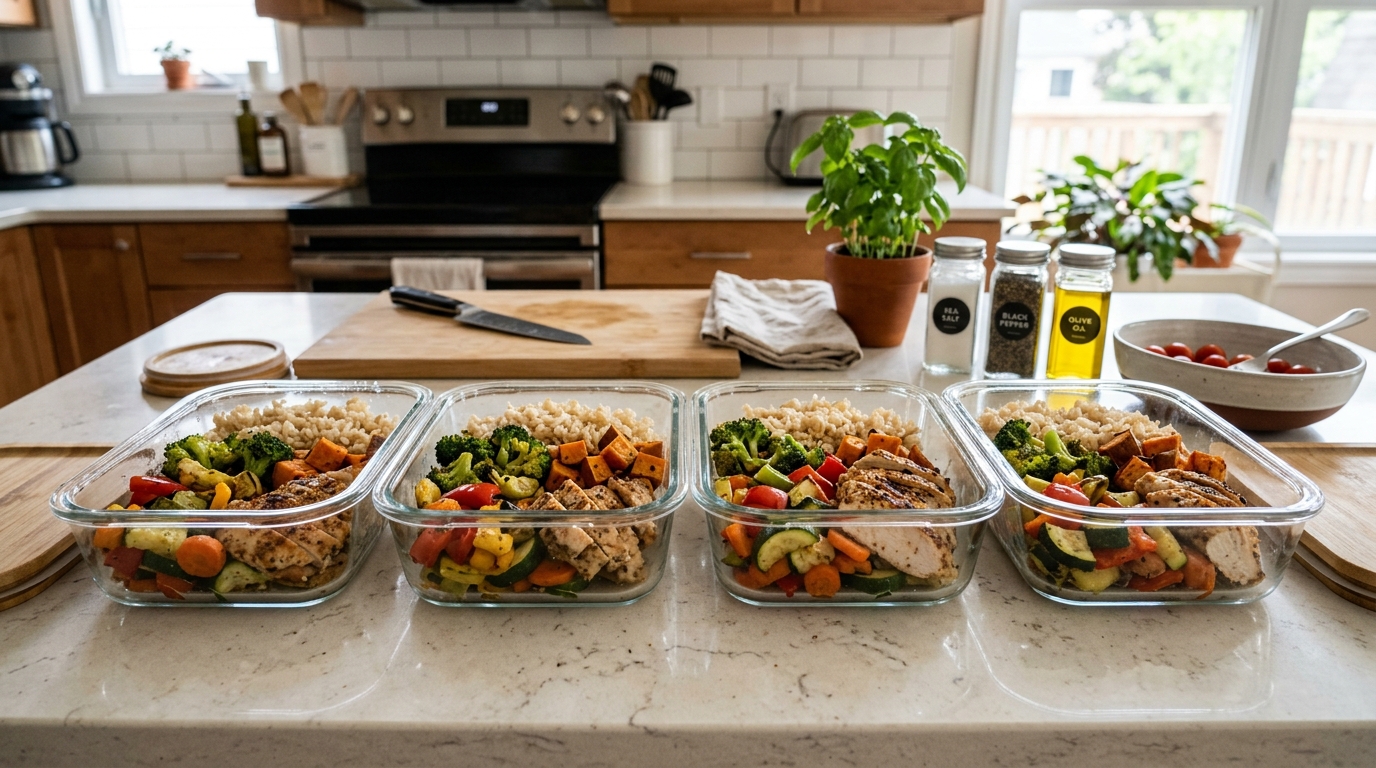
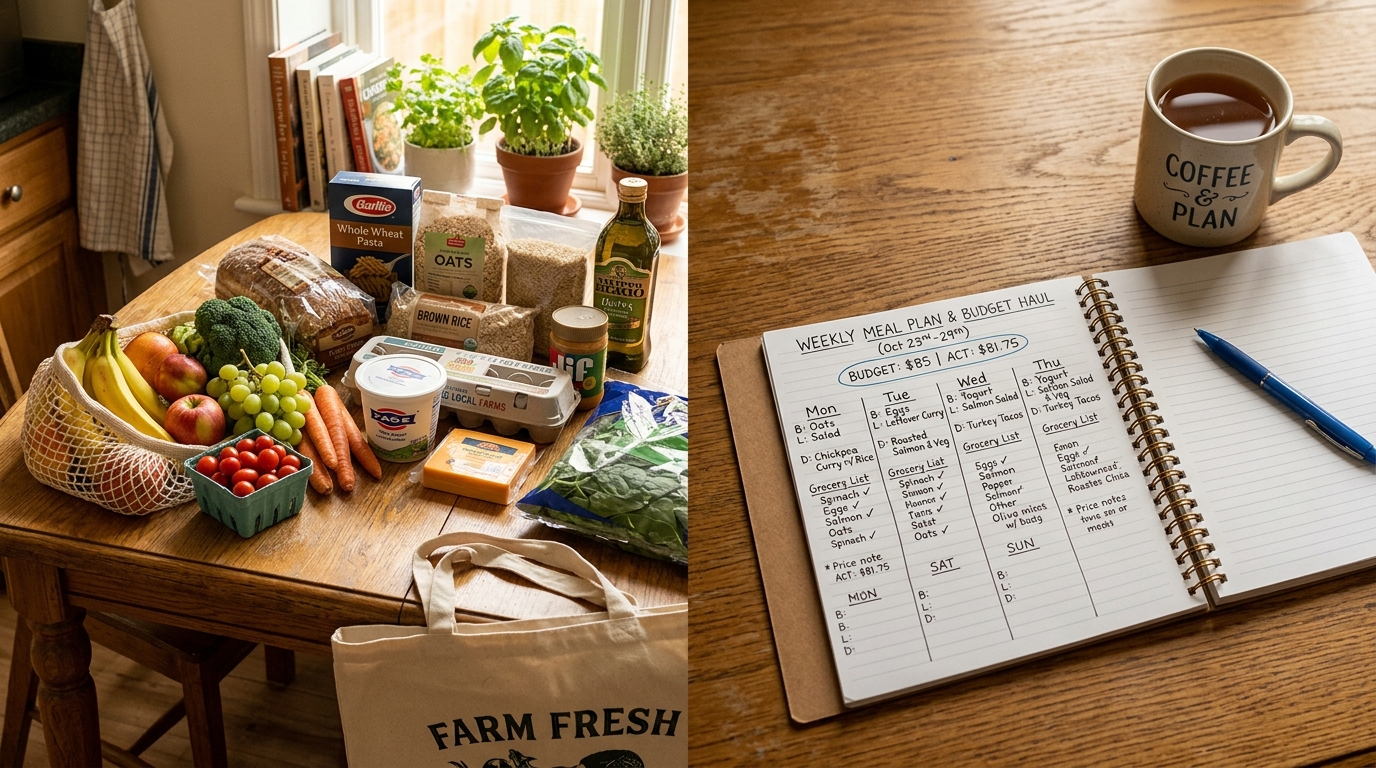
- Plan a loose 5-day menu before you shop. You don’t need rigid meal prep — just decide roughly what five dinners look like. This one habit kills impulse buys and slashes the waste that quietly inflates a food budget for living alone.
- Shop your freezer and pantry first. Before writing a list, scan what you already own. I once “discovered” three bags of rice and a freezer full of forgotten salmon — a free week of groceries hiding in plain sight.
- Buy proteins in bulk, then portion and freeze immediately. A family-size pack of chicken thighs costs less per pound. Split it into single servings the moment you get home, and the bulk discount finally works for one person.
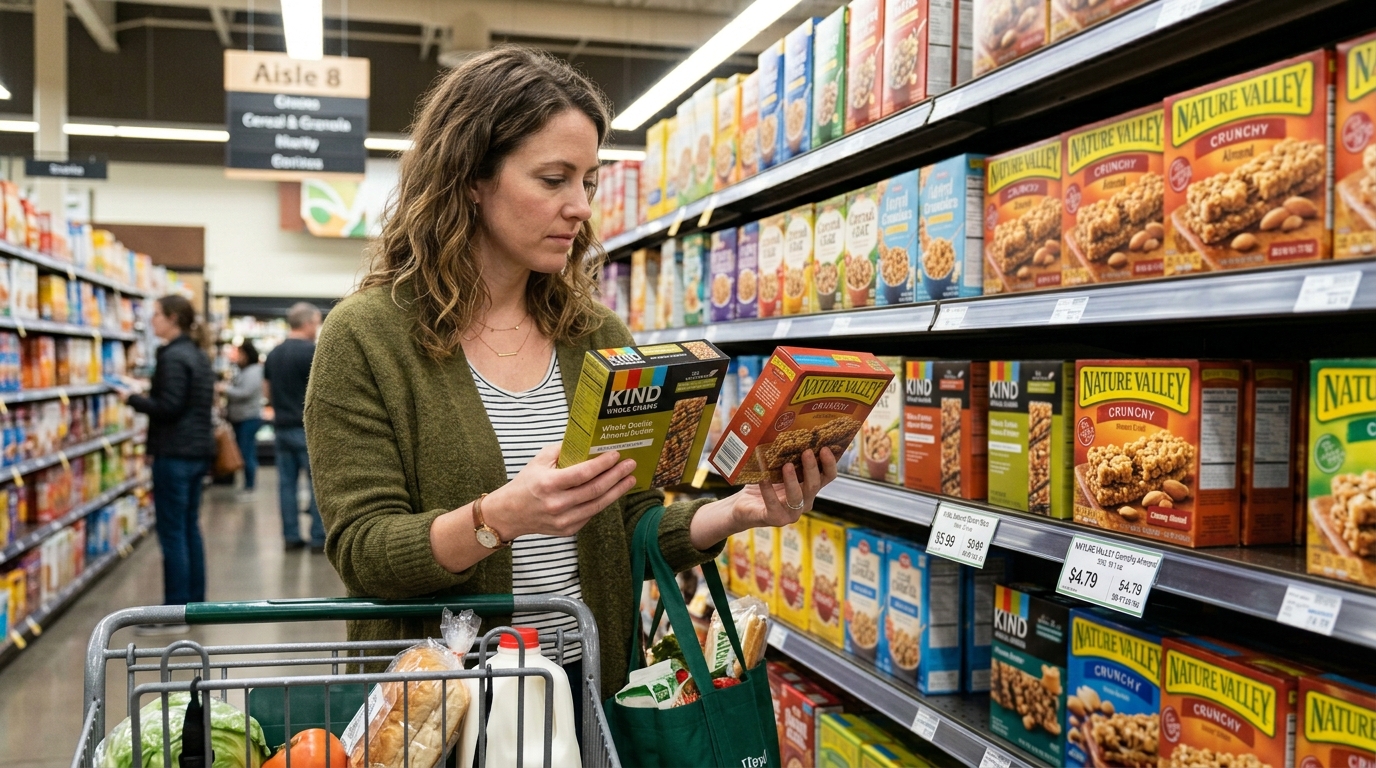
- Default to store brands. Generic pasta, canned beans, frozen vegetables, and spices are often 20–40% cheaper than name brands with no real difference. This alone can trim $40–$60 a month off your grocery expenses as a single adult.
- Embrace the “cook once, eat thrice” rule. A single pot of chili or curry stretches across lunches all week. Cooking at home is the heavyweight here — it typically costs 3 to 5 times less than eating out, and replacing even half your restaurant meals can save $300–$500 a month.
- Lean on cheap, versatile staples. Eggs, oats, lentils, rice, frozen veg, and seasonal produce form the backbone of any tight grocery budget for one person. Build meals around them and treat pricier items as accents.
- Track for just 30 days. You can’t fix a leak you can’t see. Use a free app or a notes file and watch your spending shrink simply because you’re paying attention.
Want a sense of which staples stretch furthest? According to the USDA’s food plan reports, plant-forward meals consistently come in cheapest per serving.
Related: How to Save Money on Groceries Without Coupons — more strategies to stretch your grocery dollar further every week.
Common Mistakes That Blow a Single Person’s Food Budget
Even careful shoppers fall into these traps. See if any sound familiar.
Shopping hungry. It sounds like a cliché, but an empty stomach turns a $40 trip into a $70 one. Eat something first — your budget will thank you.
Buying “family size” everything. Bigger isn’t cheaper if half of it spoils. For perishables, the smallest unit you’ll finish is almost always the smartest buy when you live alone.
Ignoring per-unit pricing. That tiny shelf tag showing cost per ounce is your best friend. The flashy “sale” item is often pricier per unit than the boring one beside it.
Treating takeout as a budget afterthought. Three “harmless” delivery orders can quietly equal a full week’s groceries. If you’re tracking food spending, count it all.
Never setting a number at all. This is the big one. Without a target, there’s nothing to measure against, so spending drifts upward month after month.
Fix these five and most people reclaim $80–$150 a month without eating a single worse meal. That’s the difference between the liberal and thrifty tiers — pure savings from habits, not deprivation.
A Real Example: How One Solo Renter Cut $140 a Month
Let me make this concrete. Take Priya, a 27-year-old remote worker living alone in a mid-size city.
She was spending about $510 a month — solidly in the liberal tier — and couldn’t figure out why. No dinner parties, no fancy tastes, just “normal” shopping.
So she tracked everything for 30 days. The results were eye-opening.
About $90 was vanishing into spoiled produce and forgotten leftovers. Another $120 went to takeout she’d mentally filed as “not really groceries.” And she was buying name brands on items where the store version was identical.
Her fix took zero deprivation. She started a loose weekly meal plan, batch-cooked two big meals each Sunday, switched her staples to store brands, and capped takeout at twice a week.
Three months later, her grocery budget for one person sat at $370 — the moderate tier — and she felt less stressed about food, not more. The lesson? She didn’t eat worse. She just stopped leaking money she never noticed.
Your situation will differ in the details, but the pattern almost always holds: the savings hide in waste, takeout, and autopilot brand loyalty.
Final Thoughts: Your Number Is Your Power
Remember that $58 checkout that set me off? The fix wasn’t dramatic. It was a five-minute meal plan and a quick freezer audit before each trip.
That’s the quiet truth about a grocery budget for one person: the hard part isn’t sacrifice, it’s simply deciding on a number and watching it. The USDA tiers give you the map, the 10–15% income rule gives you the target, and a 30-day tracking habit gives you control.
Rising prices in 2026 feel overwhelming because they’re outside your hands. But the portion you can steer — what you plan, what you buy, what you waste — is bigger than it seems.
Start with one move today. Pick your tier, jot down five dinners, and check what’s already in your freezer.
Then save this guide and revisit it next month when your number is already shrinking.
Related: No Spend Challenge Rules — a structured way to reset your spending habits and accelerate your savings.
Frequently Asked Questions
Q: What is a good grocery budget for one person per month in 2026?
A realistic grocery budget for one person ranges from about $250/month on the USDA thrifty plan to $565/month on the liberal plan, with most solo shoppers landing near the $390–$465 moderate tier. A simple rule is to keep groceries under 10–15% of your take-home pay. Adjust up if you live in a high-cost area like Hawaii or California.
Q: Is $300 a month enough for groceries for one person?
Yes, $300 a month is achievable and sits within the USDA thrifty-to-low-cost range for a single adult. It requires cooking from scratch, leaning on staples like rice, eggs, and lentils, and minimizing takeout. Tracking your spending for the first month makes hitting $300 far easier.
Q: Why are groceries so expensive for one person?
Living alone carries a built-in “solo tax” — you can’t buy in bulk efficiently and you waste more food per person than larger households, roughly $728 a year on average. On top of that, cumulative grocery inflation since 2020 has pushed the baseline up about 29%. Portioning and freezing in advance is the most effective fix.
Q: How can I lower my food budget when living alone fast?
The quickest wins are planning a few meals before shopping, defaulting to store brands, and cutting takeout in favor of batch-cooked meals. Cooking at home costs three to five times less than eating out, so even small swaps add up quickly. Most solo shoppers can save $80–$150 a month within 30 days.
Note: Dollar figures are based on 2026 USDA Official Food Plan data and Bureau of Labor Statistics consumer expenditure reports. Your actual costs will vary with location, diet, and lifestyle.
