

You unload the cart, watch the total tick higher, and feel that familiar little stomach drop. Sound familiar?
You’re not imagining it. Grocery prices are climbing again — the USDA expects food-at-home costs to rise above their long-run average in 2026, with beef alone projected to jump double digits.
So here’s the good news: you can save money on groceries without coupons and never spend a Sunday clipping inserts again. No apps to babysit. No binder. Just smart, repeatable habits.
I used to think couponing was the only “real” way to cut a grocery bill. Then I tracked my spending for a month and realized the biggest wins had nothing to do with coupons at all.
In this guide, you’ll get 9 grocery hacks with no coupons required — the kind that quietly shave 15–30% off your total without eating your weekend. Let’s get into it.
Why Saving Money on Groceries Without Coupons Actually Works Better
Here’s the thing most people miss: coupons mostly discount processed, brand-name products you didn’t plan to buy. That’s not saving — that’s marketing.
When you learn to save money on groceries without coupons, you’re attacking the parts of your bill that are actually big: protein, produce, staples, and waste. Coupons rarely touch those.
Think of it like a leaky bucket. A coupon patches one tiny hole on the side. Smart shopping habits raise the whole water line — every trip, automatically.
A friend of mine spent two hours a week hunting deals and saved maybe $6. When she switched to the habits below, she cut $90 a month and got her Sundays back. The math on your time matters as much as the math on your receipt.
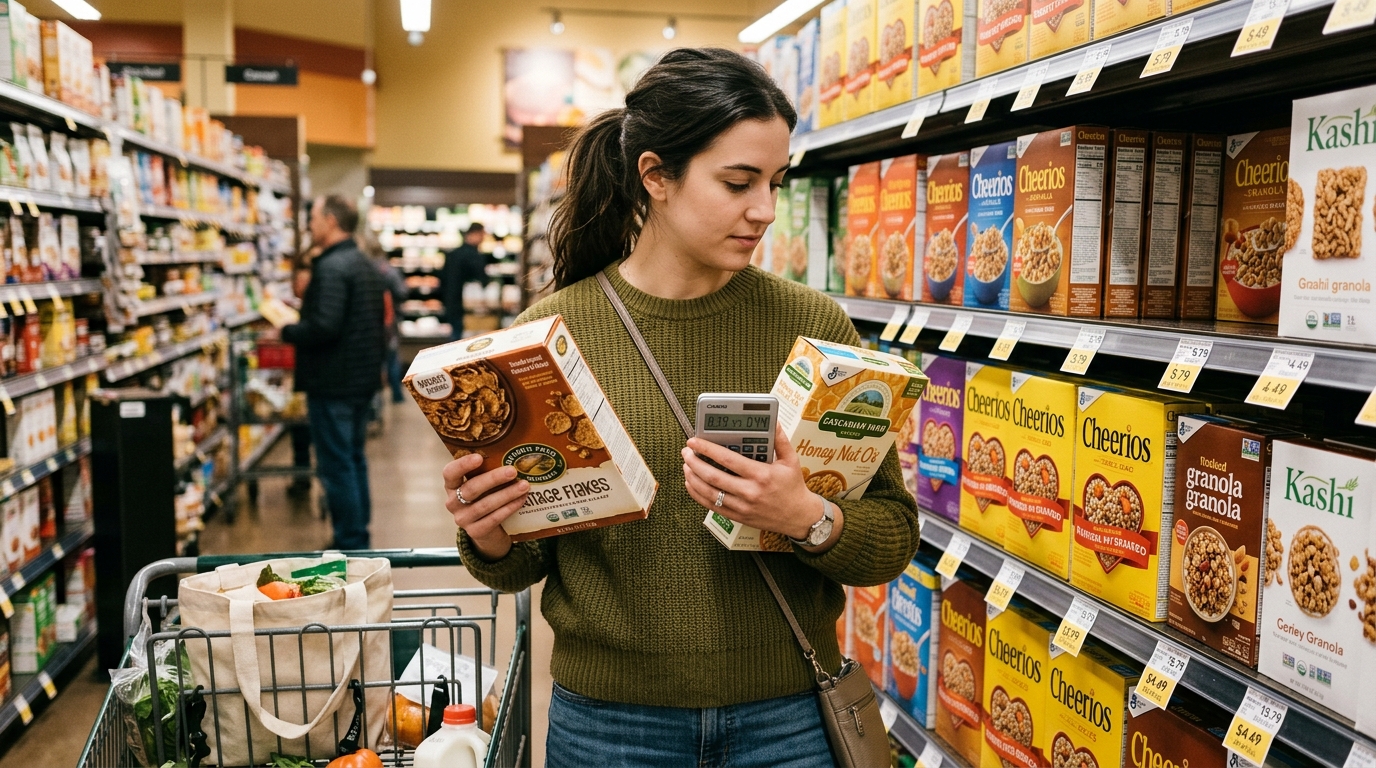
Shop Your Pantry First (Before You Spend a Dime)
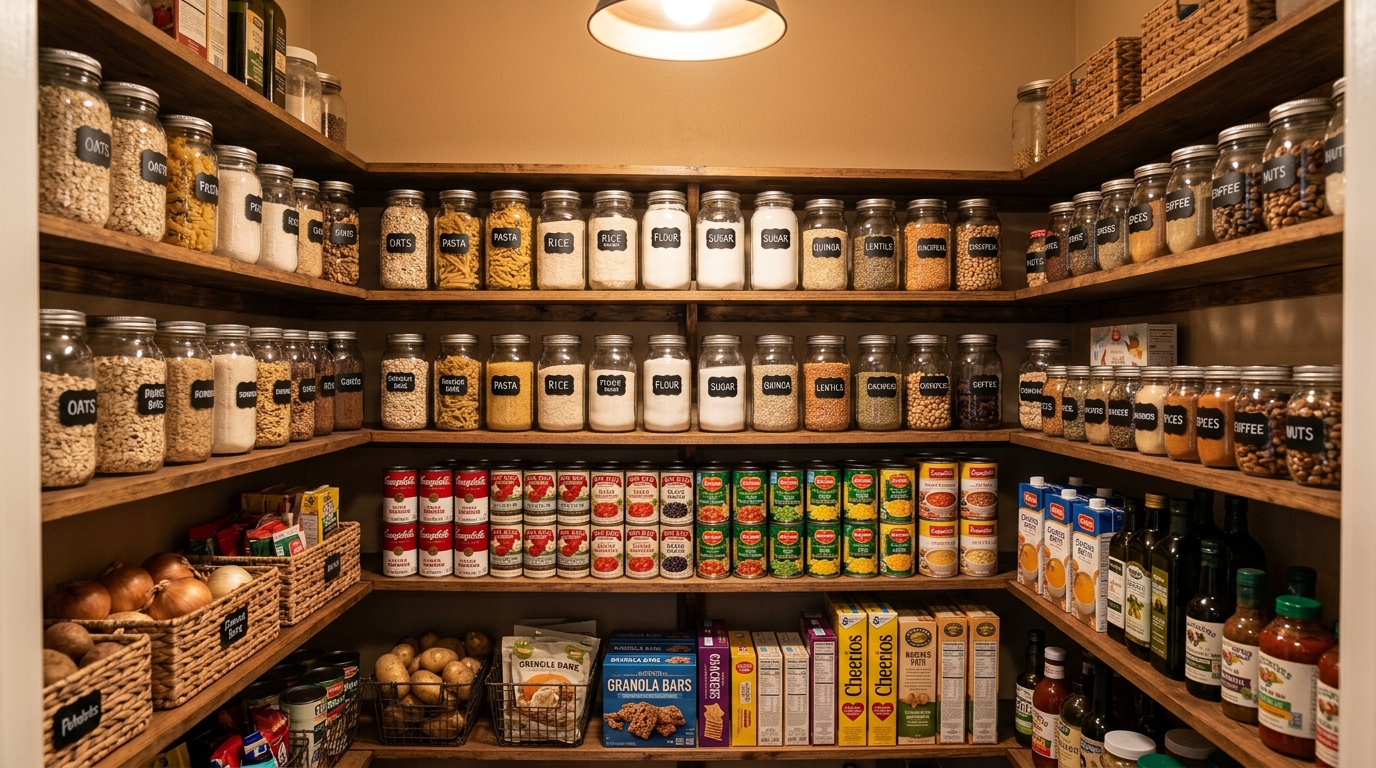
Before you write a list, take inventory. Open the freezer, dig to the back of the pantry, check the crisper.
Most households throw away a shocking amount of food — and every tossed item is money you already spent. That half-bag of rice and lonely can of beans? That’s tomorrow’s dinner.
I call this the “eat-down week.” Once a month, I plan meals almost entirely from what I already own. One pantry-clearing week can cut a monthly grocery bill by a third with zero effort beyond a little creativity.
This is one of the easiest grocery savings strategies with no coupons because it costs nothing to start. You’re not finding deals — you’re stopping leaks.
Related: Zero Based Budgeting for Beginners — pair a pantry-first system with a proper budget to see exactly where every dollar goes.
Master Unit Pricing — The Skill Nobody Teaches You
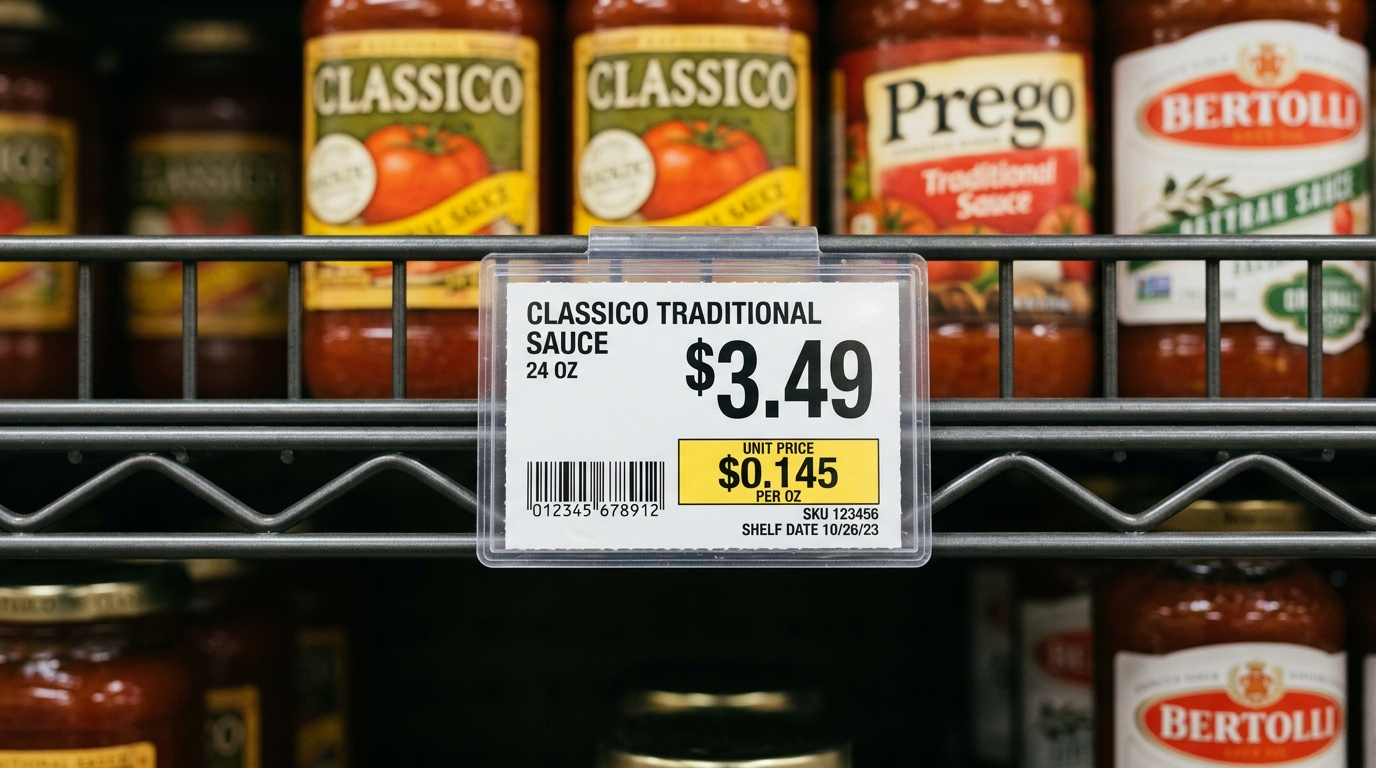
That tiny sticker on the shelf edge with “price per ounce”? It’s the most powerful tool in the store, and almost nobody reads it.
The biggest box isn’t always cheaper. Sometimes the mid-size item on sale beats the “value” size. Unit pricing tells you the truth in two seconds.
Picture this: two peanut butter jars, one clearly labeled as the deal. Check the per-ounce price and the “smaller” one often wins. That gap repeats across hundreds of items a year.
Comparing unit price instead of sticker price is how you save on food without couponing on literally every single trip. It’s a habit, not a hunt — once it’s automatic, you stop overpaying forever.
Want a quick gut check? If you can’t say which size is cheaper per ounce, you’re guessing — and the store is counting on it.
The Store-Brand Switch That Cuts Bills Fast
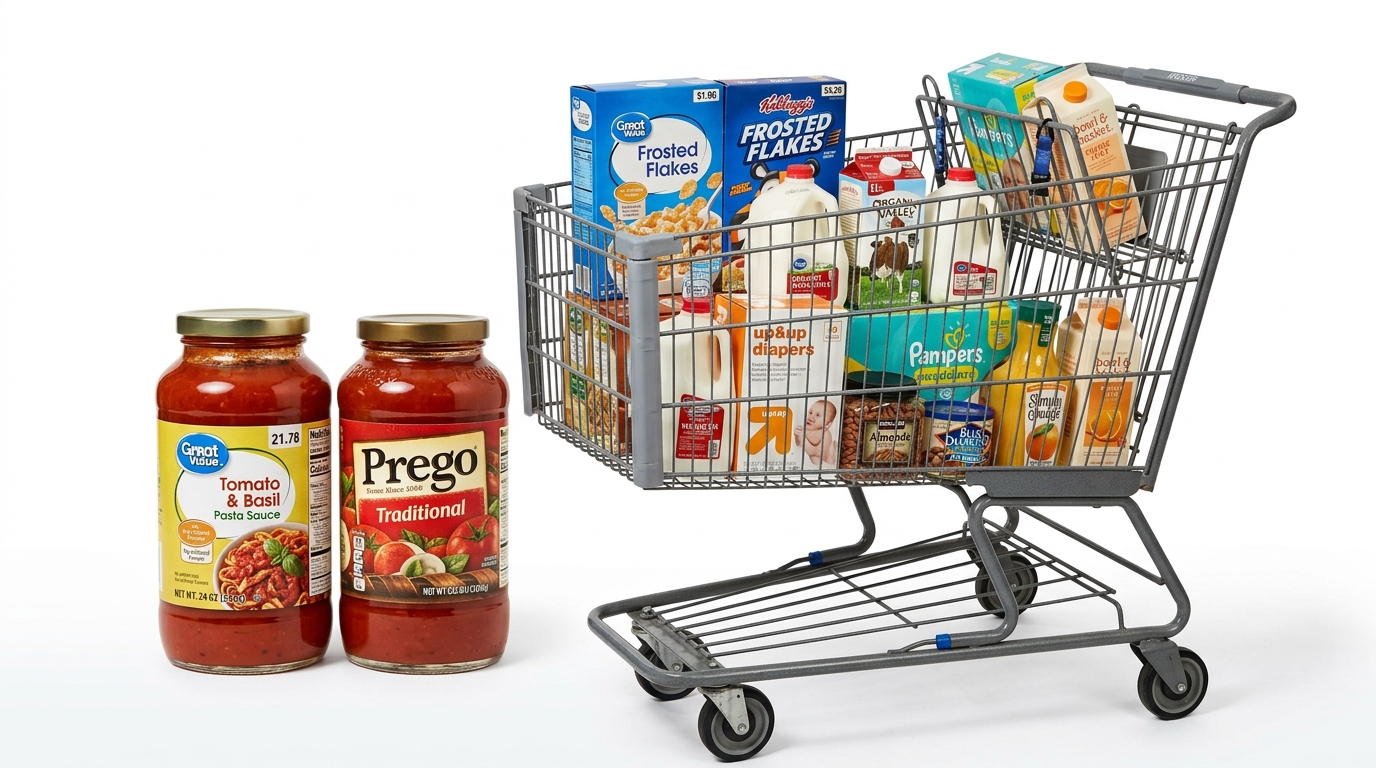
Store brands are often made in the same facilities as name brands — sometimes on the same production line. You’re frequently paying extra purely for the label and the ad budget.
Swap just your “invisible” staples first: flour, sugar, canned goods, frozen veggies, milk, spices. In a blind taste test, almost nobody can tell the difference on these.
When my sister switched her whole staples list to store brand, her receipt dropped about 25% — and her kids never noticed. For pantry basics, the premium you pay for a brand name is one of the purest forms of wasted money there is.
This single move is one of the most reliable budget grocery tips because it works on autopilot. Decide once, save every trip.
If a store-brand swap ever disappoints, just switch that one item back. You’ll still keep the wins on everything else.
Plan Meals Around What’s Cheap This Week (Step-by-Step)
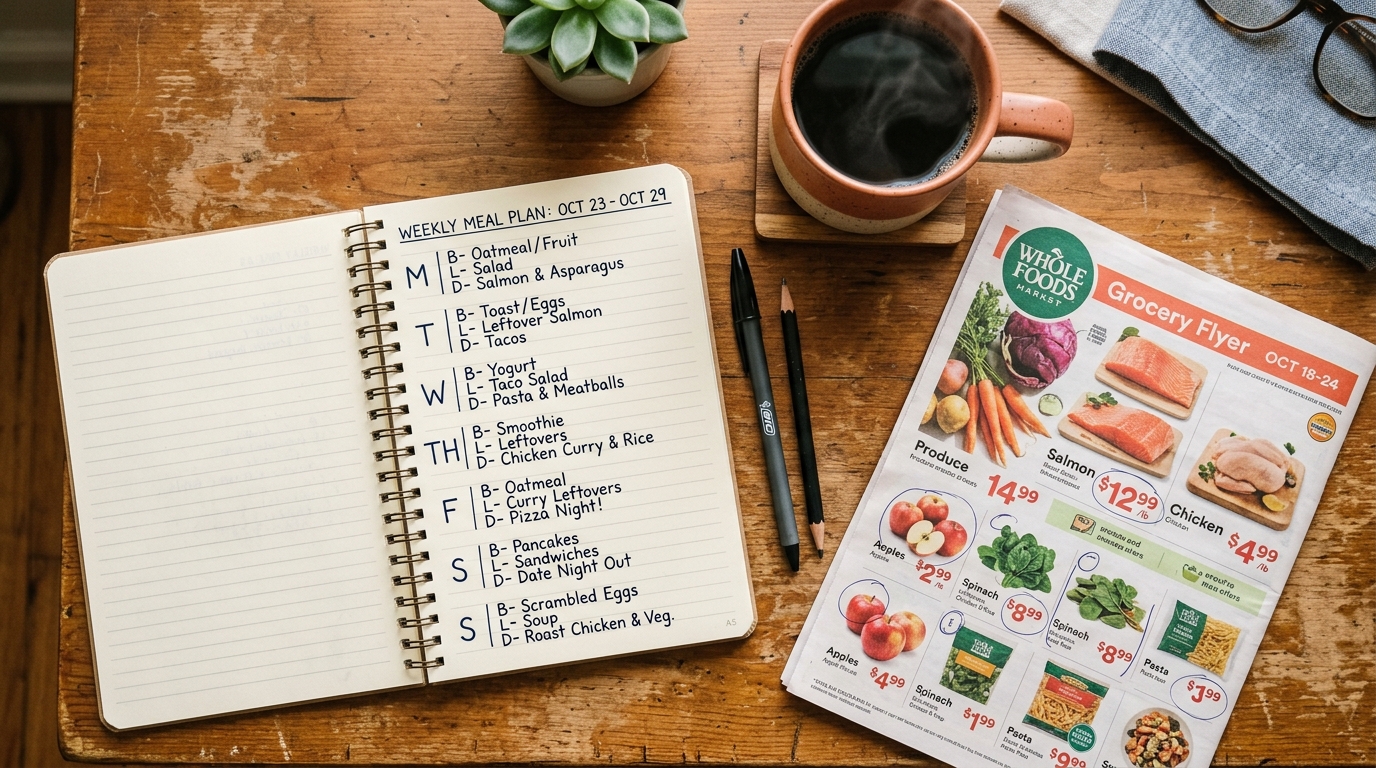
This is where smart grocery shopping in 2026 really pays off. Instead of picking recipes and then buying whatever they cost, flip it: let the lowest prices decide your menu.
Here’s the simple system:
- Scan the weekly flyer (online is fine) and circle the loss-leader proteins and produce — usually on the front page.
- Build 3–4 dinners around those discounted anchors. Cheap chicken thighs on sale? That’s two meals right there.
- Bridge the gaps with pantry staples you already counted in step one, not new full-price buys.
- Batch one or two of those meals so leftovers become free lunches.
A quick real example: chicken thighs and cabbage go on sale, so the week becomes stir-fry, a sheet-pan bake, and a soup — three dinners, one cheap protein, almost no waste.
Letting the sales write your menu is the single fastest way to reduce your grocery bill without clipping a thing. You’re using the store’s discounts without ever touching a coupon.
According to the USDA’s Economic Research Service, grocery prices keep climbing in 2026 — which makes flexible, price-led meal planning more valuable than it’s been in years.
Grocery Mistakes That Quietly Drain Your Budget
Even great shoppers leak money in predictable ways. Fix these and you’ll feel the difference at the register immediately.
- Shopping hungry. An empty stomach turns a $60 list into a $95 cart. Eat first, every time.
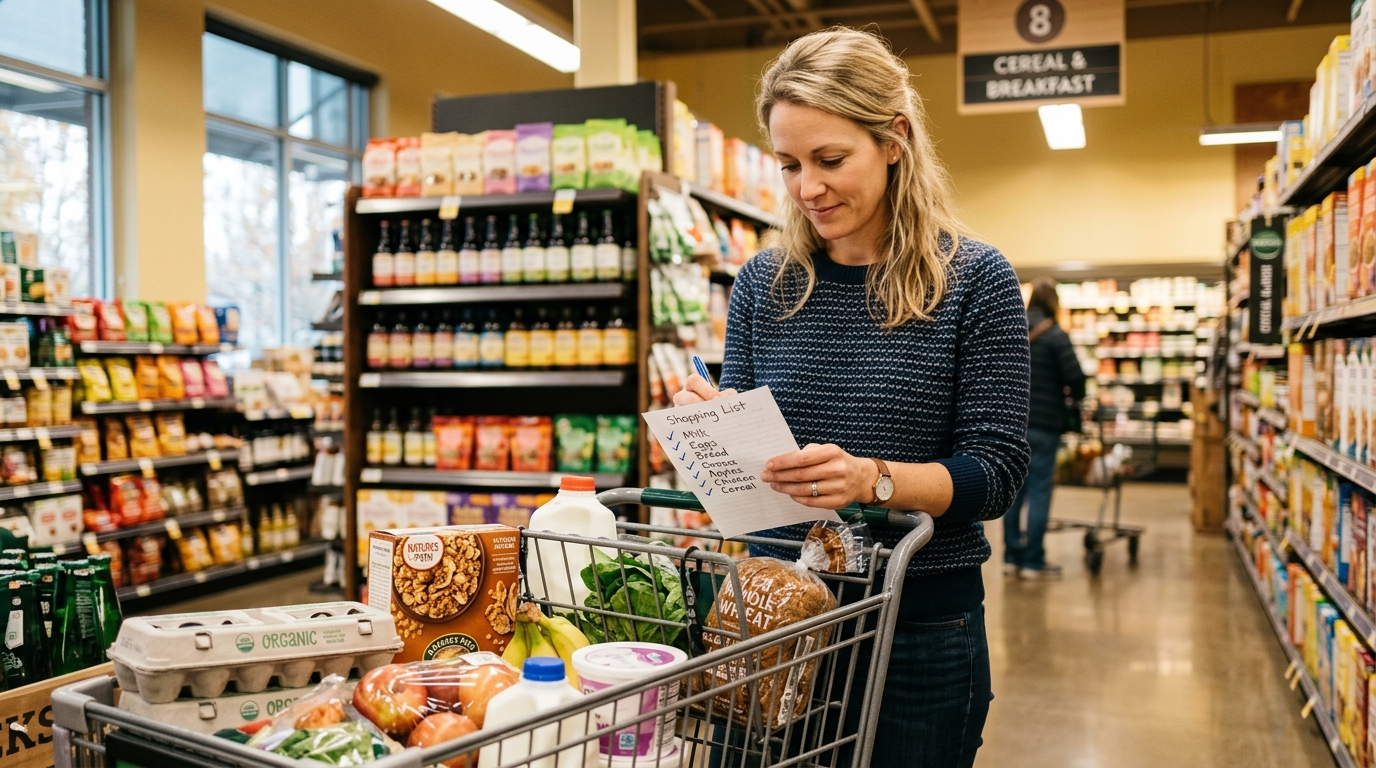
- Skipping the list. Walking in without a plan is how impulse buys multiply. A list is your cheapest defense.
- Ignoring frozen and canned produce. They’re often cheaper, last longer, and are just as nutritious — no spoilage tax.
- Buying bulk you can’t finish. A “deal” you throw away is the most expensive food in your kitchen.
- Auto-piloting to eye-level shelves. The pricier brands live there on purpose. Look high and low for the better deals.
Here’s the part that stings: most of these aren’t about willpower — they’re about the store’s design working against you. Once you see the traps, you stop falling into them, and that’s worth more than any coupon.
Which of these have been quietly costing you the most?
Final Thoughts
Remember that stomach-drop at the register? It doesn’t have to be your normal.
You don’t need a coupon binder, three rebate apps, or a free Sunday to win this. You need a handful of habits that work quietly in the background — pantry-first planning, unit pricing, store brands, and letting sales steer your menu.
That’s the real shift: learning to save money on groceries without coupons isn’t about doing more work. It’s about doing smarter work, once, and letting it pay you back trip after trip.
Pick just one strategy from this list and try it on your next shop. One change is enough to feel the difference — and to prove to yourself this actually works.
Save this post, screenshot the mistakes list, and put one habit into play this week. Your future self, staring at a smaller total, will thank you.
Related: How to Budget on $2,000 a Month — once your grocery bill is lean, here’s how to build a full budget around your savings.
Frequently Asked Questions
Q: Can you really save money on groceries without coupons?
Yes — and often more than coupons save you. Coupons mostly discount brand-name processed foods, while habits like unit pricing, store-brand swaps, and sale-based meal planning cut the biggest parts of your bill. Most shoppers see a 15–30% drop without clipping anything.
Q: What’s the fastest way to reduce my grocery bill in 2026?
Plan your meals around what’s already on sale that week, then fill gaps with food you already own. With grocery prices rising again in 2026, this single habit delivers the biggest, fastest savings. It uses the store’s own discounts without any coupons or apps.
Q: Are store brands actually as good as name brands?
For staples like flour, canned goods, frozen vegetables, and spices, the difference is usually negligible — many are made in the same facilities. Switch your “invisible” basics first, since those rarely affect taste. If one ever disappoints, simply switch that single item back.
