You stand in the checkout line, watch the total climb past $180, and quietly wonder where it all went. Just milk, eggs, chicken, and a few “basics,” right?
If that scene feels familiar, you’re not imagining things. Food prices in the U.S. rose about 3.2% in the year ending April 2026, with grocery shelves seeing one of the sharpest single-month jumps since 2022.
So the Aldi vs Walmart groceries debate isn’t a fun internet argument anymore — it’s a real-money decision for millions of families.
Here’s the catch: almost every viral post screams “Aldi is cheaper!” or “Walmart wins!” without showing the receipts. The truth is messier, more interesting, and honestly more useful.
I dug into 2026 price tests, store-brand comparisons, and inflation data so you don’t have to photograph receipts for six weeks. By the end, you’ll know exactly which store wins for your cart — and the one strategy that beats picking sides entirely.
Ready to stop overpaying? Let’s break it down.

The Real Aldi vs Walmart Groceries Verdict in 2026
Let’s settle the headline question first, then dig into the nuance.
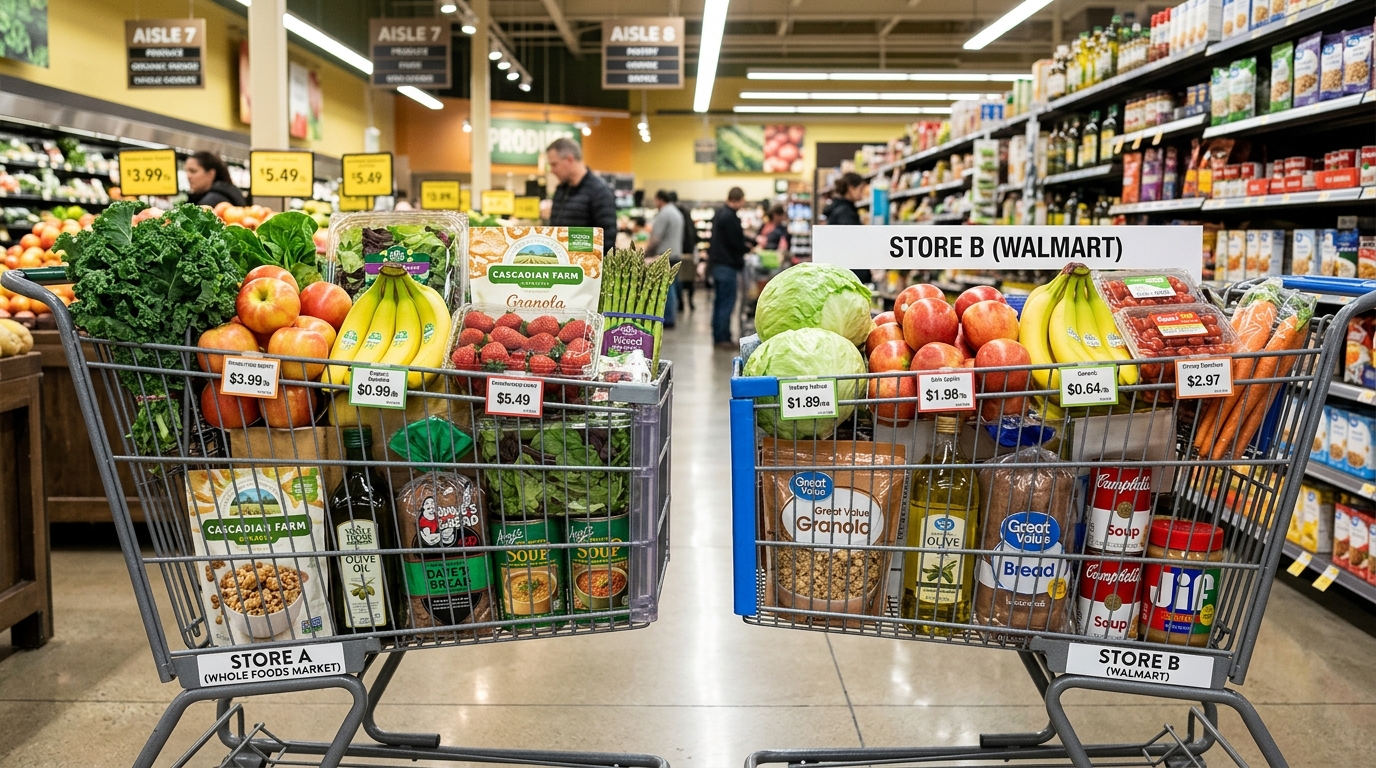
Across multiple price tests, Aldi tends to come out cheaper on the items both stores carry — usually somewhere in the 15% to 30% range on comparable store-brand goods. That pattern has held up for years across reviews from outlets like Cheapism and consumer testers.
In one hands-on 2025 cart test by Ramsey Solutions, Aldi beat Walmart on 24 of 29 items and came out about $11 cheaper on a single trip.
That $11 doesn’t sound dramatic — until you multiply it by 52 weeks and realize it’s roughly $570 a year walking out the door.
But — and this matters — “cheaper on most items” is not the same as “cheaper on everything.” Walmart claws back wins in specific categories, which is exactly where most shoppers leave money on the table.
So the honest answer to the Aldi vs Walmart groceries question in 2026? Aldi usually wins the cart total. Walmart wins the convenience and a handful of surprising line items.
Is Aldi Cheaper Than Walmart? Category by Category
Averages hide the good stuff. Here’s where each store actually wins on the shelf.
Where Aldi tends to win:
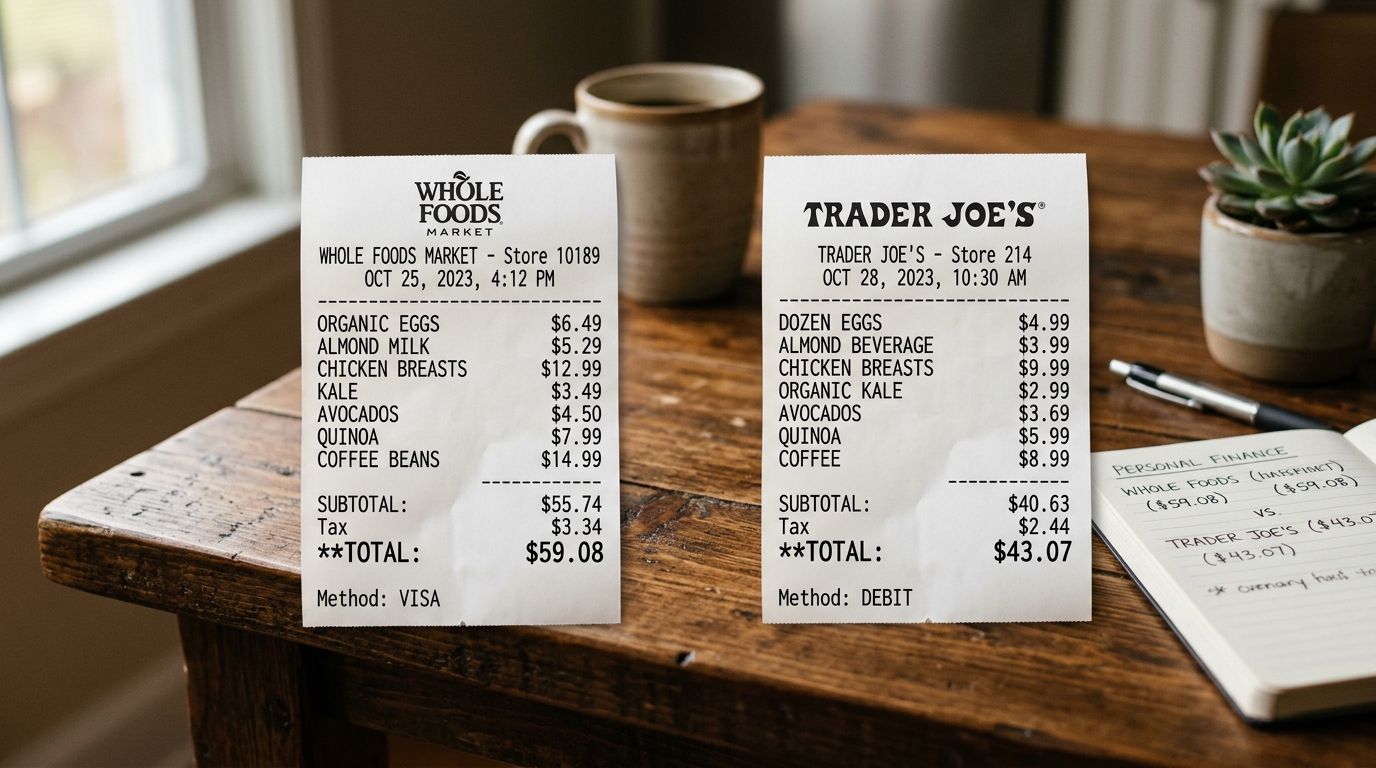
- Fresh produce — bananas, apples, onions, and bagged salads often ring up noticeably lower at Aldi.
- Ground beef and chicken — Aldi’s meat case frequently undercuts Walmart per pound.
- Pantry staples — flour, pasta, canned goods, and snacks under Aldi’s private labels are consistently lean on price.
Where Walmart surprises people:
- Eggs — in a 2025 check, Walmart’s Great Value dozen ran about $3.94 versus Aldi’s $4.35.
- Some frozen items — a frozen strawberry-banana blend and vanilla ice cream both came in cheaper under Walmart’s Great Value brand in early-2026 tests.
- Bacon and certain potatoes — Walmart edged out Aldi on these in head-to-head comparisons.
Notice the theme? Aldi wins the broad cart, but Walmart quietly wins enough “everyday” items that loyalty to one store costs you.
Think about your own routine. If half your weekly spend is produce and meat, Aldi is your friend. If you buy eggs and frozen treats by the truckload, don’t assume Aldi automatically wins.
This is the Walmart vs Aldi prices reality no headline tells you.
Related: Save Money on Groceries Without Coupons — more strategies to cut your food bill no matter which store you shop.
Why Grocery Price Comparison Matters More in 2026
A few years ago, a 30-cent difference on a can of beans felt like rounding error. Not anymore.
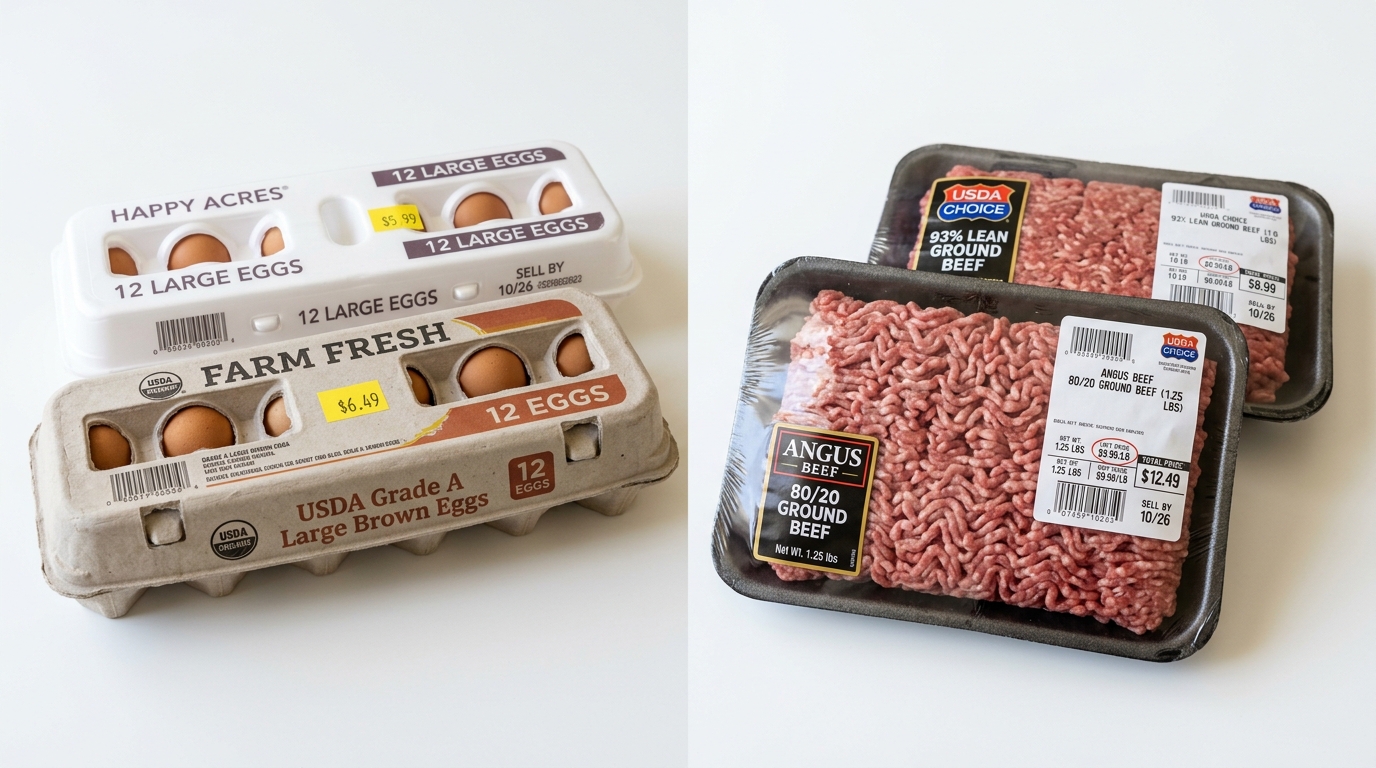
With food-at-home prices climbing again — the Bureau of Labor Statistics tracked grocery inflation near 2.9% year over year this spring — those small gaps compound fast.
Here’s the thing: inflation doesn’t hit every product evenly. Eggs spike, then settle. Coffee jumps. Beef drifts up. So the “cheapest” store can shift month to month, item to item.
That’s why a one-time price test isn’t enough in 2026. The shoppers saving the most aren’t loyal to a logo — they’re loyal to the lowest price on each item.
Walmart has leaned hard into this, rolling out thousands of price rollbacks in recent quarters to fight the “Aldi is cheaper” reputation. In one early-2026 meat-bundle test, a Walmart rollback actually pushed its total just below Aldi’s.
The lesson? Prices move. Your strategy should too.
How to Save the Most on Groceries in 2026 (Step-by-Step)
You don’t need to shop both stores every week. You need a smarter rhythm. Here’s the playbook.
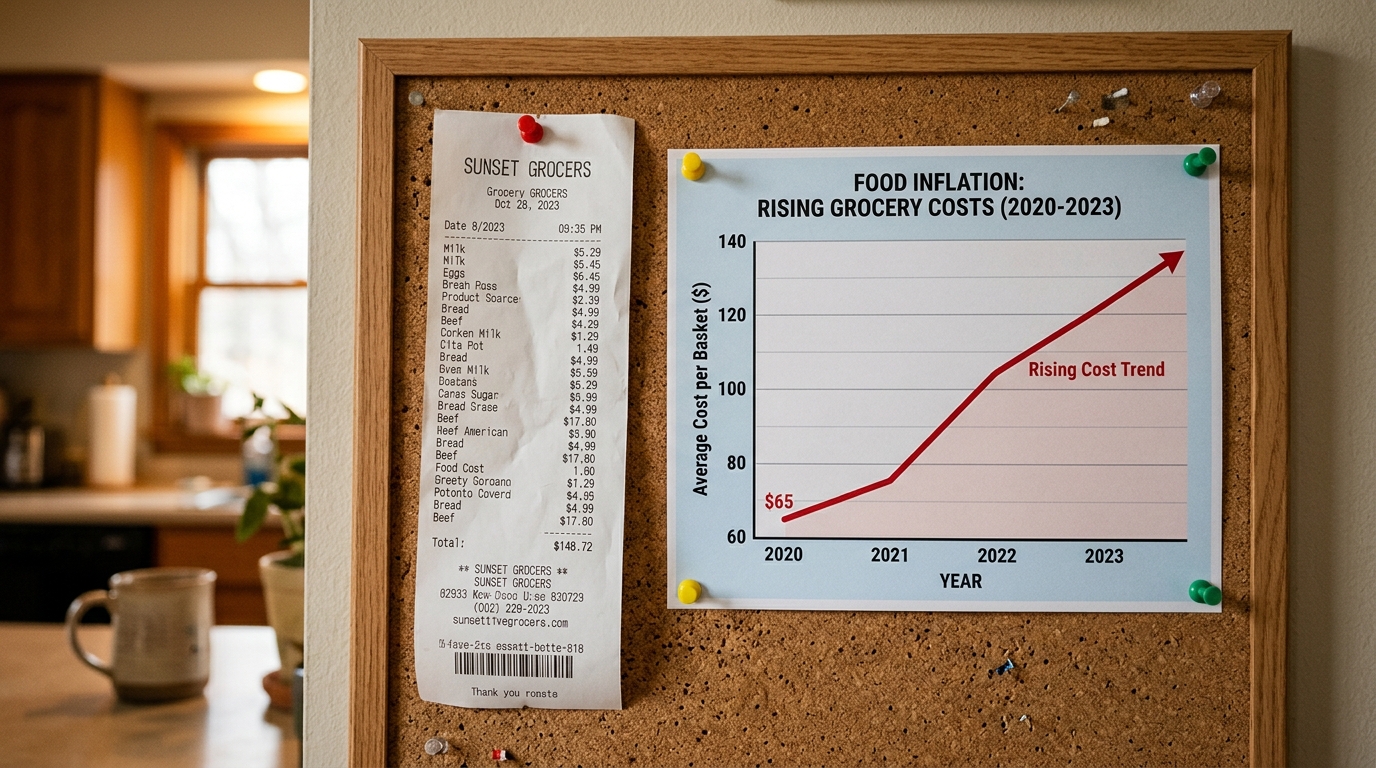
- Map your typical cart. Spend ten minutes listing the 20–25 items you actually buy most weeks. This is your real budget, not the random impulse stuff.
- Split that list into “Aldi-leaning” and “Walmart-leaning” buckets using the category breakdown above. Produce, meat, and pantry basics lean Aldi; certain dairy, frozen, and brand-name items lean Walmart.
Picture a family of four. Say they spend $250 a week. Shifting just the produce and meat half to Aldi can trim 15–20% off that chunk — real money, every single week.
- Anchor your weekly shop at Aldi for the bulk of the cart, since it wins the broad total most often.
- Batch the Walmart-only items — the brand-name products, specialty goods, and household stuff Aldi doesn’t stock — into a once-or-twice-a-month run. Fewer trips, less impulse spend.
- Check unit prices, not sticker prices. Stores love shrinking package sizes. The “cheaper” box is sometimes just smaller.
- Track three or four volatile items (eggs, coffee, beef) and stay flexible. When one store rolls back prices, grab them there.
Done consistently, this hybrid approach routinely beats single-store loyalty by $500–$700 a year for an average family.
Related: No Spend Challenge Rules — pair your smarter grocery strategy with a short spending reset to accelerate your savings even further.
5 Real Mistakes That Cost You Money
Even savvy shoppers fumble these. Avoid them and you bank the savings automatically.
- Assuming one store always wins. It doesn’t. Loyalty feels efficient but quietly costs you on the items your store overcharges for.
- Ignoring per-unit price. A bigger box isn’t always cheaper. Always glance at the price-per-ounce tag — it’s right there on the shelf.
- Skipping the store brands. Aldi’s private labels and Walmart’s Great Value are where the savings live. Name brands erase the gap fast.
- Driving across town for a 40-cent win. Gas isn’t free. If the savings don’t beat your fuel and time, you’ve “saved” yourself into a loss.
- Shopping hungry without a list. The oldest trap in the book. Impulse buys quietly blow up even the most disciplined Aldi vs Walmart groceries plan.
The biggest mistake isn’t picking the wrong store — it’s never comparing in the first place.

Final Thoughts: The Smartest Way to Shop in 2026
Remember that checkout line where the total kept climbing? It doesn’t have to feel that way.
The Aldi vs Walmart groceries question never really had a single winner — and that’s good news. It means the power is in your hands, not in a logo. Aldi will usually win your overall cart, Walmart will surprise you on a handful of items, and the savviest shoppers simply refuse to pick a permanent side.
You don’t need a finance degree or a price spreadsheet. You need a short list, a little awareness of where each store wins, and the willingness to split your shopping just enough to stay ahead of rising prices.
Start this week with one small move: pick five staples and compare them at both stores. That’s it. The habit grows from there — and so does the money you keep.
Found this useful? Save it, share it with someone fighting their grocery bill, and try one tip on your next trip.
Frequently Asked Questions
Q: Is Aldi really cheaper than Walmart in 2026?
On most comparable store-brand items, yes — Aldi typically runs 15–30% cheaper, and cart tests usually show Aldi winning the total. But Walmart beats Aldi on specific items like eggs, some frozen goods, and bacon, so the smartest move is comparing your actual staples rather than assuming.
Q: Why are grocery prices rising again in 2026?
Food-at-home inflation ticked back up to roughly 2.9% year over year this spring, driven by energy costs, tariffs, and supply-chain pressure. Because inflation hits items unevenly, the “cheapest” store can shift month to month, which is exactly why ongoing price comparison pays off.
Q: Should I shop at both Aldi and Walmart?
For most families, yes. Anchor your weekly trip at Aldi for produce, meat, and pantry basics, then batch the brand-name or specialty items into an occasional Walmart run. This hybrid approach often saves $500–$700 a year versus loyalty to one store.