


BTN News: As adults age, personal care becomes increasingly important to maintain overall well-being and comfort. One key question often asked by caregivers is: How often should elderly adults bathe? While it might seem like a simple question, the answer depends on several factors, including the individual’s skin health, mobility, and daily activities. Ensuring seniors maintain proper hygiene without compromising their sensitive, aging skin is essential for long-term health. This article dives into expert recommendations on elderly personal care and hygiene routines that promote skin health, especially as people grow older.
Aging Skin Requires Special Care
By the time someone reaches their mid-60s, their skin undergoes significant changes. According to Dr. Sylvie Meaume, a leading dermatologist in geriatric care, the skin’s natural protective barrier, known as the hydrolipidic film, begins to weaken. This thin layer, which helps retain moisture and defends against environmental aggressors, becomes less effective with age. As a result, excessive bathing can strip this protective barrier, leading to dryness, irritation, and even infections. Therefore, it’s crucial to adjust bathing habits accordingly for seniors.
Balancing Hygiene and Skin Health: Key Considerations
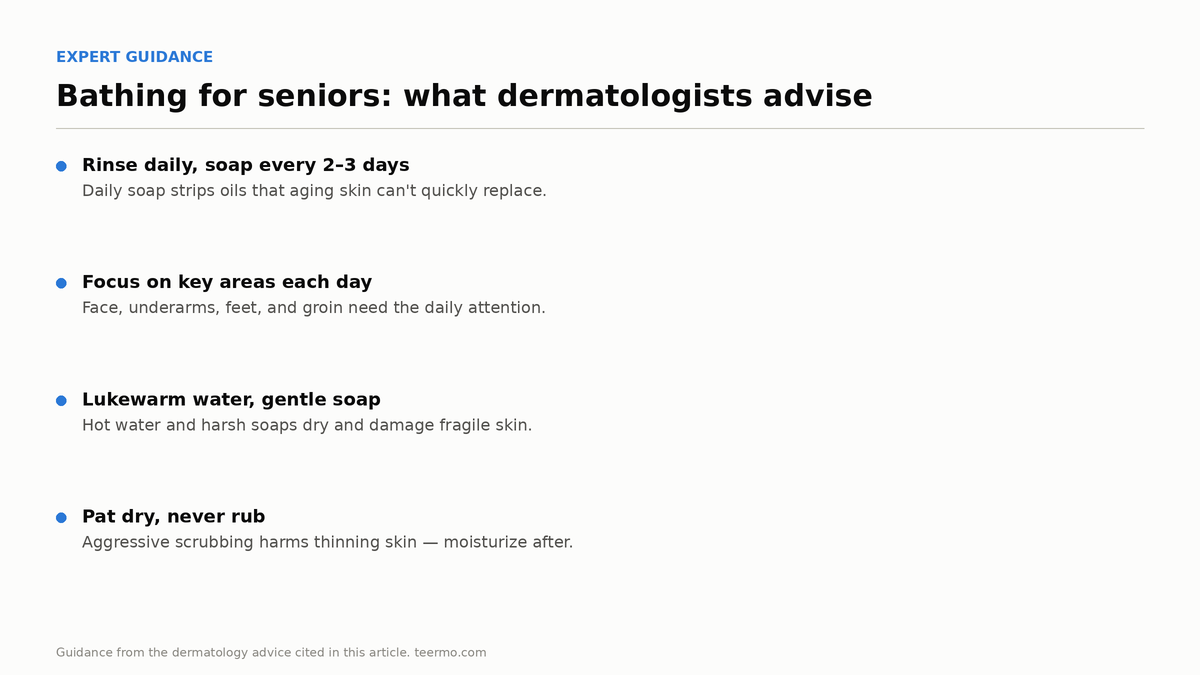
Aging adults don’t necessarily need to bathe every day. In fact, Dr. Meaume suggests that seniors over 65 should rinse their bodies daily but only use soap every two to three days. This reduces the risk of drying out the skin while still ensuring cleanliness. The daily focus should be on washing key areas like the face, armpits, feet, and genitals. These zones require more attention as they are prone to bacteria buildup and potential infections.
When Less is More: Avoiding Over-Bathing
Over-bathing, especially with harsh soaps or hot water, can do more harm than good for elderly skin. Using gentler, moisturizing soaps and lukewarm water can help maintain the skin’s hydration levels. Moreover, scrubbing too aggressively can damage fragile skin, so it’s best to pat dry with a soft towel rather than rub.
Alternative Methods for Elderly Hygiene
For elderly adults with limited mobility or those suffering from chronic conditions, traditional baths or showers might be difficult. In such cases, bath wipes or sponge baths can be effective alternatives. These methods help maintain cleanliness without exposing the skin to excessive moisture. Caregivers can also look into specialized no-rinse cleansers that are specifically designed for senior skin care.
Tailoring Bathing Frequency to the Individual
It’s essential to remember that each senior is unique, and the frequency of bathing should be tailored to their personal needs. For example, warmer months or increased activity levels may necessitate more frequent bathing, while during colder months or periods of inactivity, less frequent bathing may suffice. Always consider factors like skin condition, health status, and lifestyle when determining the appropriate hygiene routine.
Expert Tips for Senior Skin Protection
In addition to adjusting bathing frequency, there are other ways to protect and nourish elderly skin:
- Moisturize after bathing: Always apply a gentle, fragrance-free moisturizer immediately after bathing to lock in moisture.
- Use soft, non-abrasive towels: This helps reduce the risk of friction that can lead to skin tears or irritation.
- Monitor the skin for changes: Regularly check for signs of dryness, redness, or irritation, and adjust the bathing routine if necessary.
- Stay hydrated: Proper hydration supports healthy skin from the inside out. Encourage seniors to drink plenty of water throughout the day.
Conclusion: A Holistic Approach to Senior Hygiene
Maintaining hygiene in older adults isn’t just about staying clean; it’s about finding a balanced approach that supports both cleanliness and skin health. As Dr. Meaume emphasized, elderly individuals often benefit from bathing less frequently but focusing on critical areas daily. Incorporating these practices into a care routine ensures seniors remain comfortable, healthy, and protected from skin issues that may arise due to over-bathing.
By following these expert-backed recommendations, caregivers can better support the unique needs of aging adults, preserving their quality of life and skin health in the years to come.
