You open the utility app, see the new total, and feel your stomach drop. Again.
If your power bill keeps creeping higher no matter what you do, you’re not imagining it. Figuring out how to lower electric bill costs has quietly become one of the fastest ways to put real money back in your pocket this year.
Here’s the frustrating part: rates are rising for reasons that have nothing to do with you. The U.S. Energy Information Administration projects the average residential price will hit about 18.02 cents per kWh in 2026, up from 17.29 cents in 2025. The average monthly bill is now roughly $163 — up 26% in just five years.
But you’re not powerless. Most homes leak money through small, fixable habits and a handful of energy-hungry appliances.
In the next few minutes, you’ll get 9 proven moves — some free, some cheap — that can shave $50 or more off your monthly bill. Let’s get into it.


Why Your Bill Is Climbing (and Why 2026 Is the Year to Act)
Before the fixes, a quick gut-check on what’s actually happening.
The biggest driver isn’t your thermostat — it’s the grid. Utilities are pouring money into transmission lines, storm hardening, and new infrastructure, and those costs land on your bill.
On top of that, demand is exploding. According to reporting based on EIA data, data centers and “large loads” are tightening regional power markets, especially in Texas and the Northeast.
Here’s the thing: you can’t control the rate, but you can absolutely control how many kilowatt-hours you burn. That second lever is where the savings live.
Think of your bill as a math problem with two numbers — rate and usage. You don’t get a vote on the first one. You get total control over the second.
Want to know how to lower electric bill totals when the price per unit keeps rising? You attack usage. Hard.
Reduce Your Electricity Bill With These Heating and Cooling Tips
Heating and cooling is the heavyweight. In most homes it’s nearly half the entire bill, so this is where the biggest reduce electricity bill tips pay off fastest.
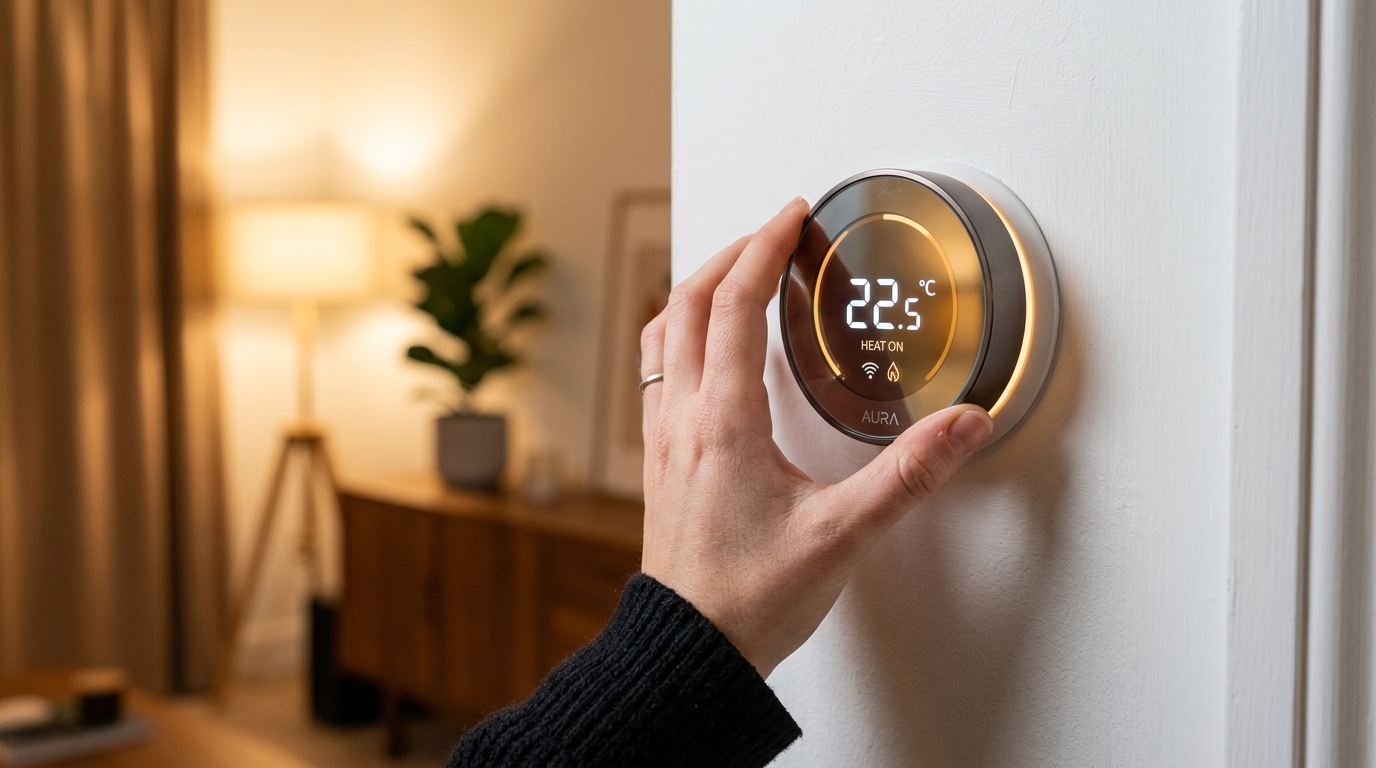
Start with your thermostat. A programmable or smart thermostat that backs off the temperature while you sleep or while you’re out can save the average household around $50 a year on its own — and you’ll never feel the difference at 2 a.m.
My neighbor swore her AC was “just old.” Turns out her thermostat ran a full 72°F all day in an empty house. She set it to drift to 78°F from 9 to 5, and her July bill dropped almost $40.
A few more quick wins:
- Bump the thermostat 7–10 degrees for the 8 hours you’re asleep or away.
- Change your air filter monthly — a clogged filter forces the system to work harder.
- Close vents and doors in rooms nobody uses.
- Use ceiling fans so you can raise the AC setting a couple degrees and still feel cool.
One more thing worth knowing: keeping your set temperature steady usually beats big swings. Letting the house drift while you’re out is smart, but yo-yoing the thermostat up and down all day forces the system to ramp repeatedly, which burns more power than a gentle schedule. Set it, schedule it, and stop touching it.
Lower Your Power Bill USA-Wide With Smarter Appliance Habits
After heating and cooling, your everyday appliances are the next quiet drain. The good news: these fixes cost nothing and take seconds.
Your water heater is often the second-biggest energy user in the house. Drop it from the factory-default 140°F to 120°F and you’ll still get hot showers while trimming standby losses.
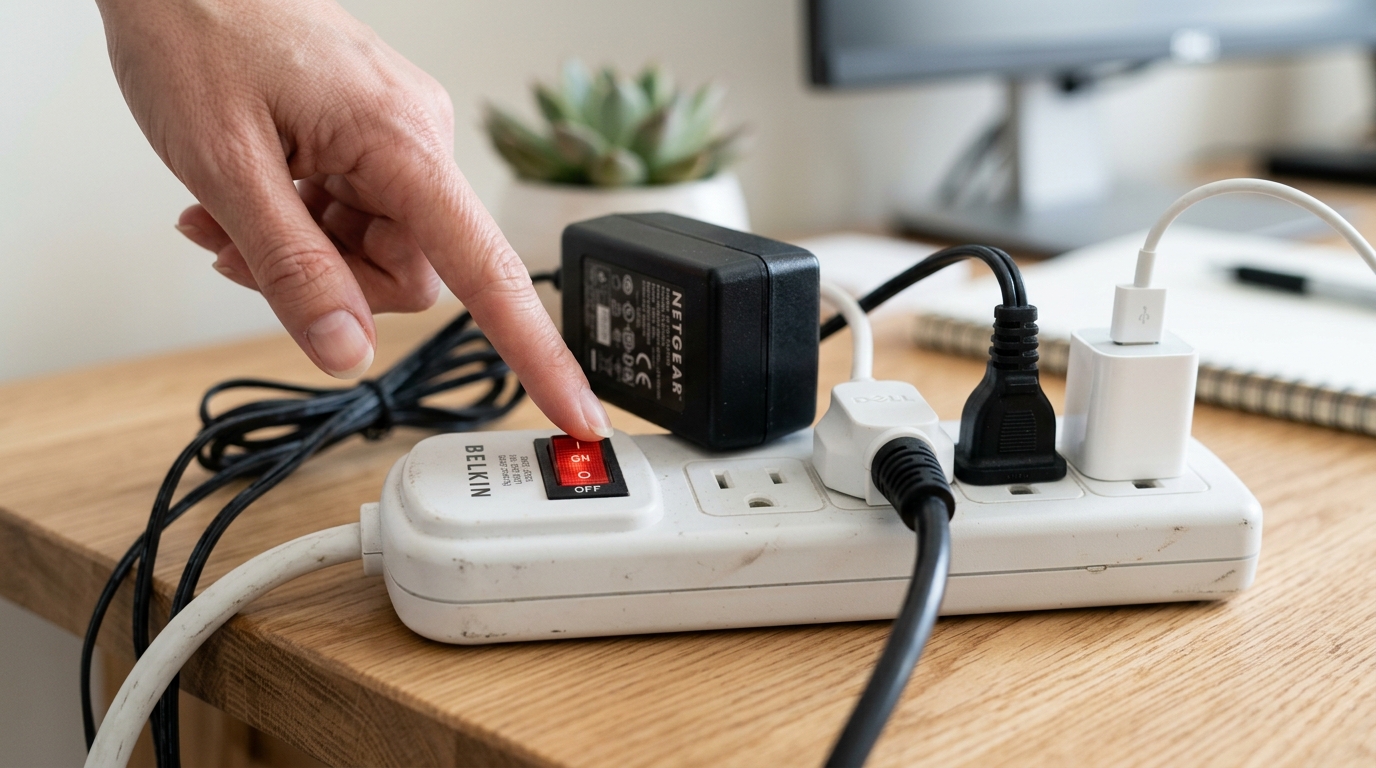
Then there’s “phantom load” — the power your devices sip while doing absolutely nothing. Chargers, game consoles, that second TV, the microwave clock — they all add up to real money over a year.
Plug your worst offenders into a power strip and flip it off when you leave or sleep. One switch, instant savings.
A real example: a remote-worker friend put his monitor, dock, printer, and desk lamp on a single smart strip that cuts power when his laptop disconnects. He figured it saved him close to $15 a month — money he was literally paying to power a dark room.
More habit-based reduce monthly bills wins:
- Run full loads in the dishwasher and washer, and skip heated-dry.
- Wash clothes in cold water — heating water is the bulk of laundry’s cost.
- Air-dry when you can; the dryer is one of the hungriest machines you own.
Energy-Saving Hacks That Cost Almost Nothing
Some of the best energy saving hacks aren’t about gadgets at all. They’re about plugging leaks — literally.
Switch every bulb to LED. LEDs use about 75% less energy than old incandescents and last for years. If you’ve still got a few old bulbs hiding in closets and lamps, that’s free money sitting on the table.
Next, hunt for drafts. Air sneaking around doors and windows makes your HVAC run overtime. A $5 tube of caulk and a weatherstripping kit can seal the worst gaps in an afternoon.
I know what you’re thinking — “I rent, I can’t renovate.” You don’t need to. Removable weatherstripping, draft stoppers, and even thermal curtains all peel off when you move out.
Quick low-cost checklist to cut electric costs fast:
- Seal window and door gaps with caulk or weatherstripping.
- Swap remaining bulbs for LEDs.
- Add thermal curtains to rooms that bake in the afternoon sun.
- Set the water heater to 120°F.
Related: No Spend Challenge Rules — pair your energy savings with a short no-spend reset to accelerate how fast you build a financial cushion.

How to Lower Your Electric Bill in 5 Steps This Week
Enough theory. Here’s a tight, do-it-this-week plan. Knock out one step a day and you’ll feel the difference on your next statement.
- Audit your last three bills. Find your average usage and note which months spike. This tells you where to aim.
- Set your thermostat schedule today. Program it to ease off while you sleep and while the house is empty.
Picture this: it’s Tuesday night, you spend four minutes in the app, and you’ve just locked in savings that repeat every single day for the rest of the year. That’s the kind of leverage we’re after.
- Power-strip your phantom loads. Group your desk gear, your entertainment center, and your kitchen counter gadgets onto switchable strips.
- Replace every non-LED bulb and seal your two draftiest windows or doors.
- Compare your rate if you live in a deregulated state. In places like Texas, Ohio, Pennsylvania, Illinois, and New York, you can often switch suppliers and pay less with zero lifestyle changes.
Do all five and stacking $50+ in monthly savings is realistic, not hype.
A Real Example: How One Family Cut $70 a Month
Take Dana and Marcus, a two-kid family in Ohio renting a three-bedroom place. Their winter bills had crept past $210, and they assumed the only fix was moving or suffering through a cold house.
Instead, they spent one weekend on the basics. They programmed the thermostat to dip overnight, sealed the drafty patio door with removable weatherstripping, swapped a dozen old bulbs for LEDs, and dropped the water heater to 120°F.
Then they did the step most renters forget: they compared electricity suppliers, since Ohio is deregulated. Switching to a lower fixed rate took fifteen minutes online and changed nothing about their daily life.
The combined result was about $70 off their monthly bill — roughly $840 a year — without a single major purchase or any drop in comfort.
The lesson? They didn’t find one giant fix. They stacked five small ones and let the savings compound. That’s the real answer to how to lower electric bill totals: layers, not miracles.
Mistakes That Quietly Keep Your Bill High
Even people trying hard to save sabotage themselves with a few common errors. Avoid these.
Cranking the thermostat to the extreme. Setting AC to 65°F doesn’t cool the house faster — it just runs longer and costs more. Set the target and let it work.
Ignoring the water heater. It runs 24/7 in the background, so a too-high setting bleeds money around the clock while you never notice.
Forgetting to compare rates. If you’re in a deregulated market and have never switched suppliers, you may be on a default plan that’s far from the cheapest available.
Buying gadgets you won’t use. A $200 device that promises savings means nothing if it sits in a drawer. The free habits above beat any gadget you ignore.
Track Your Progress So the Savings Stick
Here’s something most guides skip: making the changes is only half the job. If you never check the results, old habits creep back within a month.
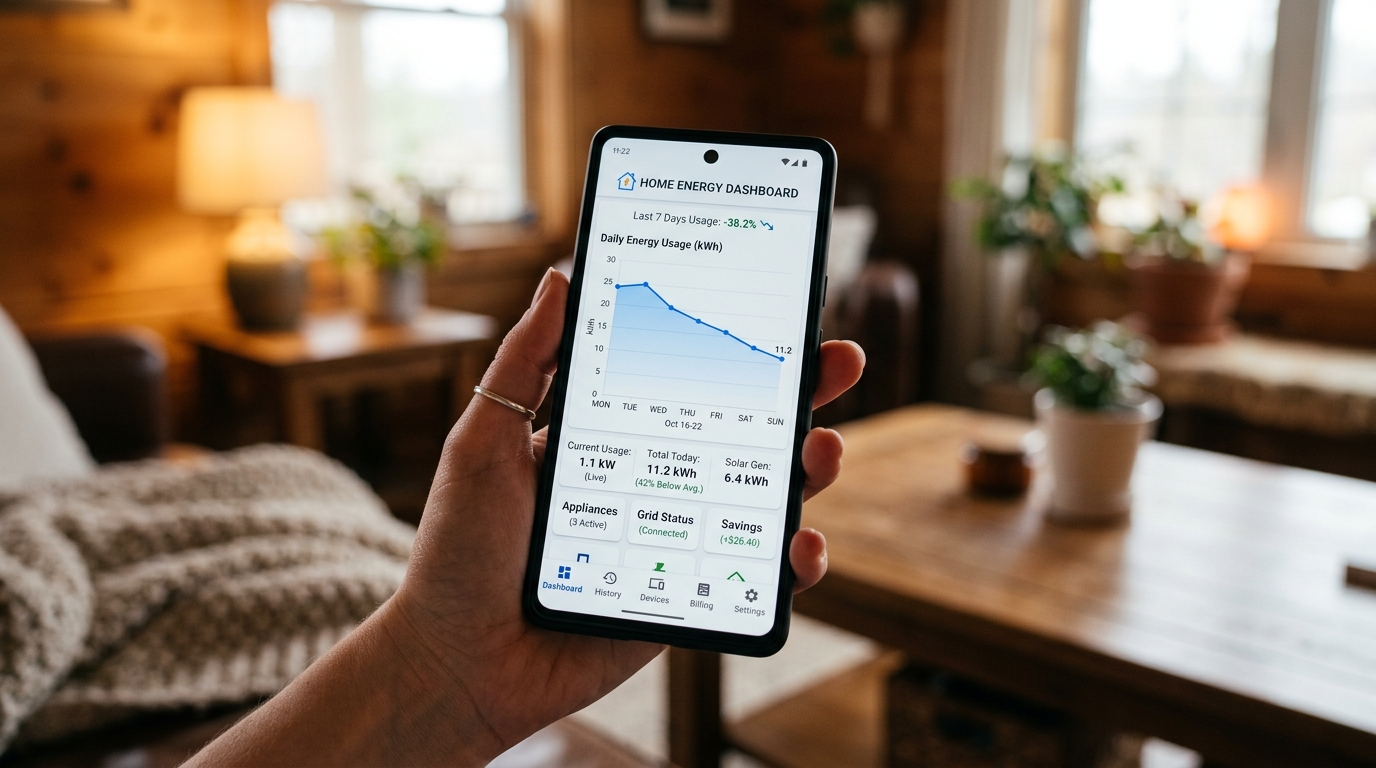
The fix is simple. Pull up your utility’s app or website and note your current kilowatt-hour usage. Most providers now show daily or hourly breakdowns, which makes spotting waste almost addictive once you start.
Before I tracked mine, I assumed the AC was the villain. The data showed it was actually an old chest freezer in the garage running nonstop. Ten minutes of looking saved me more than a week of guessing.
Check your usage once a week for a month. You’ll quickly see which of your changes moved the needle and which rooms or devices still need attention. What gets measured gets managed — and your electric bill is no exception.
Many utilities also offer free energy audits or rebates for efficient appliances. A quick call can surface money you didn’t know was waiting for you.
Final Thoughts: Take Back Control of Your Bill
Remember that sinking feeling when you opened the app? It doesn’t have to be your monthly routine.
Rates in 2026 are out of your hands — but your usage isn’t. Once you see your bill as a usage problem instead of a price problem, the whole thing stops feeling hopeless. You’ve now got a clear map: tame the HVAC, kill the phantom loads, seal the leaks, and check your rate.
You don’t have to do all nine moves today. Pick one — the thermostat schedule is the easiest big win — and do it before you close this tab. Momentum from a single change tends to pull the rest along with it.
The families saving $50, $80, even $100 a month didn’t find a magic trick. They just stopped letting the easy stuff slide.
Save this guide, try one fix today, and watch your next bill. Your wallet will notice.
Related: Save Money on Groceries Without Coupons — stack your utility savings with smarter grocery habits for a double win on your monthly budget.
Frequently Asked Questions
Q: How can I lower my electric bill fast in 2026?
The quickest wins are setting a thermostat schedule, unplugging phantom loads with power strips, and washing clothes in cold water. These cost little to nothing and start saving on your very next bill. If you’re in a deregulated state, comparing electricity suppliers can cut your rate too.
Q: How much can I realistically save on my electric bill?
Most households can trim $30–$50 a month from habit changes alone, and stacking several fixes can push savings past $50. A smart thermostat by itself saves the average home around $50 a year. Your exact savings depend on your current usage and how many of the steps you apply.
Q: What uses the most electricity in my home?
Heating and cooling is usually the biggest cost, often close to half the bill, followed by the water heater, dryer, and refrigerator. That’s why thermostat and water-heater adjustments deliver the largest savings. Target those first before worrying about smaller devices.