
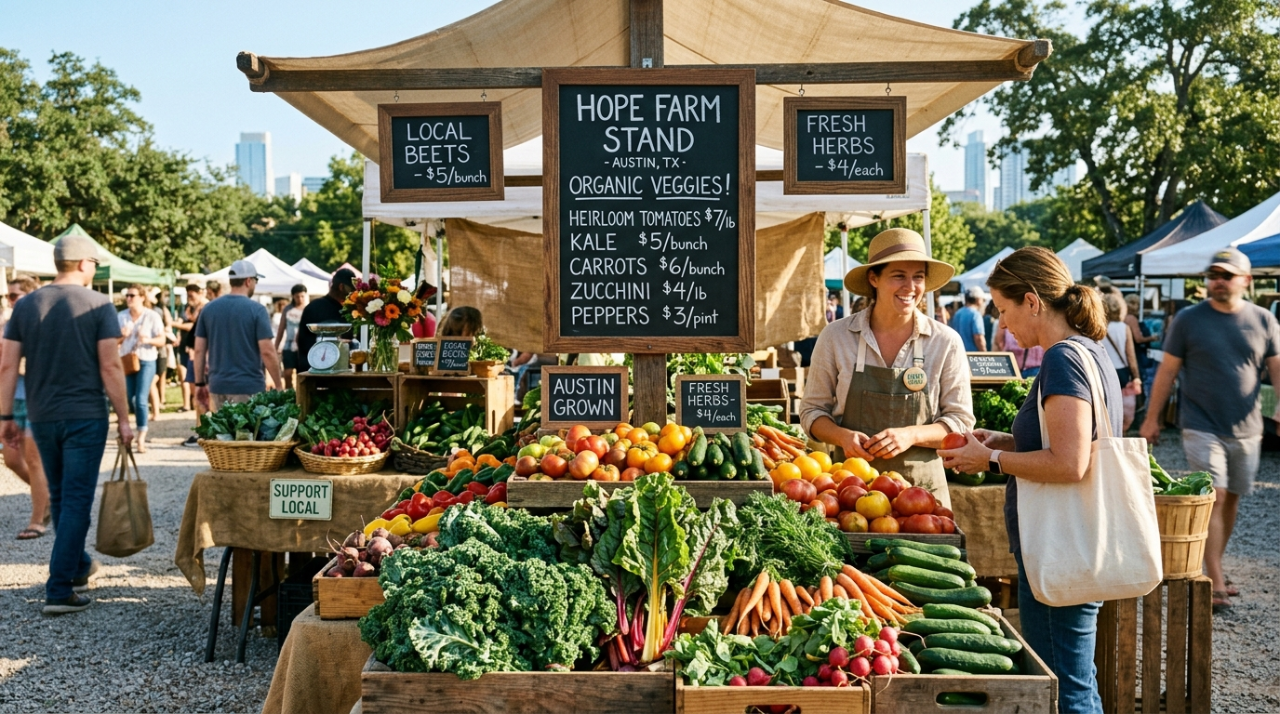
Alt text suggestion for hero image: “Austin farmers market fresh produce stalls with colorful vegetables and shoppers”
You’re standing in the grocery store aisle, staring at a bag of tomatoes priced at $5.49, and you feel that familiar burn in your stomach. It’s not hunger. It’s frustration.

Grocery prices in Austin have climbed steadily through 2025 and into 2026, and for families, students, and young professionals trying to eat well without draining their bank account, the weekly grocery run has become genuinely stressful. You didn’t sign up for this.
Here’s what a lot of Austin residents are quietly figuring out: the Austin farmers market scene is one of the best-kept budget food secrets in the city. Not just for foodies with reusable tote bags — but for real people who want fresh, quality food and more money left in their wallets every week.
This guide breaks down exactly how to shop Austin farmers markets like a pro, spend less than you do at HEB or Whole Foods, and actually enjoy doing it.
Why Austin farmers markets Are Having a Moment in 2026
It’s not a coincidence that foot traffic at Austin-area farmers markets has been climbing. As grocery store prices continue to rise — eggs, produce, dairy, meat — more Austin families are looking for alternatives that don’t mean sacrificing quality.
The Austin farmers market scene offers something grocery stores simply can’t: direct-from-farm pricing with zero middleman markup.
When a farmer drives their produce from Bastrop or Wimberley into the SFC Farmers’ Market downtown, they’re selling at what they need to make a profit — not what a corporate retailer needs to satisfy shareholders. That difference ends up in your pocket.
And unlike the outdated image of farmers markets as expensive boutique experiences, the reality in Austin in 2026 is very different. You can walk out of the SFC Farmers’ Market at Republic Square with a full week’s worth of vegetables for a family of four — and spend less than you would at a mid-range grocery store.
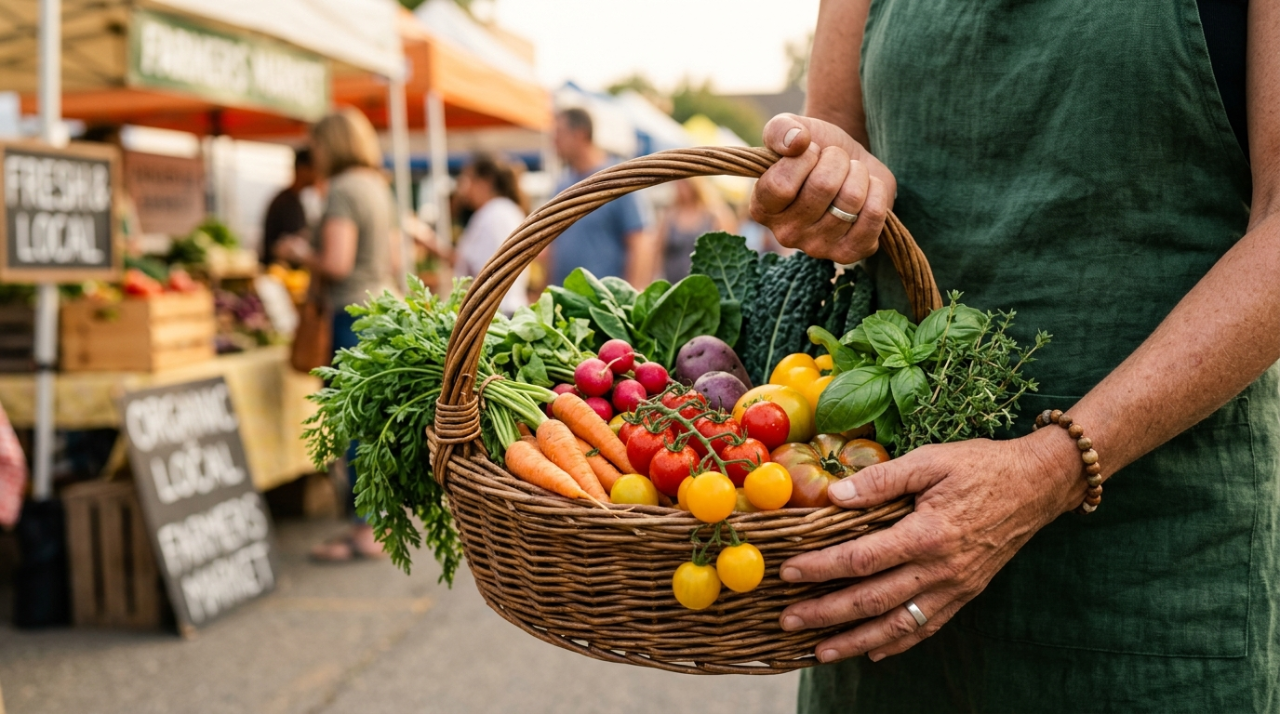
The Best Farmers Markets for Budget Shoppers
Before the saving strategies, you need to know where to go. Not all Austin markets are the same, and some are far better for budget grocery shopping Austin residents on a tight budget.
SFC Farmers’ Market — Downtown (Republic Square Park) Open Saturdays, 9 AM – 1 PM. This is the big one. Dozens of vendors, serious produce selection, and enough variety to cover most of your weekly needs. Perfect for families doing a full weekly shop.
SFC Farmers’ Market — Sunset Valley Open Saturdays, 9 AM – 1 PM. Slightly less crowded than downtown, same quality vendors. Great if you live in South or Southwest Austin and want to skip the parking headache.
Mueller Farmers’ Market Open Sundays, 10 AM – 2 PM. One of the most community-focused markets in the city. Excellent for fresh food deals Austin shoppers love — especially local eggs, greens, and seasonal fruit.
Texas Farmers’ Market at Lakeline Open Saturdays, 9 AM – 1 PM. Serves the Cedar Park and Northwest Austin crowd. High-quality vendors with strong produce options and competitive pricing.
Texas Farmers’ Market at Mueller Open Sundays, 10 AM – 2 PM. Slightly more vendor variety than the SFC Mueller location. Great for meat, dairy, and specialty items alongside your produce run.
7 Smart Ways to Save Money at your local market
Here’s where the real money-saving begins. These aren’t vague suggestions — they’re specific tactics that regular market shoppers in Austin swear by.
1. the market Shopping Starts with a Plan (and a Budget Cap)
The number one mistake budget shoppers make at farmers markets? Wandering in without a list.
Set a hard cap before you go — say, $40 or $60 for the week’s produce and proteins. Write down the meals you’re planning to cook. Then shop to the list, not to whatever catches your eye at the first stall.
This sounds obvious, but the market environment — fresh smells, beautiful displays, friendly vendors — is genuinely designed to make you spend more. A list keeps you anchored.
Pro tip: Build your meal plan around what’s in season. Seasonal produce at Austin farmers markets is almost always the cheapest item on the table.
2. Show Up in the Last 30–45 Minutes
This one is a game-changer for affordable produce Austin shoppers willing to be a little flexible.
Vendors at the end of market day do not want to pack unsold produce back into a truck and drive it home. In the final 30–45 minutes before closing, it’s very common to see prices drop significantly — sometimes by half — on items like tomatoes, squash, greens, and herbs.
You won’t get the widest selection. But if your goal is maximum food for minimum dollars, showing up at 12:15 PM at an SFC market that closes at 1 PM is a genuinely smart move.
3. Buy What’s Abundant — That’s Where the Cheap Fresh Food Austin Is
When you walk into any farmers market and see six different vendors all selling the same vegetable, that’s your signal: this is what’s in season, and this is what’s cheap right now.
Abundance at a farmers market equals competition, and competition equals lower prices and better deals. Don’t fight it by insisting on off-season produce — lean into it. Build your meals around what the land is actually producing right now.
In early spring, that might be radishes, spring onions, and strawberries. Midsummer brings tomatoes, corn, and peppers in abundance. Late fall brings winter squash, sweet potatoes, and hearty greens.
Eating seasonally at your local market isn’t just cheaper — the food tastes genuinely better, which is its own kind of win.
4. Talk to Vendors About “Seconds” and Bulk Deals
This is the insider move that most first-time farmers market shoppers never discover.
Ask vendors if they have any “seconds” — produce that has minor cosmetic imperfections (a small bruise, odd shape, slight blemish) but is perfectly fine to eat. Seconds are typically sold at a steep discount. A flat of second tomatoes for salsa or sauce? Often half the price of display items.
Also, don’t be shy about asking for a bulk deal. If you want five pounds of something instead of one, most vendors will happily negotiate. They’re moving product, you’re buying more — it’s a win for everyone.
This kind of flexible, relationship-based buying is something you’ll never get at a grocery store, and it’s one of the real advantages of the local market Austin scene.
5. Bring Cash — and Smaller Bills
Most the market have moved to accepting cards and payment apps, but cash is still king for deal-making. When you ask a vendor for a deal on bulk or end-of-day items, handing over exact cash makes the transaction smooth and signals you’re a serious buyer.
Smaller bills also help you stick to your budget cap instinctively — when the cash is gone, the shopping stops.
6. Compare Prices Across Two or Three Stalls Before Buying
The farmers market for budget grocery shopping Austin residents do smartly is not a one-stop shop — it’s a competitive marketplace. Different vendors price the same items differently, and spending three minutes walking the full market before buying anything can easily save you $8–15.
Don’t grab the first zucchini you see. Do a quick loop, compare prices mentally, and then go back to buy. Experienced market shoppers do this on autopilot.
7. Supplement, Don’t Replace — Use the Market Strategically
Here’s an honest truth about budget food shopping Austin style: farmers markets aren’t always cheaper than grocery stores on every item, every week.
Bulk dry goods, canned products, dairy staples, and some proteins may still be cheaper at HEB. The smart strategy is to use Austin farmers markets for what it genuinely does best — fresh, seasonal produce; eggs; local honey; some meats — and fill in the rest at your regular grocery store.
This hybrid approach is how Austin families on tight budgets get the best of both worlds: fresher food where freshness matters most, and grocery store prices where the market isn’t the best deal.
What a Real Budget Week at an the farmers market Looks Like
Let’s make this concrete. Imagine a Saturday morning at SFC Farmers’ Market downtown.
You arrive at 12:15 PM with $45 in cash and a meal plan for the week. You do a quick loop of the market. You notice cherry tomatoes are being sold by four vendors — that means they’re cheap and plentiful right now.
You find a vendor selling end-of-day mixed greens — two big bags for $7. You grab a carton of local eggs for $5 (the same quality runs $7–8 at Whole Foods). You pick up a bunch of basil, two heads of garlic, and a bag of small potatoes. You ask a vendor about bulk cherry tomatoes and walk away with two pounds for $6.
You spend $38. You have fresh, local produce for most of the week’s meals, eggs for breakfasts and frittatas, and more variety than a typical grocery run would have gotten you.
That’s the reality of fresh food deals Austin markets can offer when you shop intentionally.
Getting Started: Your First Trip to an your local market
If you’ve never done this before, here’s a simple starting plan:
Week 1 — Explore Only Go to one market with no shopping list and no budget pressure. Just walk around, talk to vendors, get a feel for pricing and what’s available. Buy something small that appeals to you. Think of it as research.
Week 2 — Set a $30 Budget Come back with a $30 cash limit and a loose meal plan. See how far it stretches. Don’t stress about perfection — just practice the habit.
Week 3 — Go Strategic Start applying the tactics above: arrive late, ask about seconds, compare vendors before buying. Track what you spend versus what you’d have spent at a grocery store.
Most people are surprised by the results — both in savings and in how much they enjoy the experience. There’s something genuinely good about buying your food from the person who grew it, knowing where it came from, and being part of a local food community rather than just another cart in a fluorescent-lit warehouse.
The Community Bonus Nobody Talks About
Budget grocery shopping Austin families do at farmers markets comes with an unexpected bonus: it feels good.
Grocery stores are optimized for efficiency. Farmers markets are optimized for connection. You talk to vendors. You see your neighbors. Kids get excited about a weird-looking heirloom tomato. The experience of feeding your family becomes something you actually look forward to, instead of something you dread.
In a city where everything seems to be getting more expensive and more impersonal, that’s worth something real.
Frequently Asked Questions
Q: Are the market actually cheaper than grocery stores?
For seasonal produce, eggs, and some meats, yes — often significantly. The key is knowing which items to buy at the market versus the grocery store. Fresh seasonal vegetables, local eggs, and herbs tend to be the best deals. Non-seasonal items and packaged goods may still be cheaper at HEB or Costco.
Q: What are the best days and times to go to Austin farmers markets for deals?
Saturdays are the biggest market days in Austin, with the SFC Farmers’ Market at Republic Square and Sunset Valley both running 9 AM–1 PM. For the best deals, arrive in the final 30–45 minutes when vendors discount end-of-day inventory. For the best selection, arrive within the first hour.
Q: Do the farmers market accept EBT/SNAP benefits?
Yes — several local markets accept SNAP/EBT, including SFC markets. The SFC (Sustainable Food Center) also runs a Double Dollar Incentive Program at some markets, which matches SNAP dollars spent on produce up to a certain amount. Check the SFC Farmers’ Market website for current program details before your visit.
Final Thought: Rising Prices Don’t Mean You’re Out of Options
Grocery prices in Austin aren’t coming down anytime soon. But your grocery bill doesn’t have to keep climbing, either.
the market scene in 2026 is bigger, more accessible, and more shopper-friendly than it’s ever been. It’s full of people — farmers, vendors, neighbors — who want to feed this city good food at prices that make sense.
All it takes is one Saturday morning to see what the difference feels like.
Bring cash, bring a bag, and show up hungry — for great food and a lower grocery bill.