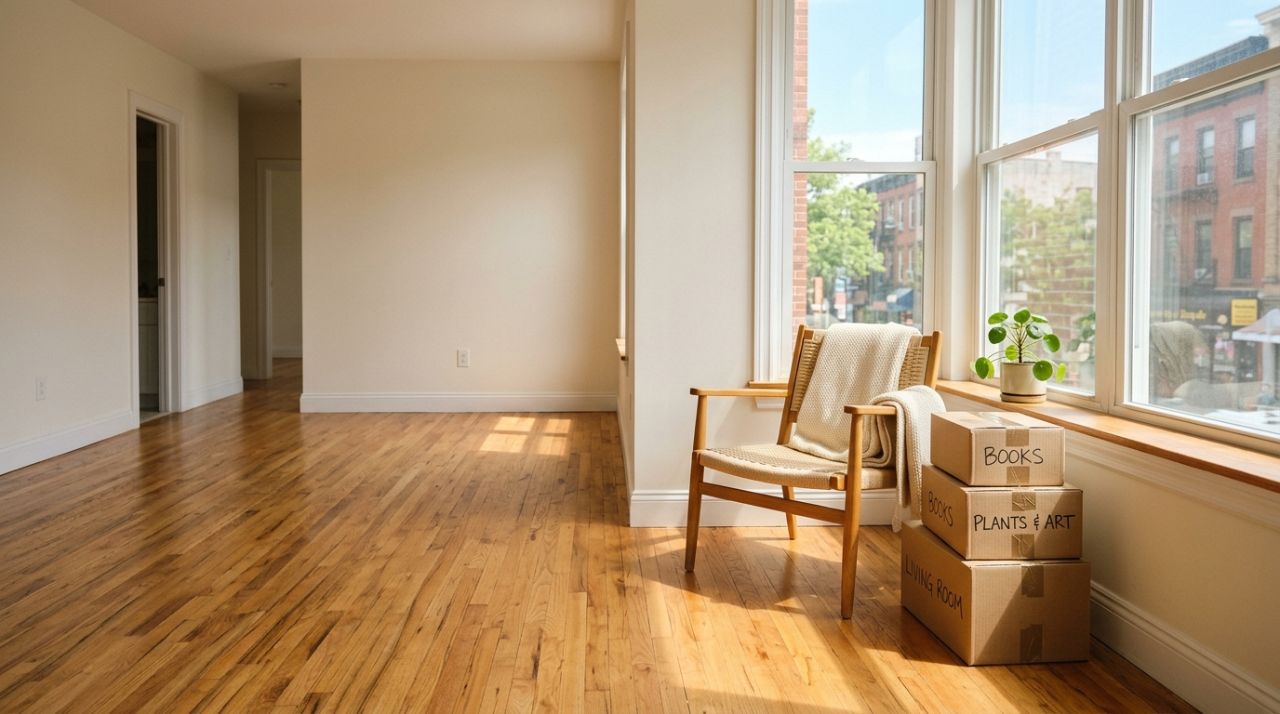
You just got the keys. The apartment is yours — and it’s completely, echoingly empty.
Last Updated: June 17, 2026
That mix of excitement and quiet panic is real. You want a space that feels like home, but your bank account is already bruised from the deposit, first month’s rent, and the moving truck.
Here’s the good news: you can absolutely furnish an apartment under $500 in 2026, even with prices climbing. It takes a plan, not a fat wallet.
This guide walks you through exactly how — a realistic budget breakdown, where to find cheap apartment furniture in the USA, the essentials you actually need (and the stuff you don’t), seven money-saving hacks, and a real $487 setup you can copy. By the end, that empty room won’t feel scary. It’ll feel like a project you’ve already won.

Why It’s Harder (But Still Possible) to Furnish an Apartment Under $500 in 2026
Let’s be honest about what you’re up against. Furniture is more expensive than it was even a year ago.
According to the latest inflation data cited by ABC News, living room, kitchen, and dining room furniture prices rose 4.6% in November 2025 compared to the year before. On top of that, a 25% import tariff on upholstered furniture, kitchen cabinets, and vanities took effect in late 2025 and stays in place through 2026 — and China and Vietnam, the two biggest sources of imported furniture, are right in the crosshairs.
Rent isn’t helping either. The average US rent sits near $1,700 a month in 2026, and a Harvard Joint Center for Housing Studies report found a record 22.7 million renter households — nearly half — are now cost-burdened, spending 30% or more of their income on housing.
So when money is this tight, every dollar you spend on furniture has to earn its place. That’s not a limitation — it’s actually the secret to doing this well.
Here’s the thing: a $500 apartment budget forces you to buy only what you’ll genuinely use, skip the impulse decor, and get creative. People who blow $3,000 on a first apartment usually end up with clutter they replace in two years anyway.

The $500 Game Plan: How to Furnish an Apartment Under $500 Without Losing Sleep
Before you buy a single thing, you need a number for each category. A budget you can see is a budget you can stick to.
Here’s a realistic allocation for a studio or one-bedroom. Adjust based on what you already own.
| Category | Budget | What it covers |
|---|---|---|
| Bed + mattress | $150 | Frame (or floor foundation) + a boxed mattress |
| Seating | $80 | A used couch, futon, or two chairs |
| Table + eating area | $60 | Small table + 2 chairs |
| Storage | $50 | Shelving, dresser, or cube units |
| Kitchen basics | $70 | Pots, pans, plates, utensils |
| Lighting + comfort | $40 | Lamps, a rug, curtains |
| Buffer | $50 | The thing you forgot |
| Total | $500 | A livable, comfortable apartment |
Notice the buffer. You will always forget something — a shower curtain, a trash can, a phone charger you left at your old place. Leaving $50 unspent keeps one surprise from torpedoing the whole plan.
Picture this: my friend Dani moved into her first studio last spring and spent her entire $500 in week one, then realized she had no curtains and slept with foil on the windows for a month. Don’t be Dani. Plan the buffer.

Where to Find Cheap Apartment Furniture in the USA
Knowing where to look is half the battle. The same dresser can cost $200 new or $30 secondhand — and nobody can tell the difference once it’s in your room.
Start with Facebook Marketplace and Craigslist. These are gold for cheap apartment furniture in the USA, especially near college towns at the end of a semester when students dump everything before moving out. Search late at night and message fast — good listings vanish in hours.
Next, hit estate sales, thrift stores, and “free” piles. Goodwill and Habitat for Humanity ReStores carry solid wood furniture for a fraction of retail. Curb shopping in nicer neighborhoods on trash-pickup eve is a real strategy — that “ugly” coffee table is a $5 can of paint away from looking intentional.
For new items, IKEA, Walmart, Target, and Amazon still anchor any budget furnish-first-apartment plan. A flat-pack dresser or a $40 boxed mattress topper does the job without wrecking your low-cost apartment setup.
The trick is mixing sources: secondhand for the big, expensive pieces, and new for anything that touches your body or food — mattress, pillows, kitchen gear.
Why pay full price when half your block is selling perfectly good furniture for pennies on the dollar?
→ Related: 12 Genius Studio Apartment Organization Ideas for 2026
Room-by-Room: The Affordable Apartment Essentials You Actually Need
The fastest way to overspend is buying things you think a home needs. You don’t need a matching three-piece living room set. You need a place to sleep, sit, eat, and store stuff.
Here’s the no-fluff list of affordable apartment essentials, room by room.
Bedroom: A mattress (buy this new), a frame or simple platform, one set of sheets, a pillow, and a lamp. A frame is optional — a quality boxed mattress on a low foundation is fine for year one.
Living area: One comfortable seat per person you expect regularly, a small table surface, and a single light source beyond the ceiling fixture. A floor lamp instantly makes a room feel finished.
Kitchen: One pot, one pan, a knife, a cutting board, two plates, two bowls, two sets of utensils, and a couple of glasses. That’s genuinely enough to cook anything.
Bathroom + cleaning: Shower curtain, towels, a trash can, basic cleaning supplies, and toilet paper. These are the “Dani” items people forget.
Everything else can wait. A TV stand, a second chair, art on the walls — those are month-three purchases once you know what your space actually needs.

7 Proven Hacks to Furnish an Apartment Under $500
Now the fun part — the moves that stretch $500 into a full apartment. Follow these in order.
- Measure your space before you buy anything. A couch that won’t fit through the door is a $100 lesson. Write down doorway widths and wall lengths in your phone.
- Buy the mattress new, everything else used. This single rule protects your health and your wallet. A used couch is fine; a used mattress is a gamble you shouldn’t take.
- Shop the end-of-semester and end-of-month windows. Students moving out and renters relocating practically give furniture away. Late August and the last weekend of any month are peak.
- Repurpose before you purchase. A sturdy cardboard box with a cloth over it is a nightstand. Two crates and a board make a bookshelf. Your moving boxes have a second life.
- Negotiate every secondhand price. Sellers list high expecting an offer. A polite “would you take $X?” saves real money — I’ve knocked 30% off listings just by asking and offering to pick up same-day.
- Prioritize multi-use pieces. A futon is a couch and a guest bed. A storage ottoman is seating and a place to hide clutter. One item, two jobs, half the budget.
- Wait 48 hours on any non-essential. If you still want that $35 rug two days later, buy it. Most “I need this” urges fade — and that’s how a budget furnish-first-apartment plan survives the first month.
Imagine pulling all seven together: you measured, scored a $40 used futon, turned moving boxes into a nightstand, and still have buffer left. That’s a 500 dollar apartment setup done right.

Common Mistakes That Blow Your First Apartment Furniture Budget
Even with a plan, a few classic traps can wreck your effort to furnish an apartment under $500 and blow your first apartment furniture budget overnight. Here’s what to dodge.
Buying everything in week one. The pressure to “finish” makes you overspend on stuff you’d skip if you waited. Live in the space a few days first — you’ll learn what you actually need.
Falling for matching sets. Retailers bundle a couch, loveseat, and chair because it’s profitable for them. Mixing pieces is cheaper and looks more personal anyway.
Ignoring delivery and assembly costs. That “$60 dresser” becomes $95 once you add shipping or a delivery fee. Always check the real total, especially online.
Skipping the tape measure. Returning oversized furniture eats time, gas, and sometimes restocking fees. Measure twice, buy once.
Forgetting the small stuff. Trash cans, a drying rack, light bulbs, a shower curtain — they’re cheap individually but add up to $80 fast. That’s exactly what your buffer is for.
The biggest mistake of all is treating “cheap” as the only goal. A $20 office chair that destroys your back isn’t a deal — it’s a future expense. Spend smart, not just small.
Real Example: A $487 First Apartment Setup
Meet Marcus, a 23-year-old who landed his first job and a small one-bedroom in Columbus, Ohio. His furniture budget was strict: $500, not a dollar more.
He started with the mattress — a boxed memory-foam queen on sale for $159, bought new. Then he hit Facebook Marketplace the last weekend of the month and found a barely-used futon for $45 and a small dining table with two chairs for $50.
For storage, he grabbed three fabric cube organizers from Walmart for $42 and turned his moving boxes into a temporary nightstand. Kitchen basics — a starter pot-and-pan set, plates, and utensils — ran $68 from Target. He spent $38 on a floor lamp, a $12 shower curtain, and a clearance rug.
Final tally: $487. He had $13 left and a fully livable apartment. Three months later he added art and a real nightstand once he knew the space — and he never felt like he was living in a half-finished room.
The lesson? A 500 dollar apartment setup isn’t about deprivation. It’s about sequencing — essentials first, personality later.
→ Related: The Real Budget for a Single Person in Columbus, Ohio (2026)
Final Thoughts: Your Empty Apartment Is a Head Start, Not a Problem
Remember that echoing, empty room from the beginning? It doesn’t feel scary anymore — because now you have a plan.
You don’t need thousands of dollars or a single matching furniture set to build a home you love. You need a budget you can see, the right places to shop, and the discipline to buy essentials first and personality later. That’s the whole secret to learning how to furnish an apartment under $500, even with 2026’s higher prices working against you.
The first piece you score for a steal — that $45 futon, that free dresser with good bones — flips a switch. Suddenly this isn’t a financial stress. It’s your space, built your way, on your terms.
So pick one task today: measure your rooms, or open Facebook Marketplace and save three listings. Momentum is everything.
Save this guide, share it with the friend who’s about to move, and come back to it when you tackle the next room.
→ Related: Simple Budget Plan for Beginners: A Step-by-Step Guide
Frequently Asked Questions
Is it actually realistic to furnish an apartment under $500 in 2026?
Yes, for a studio or one-bedroom it’s very doable. The key is buying your mattress new and sourcing everything else secondhand from Facebook Marketplace, thrift stores, and end-of-semester sales. Higher furniture prices and 2026 tariffs make it tighter than a few years ago, but a category-by-category budget keeps you on track.
What’s the one thing I should never buy used when furnishing on a budget?
Your mattress. Used mattresses can carry allergens, bed bugs, and worn-out support that hurts your sleep and back. A boxed mattress starts around $150 new — spend there and save by buying the frame, couch, and storage secondhand.
How do I find cheap apartment furniture in the USA fast?
Start with Facebook Marketplace and Craigslist, especially near college towns at the end of a semester. Add Goodwill, Habitat for Humanity ReStores, and curb-pickup nights for big pieces, then use IKEA, Walmart, or Target for new essentials like a mattress and kitchen gear.
What should I buy first when setting up a first apartment furniture budget?
Buy in this order: mattress, basic seating, a small table, kitchen essentials, then storage and lighting. Hold off on decor, a second chair, and a TV stand until you’ve lived in the space a week and know what it actually needs.
→ Related: How to Decorate a Rental: 12 Proven No-Damage Tips for 2026
→ Related: How to Find a Roommate Safely: 7 Proven Steps for 2026