

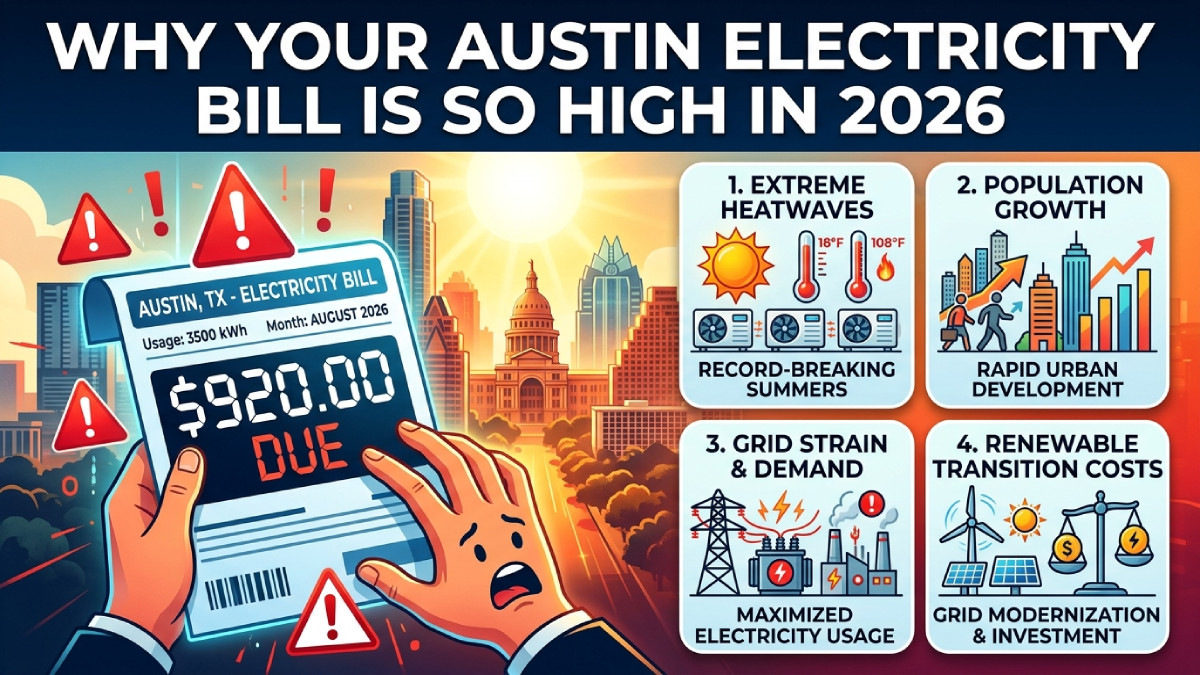
How real Austin residents are fighting back against brutal 2026 heat and sky-high cooling costs
It was a Tuesday in late June, and Sarah — a remote worker renting a two-bedroom house in South Austin — opened her electricity bill and felt her stomach drop.
She had barely left the house. She kept the thermostat at 76°F. She’d even bought blackout curtains the month before. And still, her bill nearly doubled compared to the same month last year.
Sound familiar?
If you live in Austin, you already know 2026 has been something else. The heat is relentless, the AC never really turns off, and your electricity bill keeps climbing higher no matter what you try. Austin Energy has reported record-breaking demand this summer, and utility costs across Texas are feeling it.
But here’s the thing: there are real, practical ways to lower your electric bill in Austin this summer — and none of them require you to sweat through 105-degree afternoons just to save a few bucks.
Let’s get into it.
Why Austin Summer Electricity Bills Are So High in 2026
Before you can fix the problem, it helps to understand it.
Austin has always had brutal summers, but 2026 has pushed things to a new extreme. Temperatures have been consistently hitting triple digits, often before 10 AM. That means your AC system isn’t just running more — it’s running harder, and for longer stretches without a break.
Here’s what’s actually happening to your bill:
- Your HVAC system accounts for 50–70% of your total electricity use during summer months
- The longer it runs at full capacity, the more kilowatt-hours (kWh) you rack up
- Austin Energy’s tiered pricing means the more you use, the more expensive each unit becomes
- Older rental homes and apartments with poor insulation make everything worse
The result? A bill that feels completely out of your control — even when you’re trying your hardest.
You’re not imagining it. Austin electricity expenses in 2026 have jumped significantly for thousands of households. But you can push back.
The Thermostat Trap Most Austin Residents Fall Into
Everyone has heard “set your thermostat higher to save money.” And yes, that’s technically true — every degree above 72°F can save you roughly 3% on your cooling costs.
But here’s what most people miss: it’s not just the temperature you set, it’s when you set it.
Austin Energy’s peak demand hours run roughly from 2 PM to 8 PM on weekdays. During these hours, electricity costs more and the grid is under maximum stress. If your AC is working overtime right in that window, you’re paying premium rates for every minute of it.
Try this instead:
- Pre-cool your home between 6–11 AM, when rates and outdoor temps are lower
- Set the thermostat to 78°F or slightly above during peak hours (2–8 PM)
- Use a programmable or smart thermostat to automate all of this — set it once and forget it
- At night, aim for 74–76°F; your body cools naturally as the night goes on
This one shift alone can noticeably reduce your Austin utility bill without making your home feel like a sauna.
14 Proven Ways to Reduce Electricity Cost in Austin This Summer
Let’s go through what actually works — and what’s worth your time and money.
1. Sign Up for Austin Energy’s Free Programs (Seriously, Do This First)
Austin Energy offers several programs that can directly save on AC bill Texas residents often overlook. The Power Partner Thermostat Program lets Austin Energy make small, temporary adjustments to your thermostat during peak hours in exchange for bill credits.
You stay cool. They manage the grid. You save money. It’s genuinely a win-win.
Also check out Austin Energy’s rebates for smart thermostats, insulation upgrades, and energy-efficient appliances. Some rebates are worth hundreds of dollars — money you’re leaving on the table if you don’t apply.
👉 Visit austinenergy.com and look under “Rebates & Incentives” to see what you qualify for.
2. Get a Free Home Energy Audit
Austin Energy offers free energy audits for residential customers. A certified auditor walks through your home, identifies exactly where you’re losing energy, and recommends fixes — ranked by impact and cost.
This is particularly valuable for renters who suspect their home has insulation or window problems but don’t know where to start. You get a clear, personalized action plan.
3. Seal Air Leaks Around Doors and Windows
Think of your home as a cooler. If the lid doesn’t seal properly, the cold air escapes and warm air rushes in. Your AC works twice as hard to compensate.
Common leak spots in Austin homes:
- Around door frames (you can often feel the hot air coming in)
- Window edges and gaps
- Electrical outlets on exterior walls
- Attic access panels
Weatherstripping and caulk cost under $30 total and can make a noticeable difference in cooling costs within days. For renters, this is one of the few upgrades you can make without your landlord’s permission.
4. Use Ceiling Fans the Right Way
Ceiling fans don’t actually cool the air — they create a wind-chill effect that makes you feel cooler. That means you can set your thermostat 4–5 degrees higher and still feel just as comfortable.
One critical mistake: make sure your fan runs counterclockwise in summer (looking up at it). Clockwise rotation pushes warm air down — the opposite of what you want. Most fans have a small switch on the motor housing to change direction.
Only run fans in rooms you’re in. Running them in empty rooms wastes electricity with no benefit.
5. Block the Sun Before It Becomes Heat
Direct sunlight through windows is one of the biggest culprits behind high Austin summer utility bills. West and south-facing windows are especially brutal in the afternoon.
Your options, from cheapest to most effective:
- Blackout curtains or cellular shades — keep them closed between 10 AM and 6 PM on sun-facing windows
- Reflective window film — blocks up to 80% of solar heat and installs in minutes (around $25–$40)
- Exterior solar shades — the most effective option; blocks sun before it even hits the glass
For renters: blackout curtains and window film are removable and renter-friendly. Both are available at hardware stores across Austin.
6. Don’t Ignore Your AC Filter
A clogged air filter forces your HVAC system to work significantly harder, using more energy to push the same amount of air. This is one of the most common — and most avoidable — reasons Austin cooling costs run high.
Change your filter every 30–60 days during summer, especially if you have pets or live near a dusty construction area (hello, Austin). A clean filter takes two minutes and costs $5–$20.
If you’re renting and don’t know where your filter is, ask your landlord. That’s a reasonable maintenance request.
7. Run Appliances at Night
Your washer, dryer, dishwasher, and oven all generate heat when they run. In a Texas summer, that heat adds to your home’s cooling load — meaning your AC has to work harder to compensate.
Shift these to the evenings after 8 PM or early morning before 10 AM. You’ll lower both the heat load and take advantage of off-peak electricity rates.
An air fryer or Instant Pot also generates far less heat than a full oven — worth keeping in mind for weeknight cooking.
8. Tackle the Phantom Energy Drain
“Phantom load” is electricity consumed by devices that are plugged in but not actively being used — TVs in standby mode, phone chargers left in outlets, gaming consoles, and more. Across a household, this can add up to 5–10% of your total electricity bill.
Use a smart power strip in your entertainment center and home office area. When you turn off your TV, the strip cuts power to everything else connected to it — cable boxes, speakers, gaming systems.
This is especially valuable for remote workers in Austin who have a full home office setup running all day.
9. Check Your Water Heater Settings
Your water heater is likely set to 140°F from the factory. Dialing it down to 120°F is safer (reduces scalding risk), saves energy, and you’ll barely notice a difference in your shower.
If you have an older water heater, consider wrapping it in an insulation blanket — it reduces standby heat loss and is available at most hardware stores for around $30.
10. Use Natural Ventilation Strategically
Austin temperatures can drop significantly at night — sometimes 20 or more degrees from the daily high. If you can catch that window (usually between 10 PM and 7 AM), opening windows and using fans to pull in cool outside air lets your AC take a break.
Close everything up before it starts warming again in the morning, and your home stays cooler into the afternoon with less mechanical cooling needed.
11. Inspect and Upgrade Insulation
This is one for homeowners or renters with cooperative landlords. Attic insulation is the single biggest factor in how well your home retains cooled air. Many older Austin homes — especially those built before the 1990s — have inadequate attic insulation.
Austin Energy’s rebate program covers a significant portion of insulation upgrade costs. If your home regularly hits 80°F or higher before noon even with AC running, poor insulation may be the core problem.
12. Consider a Programmable or Smart Thermostat
A basic programmable thermostat costs $25–$50 and allows you to set cooling schedules automatically. A smart thermostat (Ecobee, Nest, or similar) goes further — it learns your schedule, adjusts based on occupancy, and can be controlled remotely.
Austin Energy offers a rebate of up to $85 on qualifying smart thermostats. Combined with the energy savings, most pay for themselves within a few months.
13. Shade Your Outdoor AC Unit
Your outdoor AC condenser unit works harder when it’s sitting in direct sunlight. Shading it with a strategically placed shade structure (or even large potted plants, leaving airflow clearance) can improve its efficiency by 5–10%.
Don’t block the unit — it needs clear airflow. But shading the top and sides makes a real difference during the hottest afternoon hours.
14. Review Your Austin Energy Rate Plan
This one is underutilized. Austin Energy offers different rate plans, and the one you’re automatically enrolled in may not be the best fit for your household.
Call Austin Energy or log in to your account and ask about Time-of-Use rate plans. If you can shift most of your electricity use to off-peak hours (which we’ve been discussing), a TOU plan can lower your Austin electricity expenses meaningfully.
A Realistic Savings Scenario
Let’s put some numbers together. A typical Austin household using 1,400 kWh in July might be paying $180–$220 or more.
Here’s what a combination of the above tips could realistically achieve:
| Action | Estimated Monthly Savings |
|---|---|
| Smart thermostat + scheduling | $25–$45 |
| Ceiling fans + thermostat adjustment | $15–$30 |
| Sealing air leaks | $10–$25 |
| Shifting appliance use off-peak | $10–$20 |
| Filter replacement + tune-up | $10–$15 |
| Phantom load reduction | $8–$15 |
| Total potential savings | $78–$150/month |
That’s not a guarantee — your results depend on your home, your habits, and your starting point. But the direction is clear: small, consistent changes stack up fast.
For Renters: What You Can Actually Control
Renting in Austin while trying to save on AC bill feels frustrating, because many of the big fixes — insulation, windows, HVAC upgrades — are your landlord’s domain.
But you have more control than you think:
- Weatherstripping and window film — renter-friendly, removable, effective
- Portable fans and blackout curtains — immediate impact, zero landlord involvement
- Smart power strips — plug them in anywhere
- Shifting when you use appliances — completely in your control
- Thermostat scheduling — if your unit has a programmable thermostat, use it
If your apartment has ongoing HVAC problems or inadequate insulation, document the issue and formally request repairs in writing. Austin tenants have rights, and an AC system that can’t maintain a livable temperature may constitute a habitability violation.
The Bottom Line
Austin summers aren’t getting easier. If 2026 has taught us anything, it’s that climate-driven energy costs are the new normal — and waiting for things to cool down (literally or figuratively) isn’t a strategy.
But you’re not helpless.
Every change on this list is something a real person can do — today, this week, or this month — without major expense or a contractor. Put a few of them together, and you’re looking at real money back in your pocket before the summer is over.
Start with what’s free: sign up for Austin Energy’s rebate programs, adjust your thermostat schedule, replace your AC filter, and close those curtains in the afternoon. Then layer in the rest as you’re ready.
You can lower your electric bill this Austin summer. It just takes knowing where to look.
❓ FAQ
Q: What temperature should I keep my thermostat at in Austin summer to save money?
A: The U.S. Department of Energy recommends 78°F when you’re home and awake, 82°F when you’re sleeping, and 85°F or higher when you’re away. In practice, most Austin households find 76–78°F manageable with ceiling fans running. Every degree you raise the thermostat saves approximately 3% on your cooling costs.
Q: Does Austin Energy have programs to help lower electricity bills?
A: Yes. Austin Energy offers free home energy audits, rebates on smart thermostats and insulation, and the Power Partner Program, which gives you bill credits in exchange for minor thermostat adjustments during peak hours. Visit austinenergy.com or call their customer service line to find out which programs you qualify for.
Q: Why is my Austin electricity bill so high even when I don’t change anything?
A: During extreme heat, your AC runs longer and works harder to maintain the same temperature — even if the thermostat setting is identical to last summer. If outdoor temps go from 98°F to 107°F, your system has to do significantly more work. Austin Energy also uses tiered pricing, so higher usage triggers higher per-unit rates. Your bill can jump substantially without you changing a single habit.
Published May 2026 | Based on current Austin Energy programs and 2026 rate structures. Program details are subject to change — verify directly with Austin Energy for the most current information.