
Charlotte doesn’t feel like a Southern city anymore in a lot of neighborhoods — it feels like a finance city that happens to be in the South. That’s not an accident. This is the second-largest banking center in the country after New York, and when Bank of America and Truist keep hiring, rent keeps climbing for everyone else too, banker or not.
If you’ve lived here more than a few years, you’ve watched it happen: a one-bedroom in South End that used to be reasonable now competes with people relocating from New York and California for finance jobs. Cash stuffing Charlotte NC residents are picking up isn’t a random budgeting fad — it’s a direct response to a city where salaries at the top have quietly reset prices for everyone else.
Between South End’s brewery crawl, NoDa’s gallery nights, and a housing market that’s pushed a lot of people out toward Matthews, Huntersville, and Concord chasing lower rent, this city makes it easy to spend without feeling it. Cash stuffing works because it puts a hard stop where a tap-to-pay card doesn’t.
Here’s how it actually works if you live here — accounting for Charlotte prices, Charlotte habits, and Charlotte’s specific version of “everyone around me seems to have more money than me.”
What Cash Stuffing Actually Is (And Why Charlotte Makes It Harder)
Cash stuffing is simple: withdraw your paycheck, divide it into labeled envelopes — rent, groceries, gas, “fun money” — and when an envelope’s empty, that category is closed for the pay period. No card, no “I’ll just tap it this once.”
The mechanics aren’t new. What’s changed is the environment fighting against it.
Charlotte is a city where spending signals status, and banking money is everywhere reminding you of it. Uptown happy hours after work, South End brewery patios that don’t feel like “going out” because they’re two blocks from your apartment, and a finance-industry crowd that normalizes $16 cocktails without a second thought. Your brain stops registering that as a splurge when it’s just what Tuesday looks like around you.
That’s the exact gap cash stuffing closes. When your “going out” envelope has $50 left for the week, the decision gets made before you’re at the bar deciding between two more rounds.

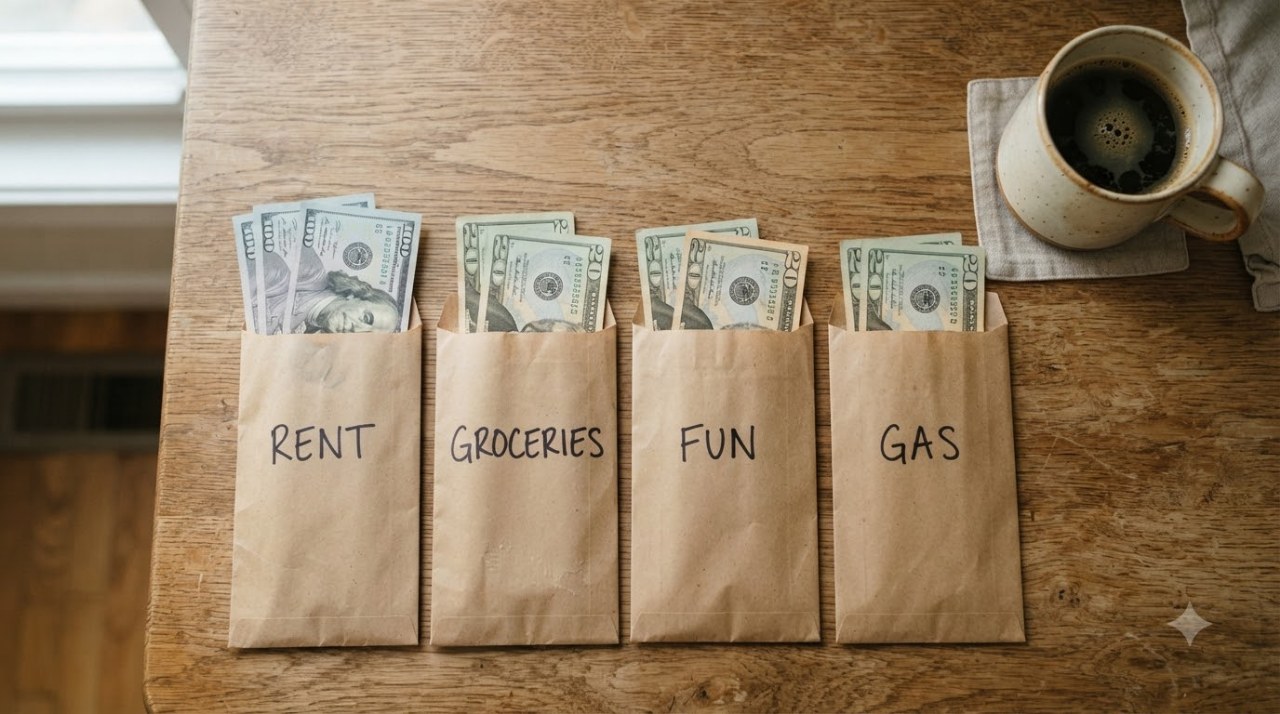
Setting Up Your Envelopes for Charlotte’s Cost of Living
Generic budgeting advice splits spending into “needs and wants.” That doesn’t hold up cleanly here, because in Charlotte, plenty of the “needs” have gotten expensive on their own, driven by a labor market with a lot of high earners bidding prices up.
Start with what’s non-negotiable, sized to what things actually cost in this city:
- Rent/mortgage envelope — not cash itself, but the anchor number the rest of your budget is built around, and Uptown/South End/Dilworth pricing looks nothing like Steele Creek or University City pricing.
- Groceries — a Harris Teeter run in Myers Park costs noticeably more than the same cart at a Publix or Aldi out toward University City or Pineville.
- Gas/transit — if you’re commuting in from Concord, Matthews, or Huntersville for an Uptown job, this envelope needs to reflect the real commute, not a hopeful guess. The LYNX Blue Line helps if your route runs along it, but most of the metro still means driving.
- “South End/going out” envelope — name it honestly. A vague “entertainment” category gets raided; a specifically-named one makes you pause before the third brewery stop.
- Farmers market/local shopping — cash is often preferred at the Charlotte Regional Farmers Market and the Atherton Mill Market in South End, so this envelope does double duty.
The Charlotte-specific move is naming your envelopes after your actual weak spots, not generic categories. If your money quietly disappears on South End patios or NoDa gallery-night drinks, that envelope needs its own line — not a folder buried inside “entertainment.”

Where to Actually Get and Use Cash in Charlotte
This trips people up more than the budgeting math does, especially in a city this bank-heavy — it’s almost ironic how few people here actually use cash day to day.
A few local and regional options worth knowing:
- Truist — headquartered in Charlotte, with a heavy branch presence across the metro; using a hometown bank at least keeps some of your fees local.
- Charlotte Metro Credit Union — a locally headquartered credit union, often with better fee structures than the big national banks for regular withdrawals and fewer out-of-network ATM surprises.
- Bank of America and First Citizens Bank — both have dense branch and ATM coverage across the region if you want more locations without fees eating into your withdrawal.
Pull your cash once at the start of the pay period, not in small withdrawals throughout the week — every extra ATM trip is another chance to overspend “just this once.”
On the spending side, cash still gets you real value in specific spots: the Charlotte Regional Farmers Market on Yorkmont Road, the Atherton Mill Market vendors in South End, food trucks parked around Optimist Hall and the Music Factory, and plenty of the family-owned restaurants along the Central Avenue corridor, where cash sometimes means skipping a card-processing surcharge entirely.

Do Charlotte Neighborhoods Change How You Should Cash Stuff?
Yes — and this is the part most generic budgeting advice skips entirely.
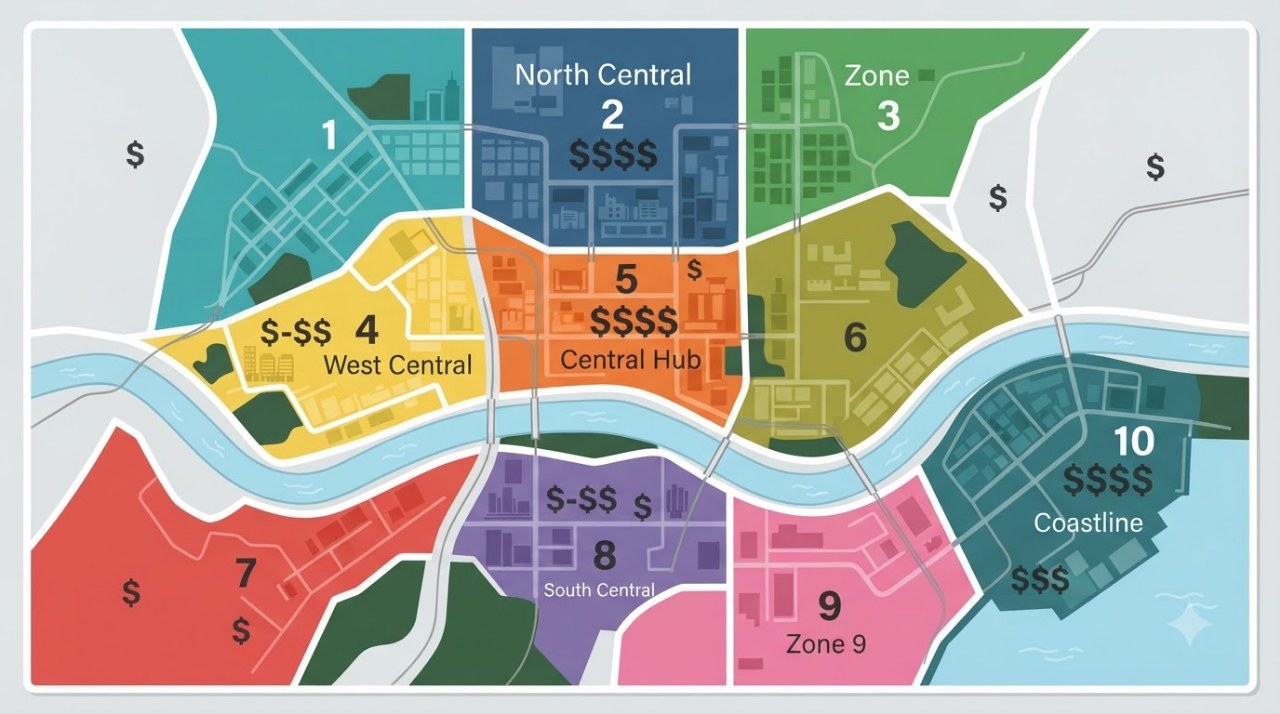
If you live in South End or NoDa, your “food” and “going out” envelopes need to be bigger by default, because the breweries, restaurants, and coffee shops in walking distance simply cost more. That’s not a discipline problem, it’s a zip code problem.
A coworker of mine who moved from University City to South End for a shorter commute told me her grocery-and-eating-out envelope went from lasting three weeks to barely lasting two — same habits, same shopping list, just a different neighborhood’s version of “close by.” She didn’t get less disciplined. Her costs changed underneath her without her spending habits moving at all.
If you’re further out — Matthews, Huntersville, Concord, or Pineville — your gas/transit envelope needs to be honest about commute costs into Uptown or South End jobs, but your food and entertainment envelopes can usually run smaller since there’s less built-in temptation within walking distance.
The mistake is copying a one-size-fits-all envelope split you found online instead of building one around your actual Charlotte zip code.
A Weekly Cash Stuffing Routine That Works With Charlotte Paydays
Here’s a simple routine to actually run this, week to week:
- Withdraw on payday, not the weekend before you need it. South End and Uptown ATMs get hit hard on weekends — some run low or trigger extra fees during big events like a Panthers or Hornets home game, or during the NoDa gallery crawl.
- Sort into envelopes immediately, before the cash sits loose in your wallet. Loose cash gets spent without a category attached to it.
- Keep the “South End/fun” envelope physically separate from your everyday wallet — leave it at home on weeknights so it’s not tempting you on a random Wednesday happy hour.
- Do a Sunday check-in. Fifteen minutes, count what’s left in each envelope, adjust next week’s split if one category is chronically running dry.
- Roll over what’s left in flexible envelopes (like the farmers market one) into a small cash buffer instead of spending it just because it’s there.
If your pay schedule is biweekly rather than weekly, don’t just double every envelope and call it done — split the “South End/fun” and grocery envelopes into two smaller sub-piles for week one and week two instead. Otherwise it’s easy to blow through half a month’s fun money on one big weekend and coast on nothing until the next check lands. A rubber band and a sticky note with the week number on it is all the “system” you need.
The habit that actually moves the needle is step 3 — physically separating your temptation envelope from your daily-use cash. Everything else is math; that one is behavior.

Mistakes Charlotte Cash Stuffers Make
Underestimating Uptown and South End pricing. If your job or social life pulls you into those areas regularly, budgeting like the rest of the metro costs the same will blow through your envelope by mid-month.
Forgetting event weekends. Panthers and Hornets home games, the NoDa arts crawl, and big Uptown festivals spike crowds and prices across the city center. Build a small “event month” buffer instead of letting it wreck your regular envelopes.
Carrying too much cash at once on a South End bar crawl. Cash stuffing doesn’t mean carrying your whole week’s envelope out for one night. Split what you’re carrying out from what stays safely at home.
Ignoring the credit union option. A lot of people default to a big national bank out of habit and eat ATM fees on every withdrawal — fees that quietly undo the savings cash stuffing is supposed to create.
If you’re brand new to the method, start with our cash stuffing for beginners guide to get the basic system down before layering on Charlotte-specific adjustments. And if you’re comparing notes with another city, see how the same method plays out in our cash stuffing Nashville guide.
Final Thoughts
Charlotte’s growth has been great for the skyline and rough on a lot of paychecks that aren’t in finance. Cash stuffing isn’t going to slow down how fast South End turns into another expensive neighborhood — but it does something you can actually control: it puts a visible, physical limit on the spending that happens *because* this city makes overspending feel normal.
Start small. Pick your two or three biggest weak-spot categories — for most people here, that’s food and South End nights out — and stuff just those envelopes for one pay period. You’ll feel the difference before the month is out.
If Charlotte’s cost of living has been quietly draining your account, this is the cheapest fix you haven’t tried yet.
Frequently Asked Questions
Q: Is cash stuffing actually worth it in a banking city like Charlotte where everyone seems to spend freely?
A: Yes, arguably more so — the visible limit of an envelope counters the exact kind of social spending pressure a finance-heavy city creates. It won’t lower your rent, but it stops the smaller leaks that add up fast when everyone around you spends like money isn’t tight.
Q: Where can I withdraw cash without paying extra ATM fees in Charlotte?
A: Local and regional options like Truist, Charlotte Metro Credit Union, Bank of America, and First Citizens Bank have wide branch networks across the metro, which usually means more free, in-network ATMs than sticking with an out-of-state bank you brought with you.
Q: How much should I put in my “going out” envelope if I spend a lot of time in South End?
A: Track one typical week honestly first — most people underestimate it by half. Set the envelope at that real number, then trim it 10–15% each pay period until it matches what you’re actually comfortable spending.
Q: Does cash stuffing still make sense if I moved to Charlotte from a much cheaper city?
A: It’s especially useful in that situation, since your spending instincts are calibrated to your old city’s prices, not Charlotte’s. Physical envelopes correct for that faster than a mental budget does, because the money running out is something you can see and feel, not just a number you have to remember to check.